Audemars Piguet Royal Oak Offshore 25721ST 'The Beast'
€ 23.900

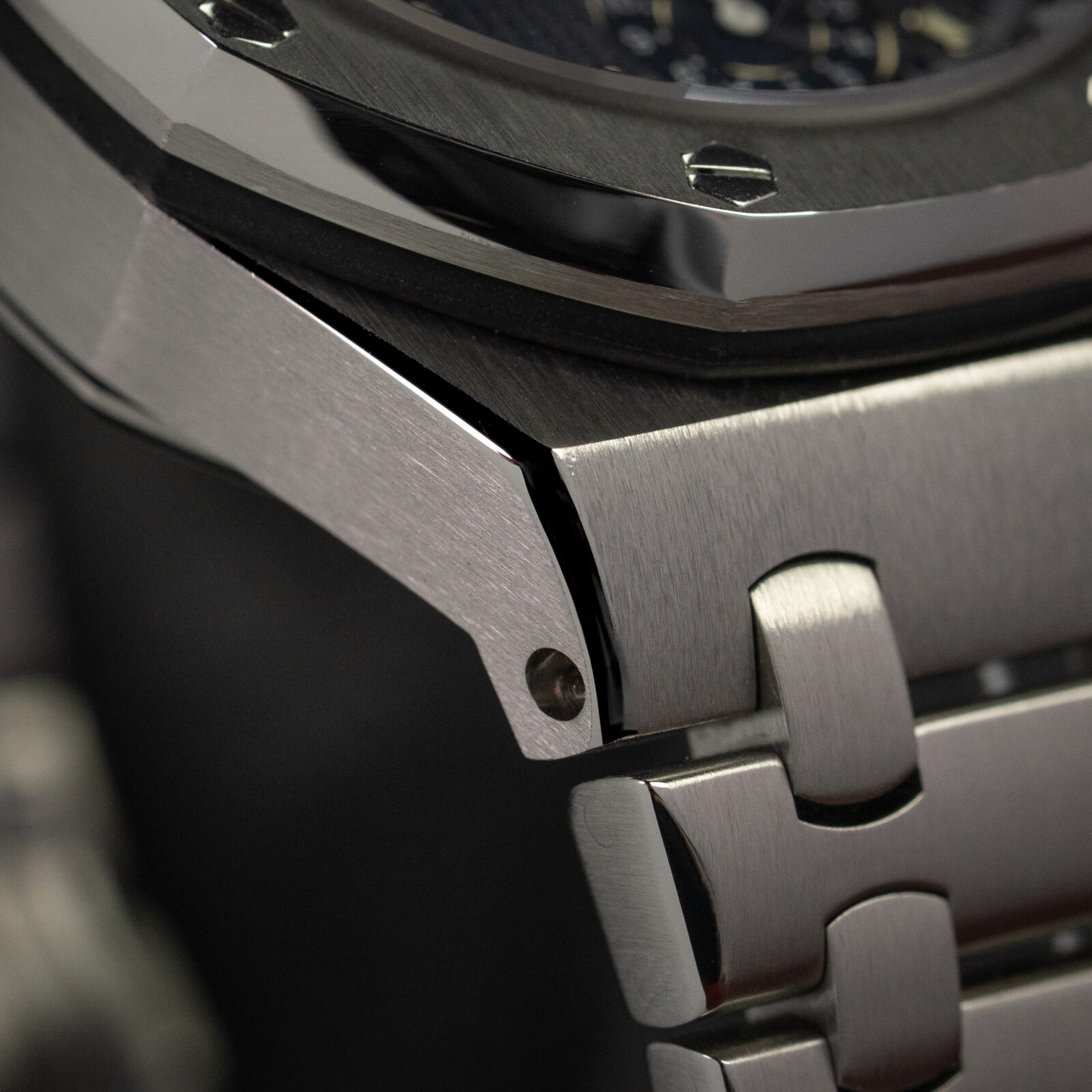

Audemars Piguet Royal Oak Offshore 25721ST 'The Beast'
€ 23.900- Free worldwide delivery
We’re thrilled to present the very first Audemars Piguet Royal Oak Offshore, better known by collectors and enthusiasts as “The Beast.” Bold, oversized, and unapologetically unconventional, this watch marked one of the most controversial,- and ultimately influential -chapters in modern horology.
This heavyweight piece of mechanical art dates back to 1997, during a period when the luxury watch industry was rapidly evolving. While many brands were still embracing classic proportions and conservative designs, Audemars Piguet dared to push boundaries with a watch that challenged traditional expectations of what a high-end sports watch should be.
The Royal Oak Offshore traces its roots back to the legendary Gerald Genta-designed Audemars Piguet Royal Oak from 1972; a watch that revolutionized the industry by introducing the concept of a luxury steel sports watch. With its octagonal bezel, exposed screws, and integrated bracelet, the Royal Oak was already considered radical in its time. But two decades later, Audemars Piguet decided to take that iconic design language even further.
Enter Emmanuel Gueit, who was just 22 years old when he was tasked with reinterpreting the Royal Oak for a new generation. His vision was daring: larger, thicker, more aggressive, and more muscular. The result was the Royal Oak Offshore: a watch that amplified every characteristic of the original and transformed it into something entirely new.
When the Offshore debuted at Baselworld 1993, the reaction was explosive. Many traditional collectors were shocked by its size and bold design. At 42 mm, it was enormous for the early 1990s, almost absurdly large by the standards of the time. In fact, the watch earned the nickname “The Beast” almost immediately because of its imposing dimensions and substantial wrist presence.
The launch was so controversial that legend has it Gerald Genta himself stormed into the Audemars Piguet booth at Baselworld, furious over the reinterpretation, reportedly shouting that his Royal Oak had been completely destroyed by Gueit. Whether embellished or not, the story perfectly captures how divisive the Offshore was in its early years.
Yet, as often happens with groundbreaking designs, time changed perceptions. What was once considered too large, too bold, and too unconventional eventually became one of the most influential sports watches of the modern era. The Royal Oak Offshore helped pave the way for the oversized watch trend that dominated the late 1990s and 2000s, influencing the design direction of countless brands across the industry.
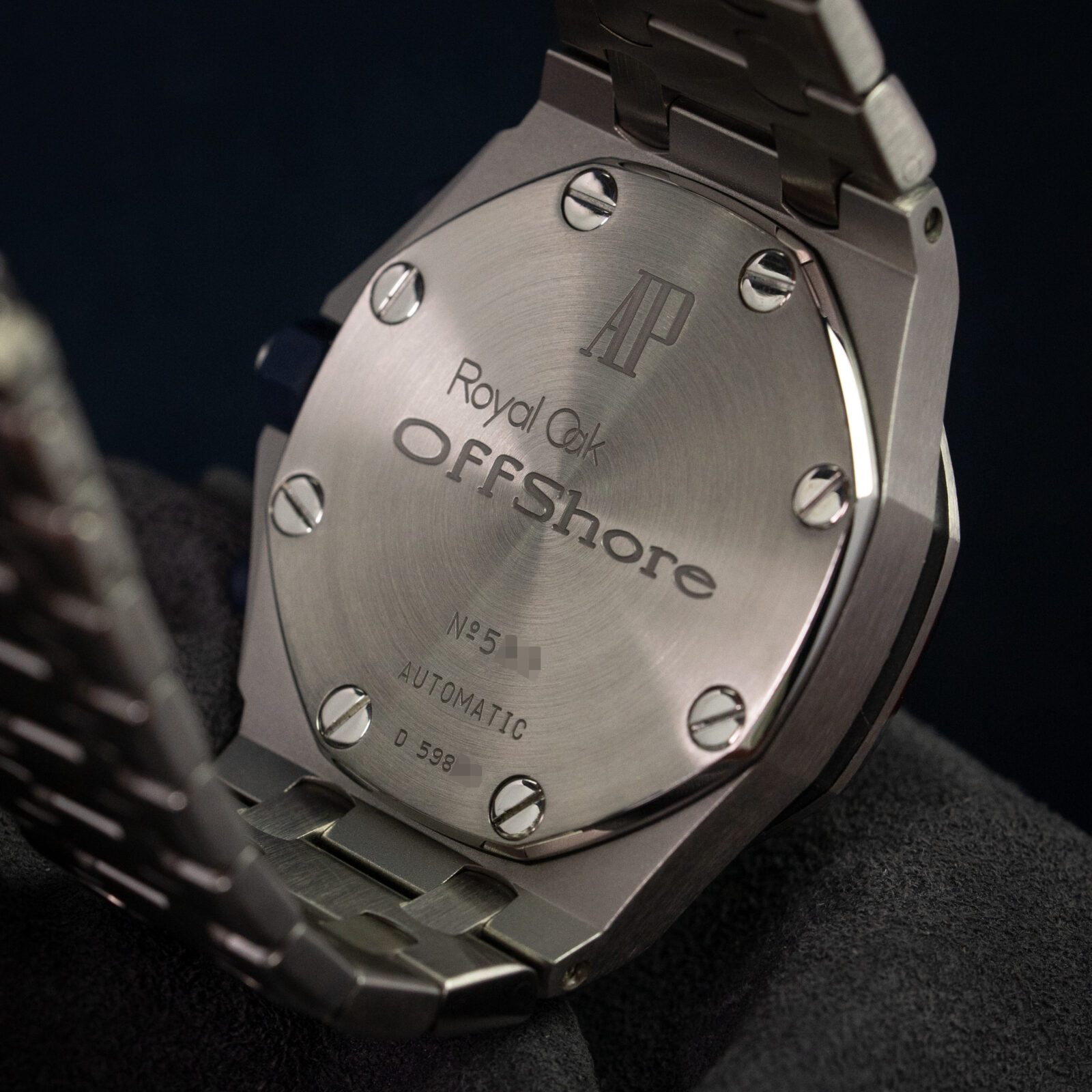
To be honest, it also took us some time to fully appreciate the Offshore. Its proportions, aggressive styling, and unapologetic presence can be overwhelming at first. But over time, its unique character becomes impossible to ignore; and now we secretly love it. This particular example features the iconic 42 mm case, which still feels substantial and powerful on the wrist. Powering the watch is the reliable and respected Jaeger-LeCoultre-based chronograph calibre 2226/2840, a movement that reflects the serious mechanical credentials behind its bold exterior.
Beneath the sapphire crystal lies a stunning blue-grey “Clous de Paris Petite Tapisserie” dial, one of the Offshore’s defining visual signatures. The textured dial creates remarkable depth and catches the light beautifully from every angle. It features three well-balanced sub-dials, along with a date display enhanced by the distinctive cyclops lens integrated directly into the dial rather than on top of the sapphire crystal; a subtle but fascinating design detail.
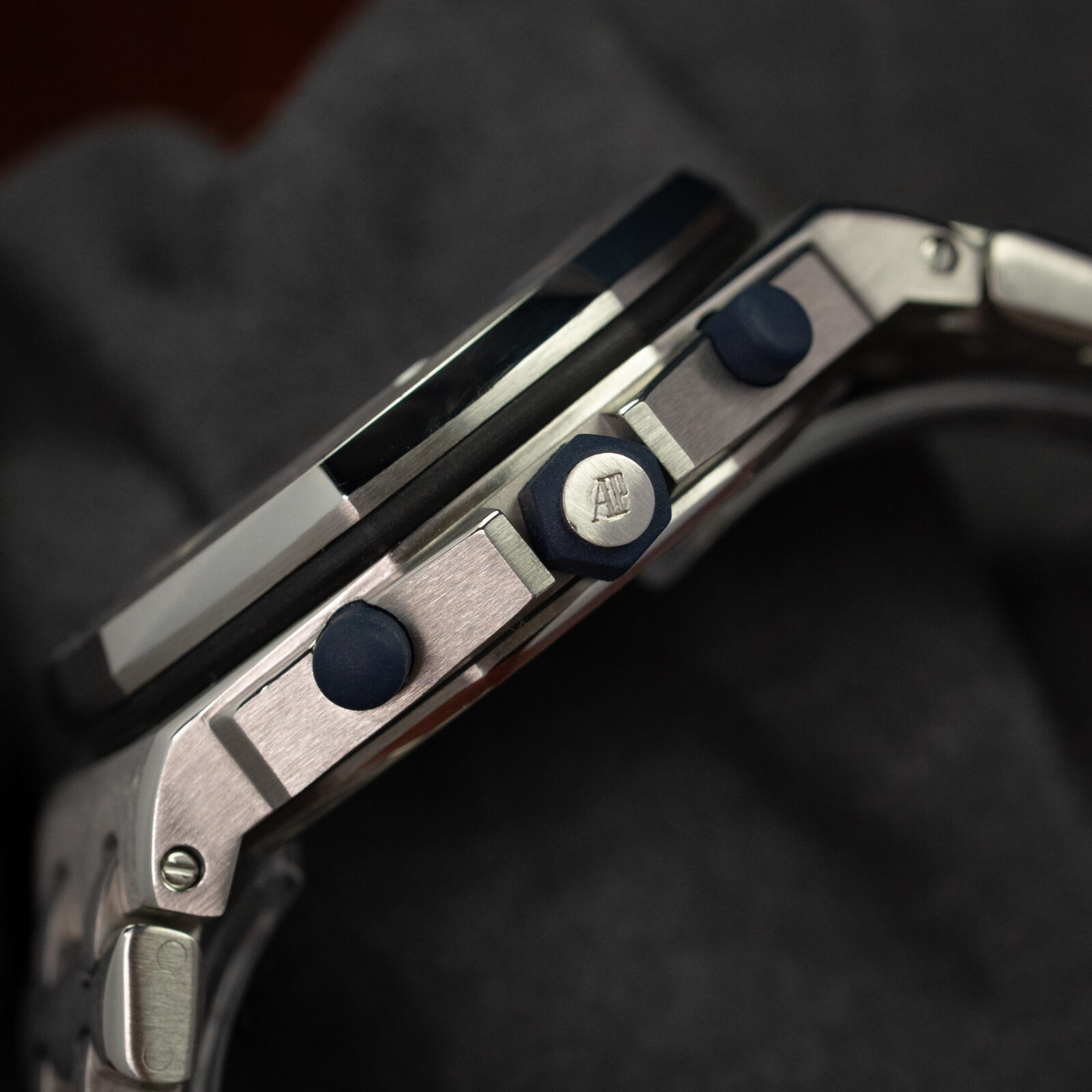
The white hands and applied hour markers remain highly luminous, creating excellent legibility and a sharp contrast against the textured dial. This combination gives the watch both functionality and visual drama. Another defining feature of the early Offshore models is the use of blue therban (a rubber-like elastomer material) on the crown and chronograph pushers. Matching the dial perfectly, these accents add both comfort and sportiness while reinforcing the watch’s distinctive character.
The first Royal Oak Offshore represents a pivotal moment in watchmaking history. It challenged convention, divided opinion, and ultimately redefined what a luxury sports watch could be. Once controversial, now iconic! The Beast has earned its place as one of the most important modern classics in horology.
Introduction
Audemars Piguet Royal OakIn 1970, Audemars Piguet instructed Genta to come up with an unprecedented steel watch. As the story goes, he found inspiration whilst seeing a diver at work with an old-fashioned diver’s helmet near Lake Geneva. Staying up all night, Genta drew the design for a circular case with an angular, octagonal bezel, eight visible screws, and an integrated bracelet. The Royal Oak was presented in 1972 as the most expensive steel watch available and it caused an uproar: why was a distinguished maison d’horlogerie putting out a sports watch, let alone in such a pedestrian material? Some experts even predicted that the Royal Oak would put Audemars Piguet out of business. Though it took a while to catch on, the Royal Oak is now one of the most iconic and long-lasting watch designs, and has spawned an entire product line. It wouldn’t be the first time that Genta would prove a brand’s owners, customers, and industry experts wrong.
Specifications
- SKU 8272
- Bezel material
- Boxed
-
Bracelet
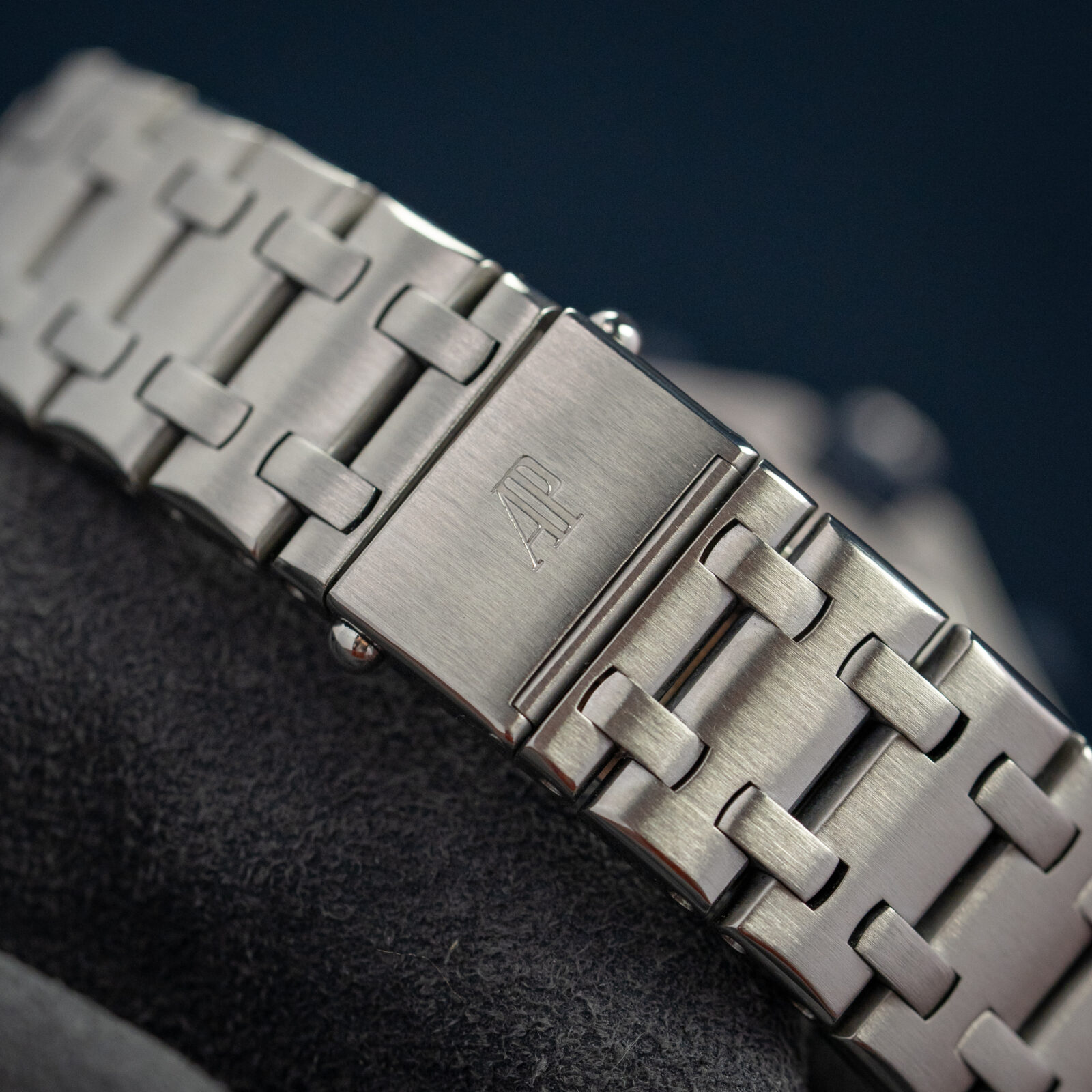
Stainless steel integrated bracelet, original Audemars Piguet
- Caliber
- Case Dimensions
- Case Material
- Clasp
- Dial
- Documents
- Glass
-
Index
18k white-gold applied hour markers with luminescent coating
- Model
- Movement
-
Reference
25721ST
- Year