Patek Philippe 3971EJ '2nd Series'
€ 300.000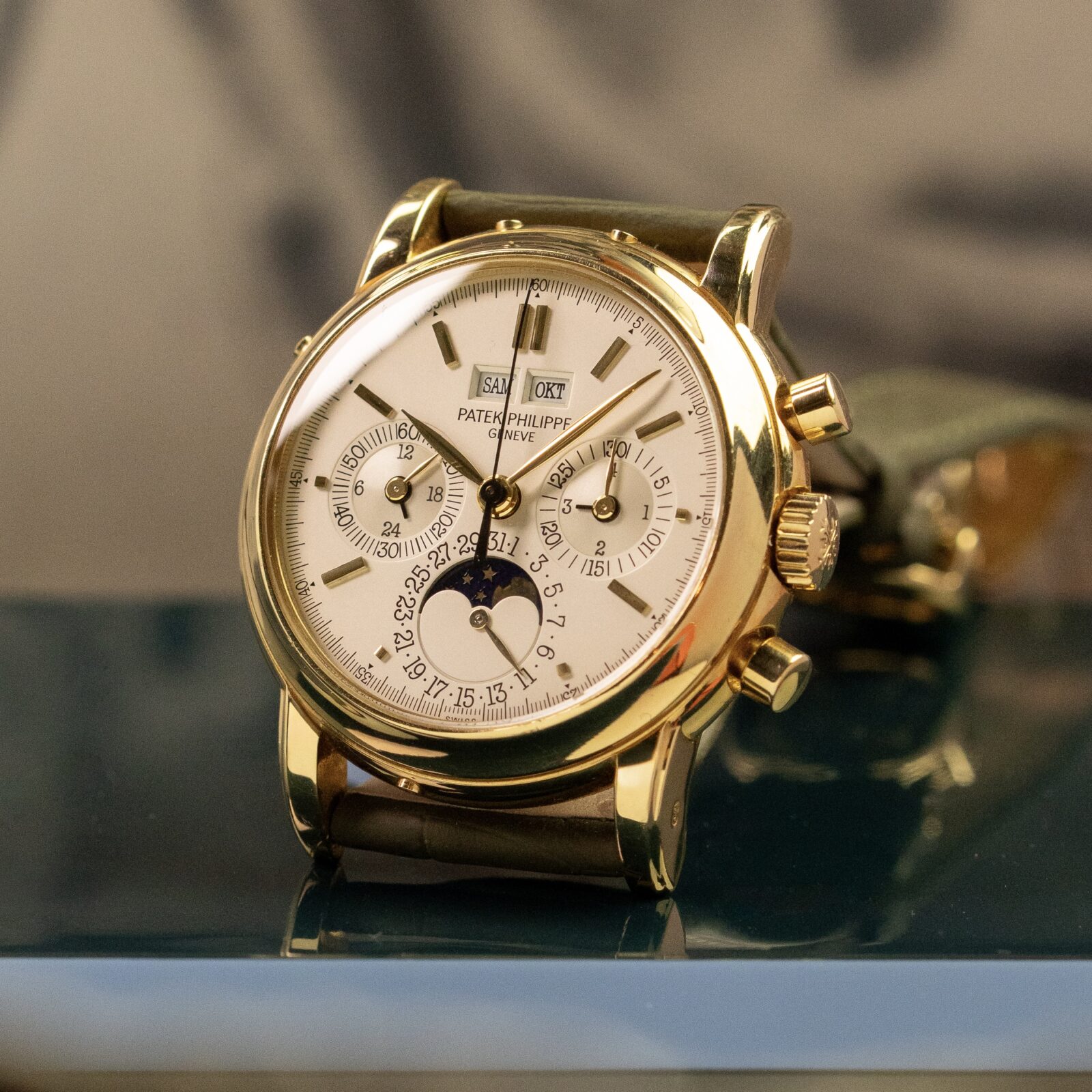
Patek Philippe 3971EJ '2nd Series'
€ 300.000- Free worldwide delivery
A second-series Patek Philippe 3971E: originally owned by Arman Fernandez, later passing through the hands of another internationally renowned artist before eventually being acquired by Kölsch. From artist to artist to Amsterdam.
Starting with the case, because this is ultimately what separates the 3971E from the far better-known 3970E. The “E” stands for étanche, French for waterproof. Interestingly, the earliest examples of the 3970 were not actually waterproof at all. The first approximately 100 pieces were delivered with snap-on casebacks and are therefore simply designated reference 3970. With the second series, Patek Philippe introduced a screw-down caseback, finally giving its flagship perpetual calendar chronograph a water-resistant case.
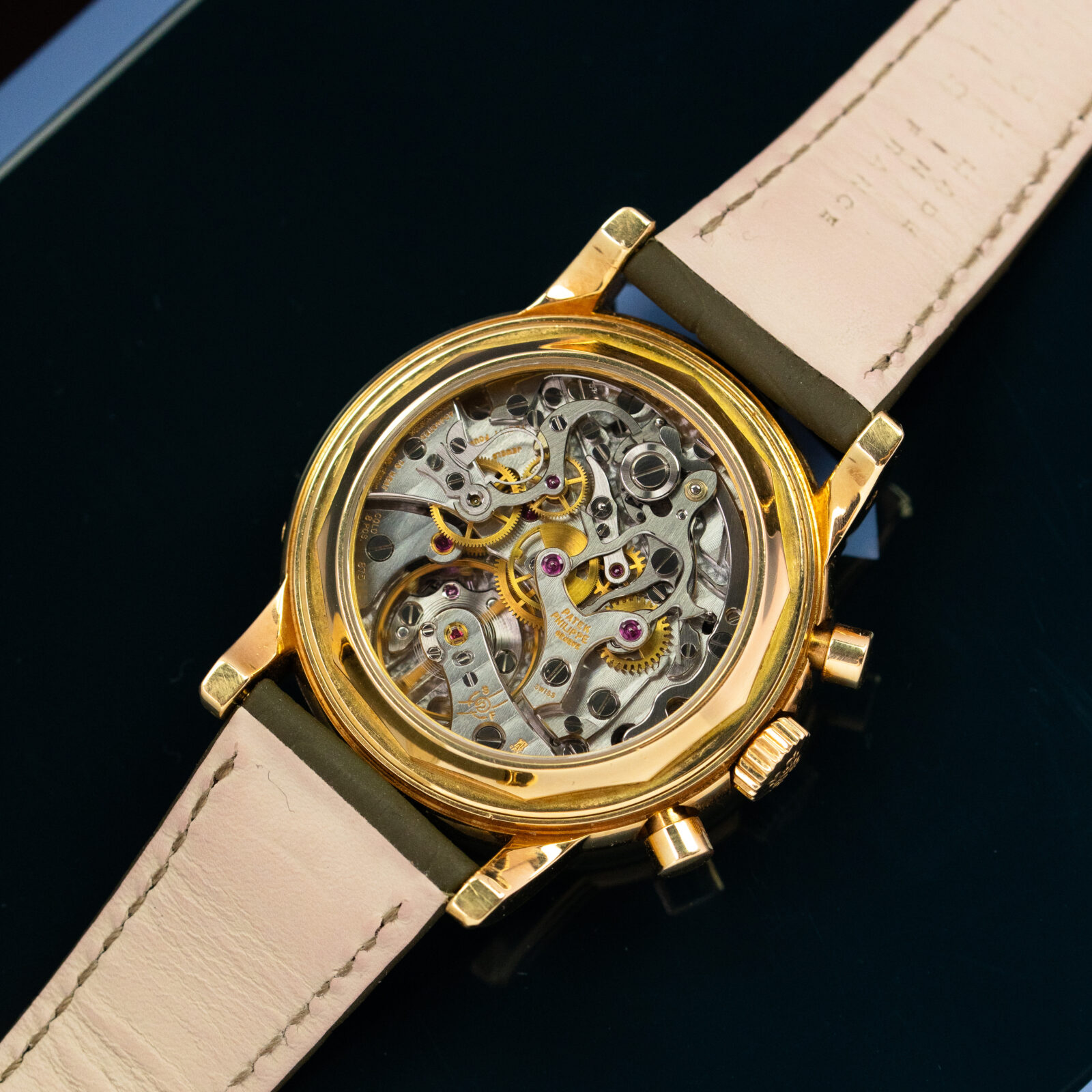
Second-series examples were normally delivered with a solid caseback. This watch, however, was fitted with a sapphire exhibition back. While an open caseback became perfectly normal on later examples, at this early stage it was sufficiently unusual for Patek Philippe to assign it a separate reference altogether: 3971E. It is a wonderfully niche distinction and one that makes the watch considerably more interesting to us.
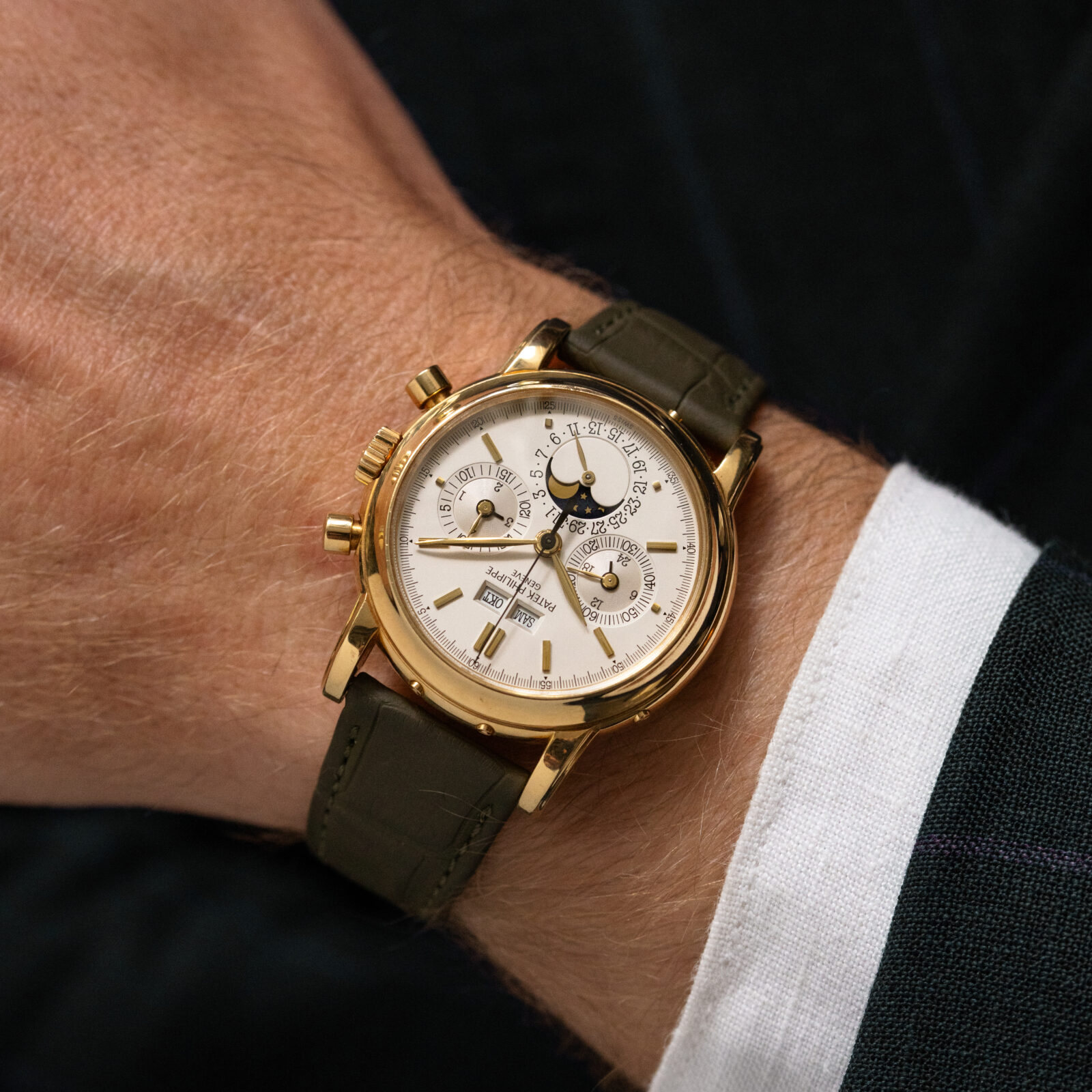
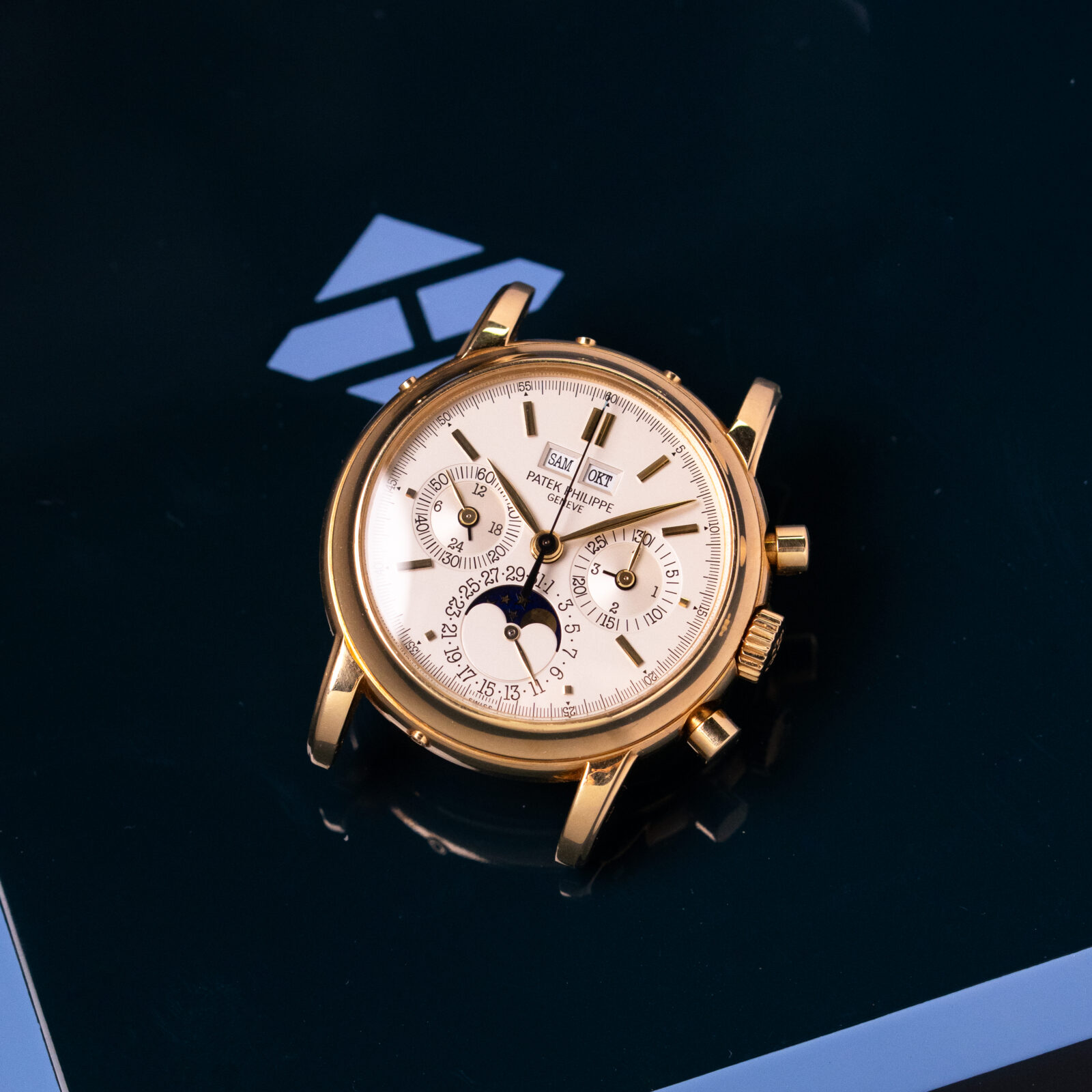
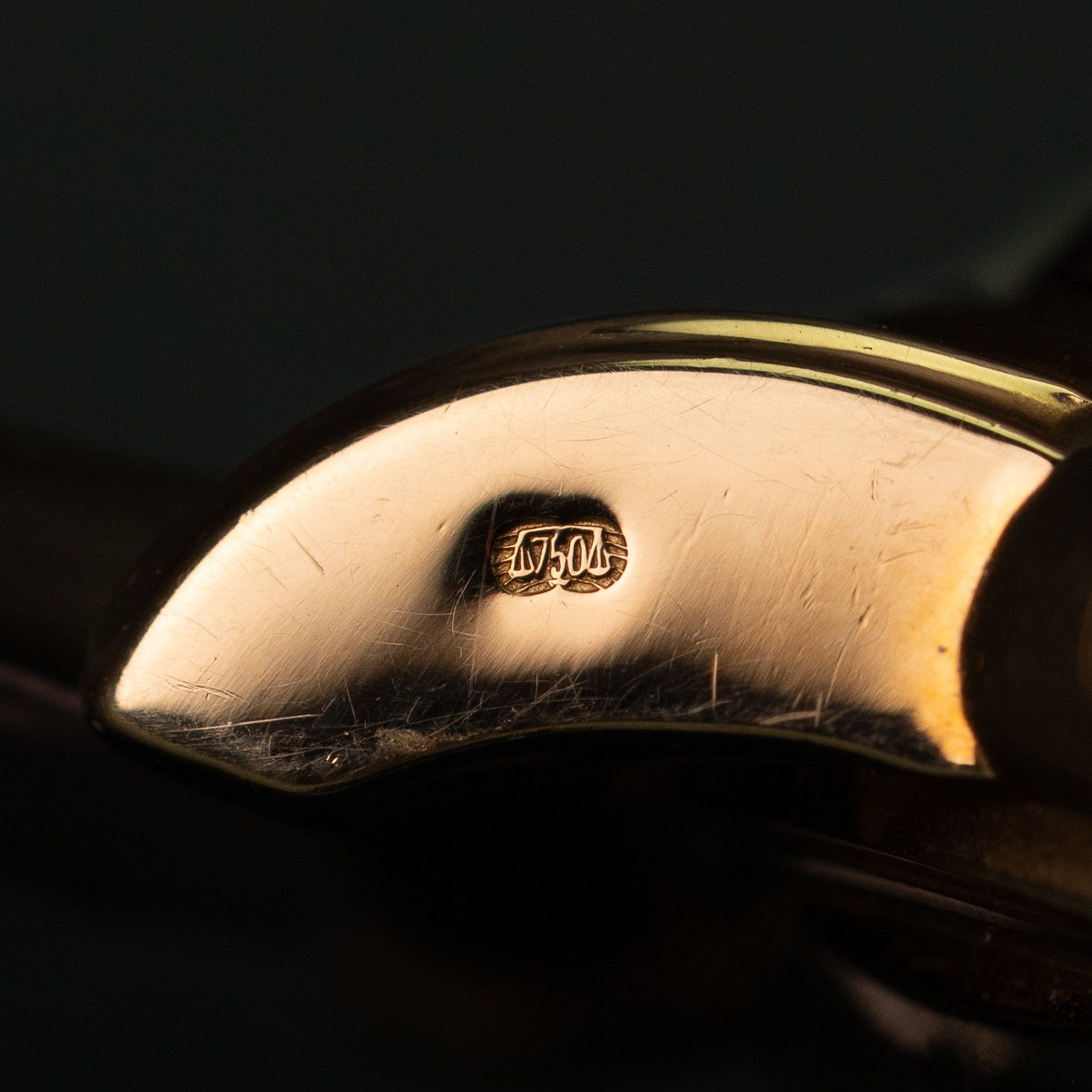
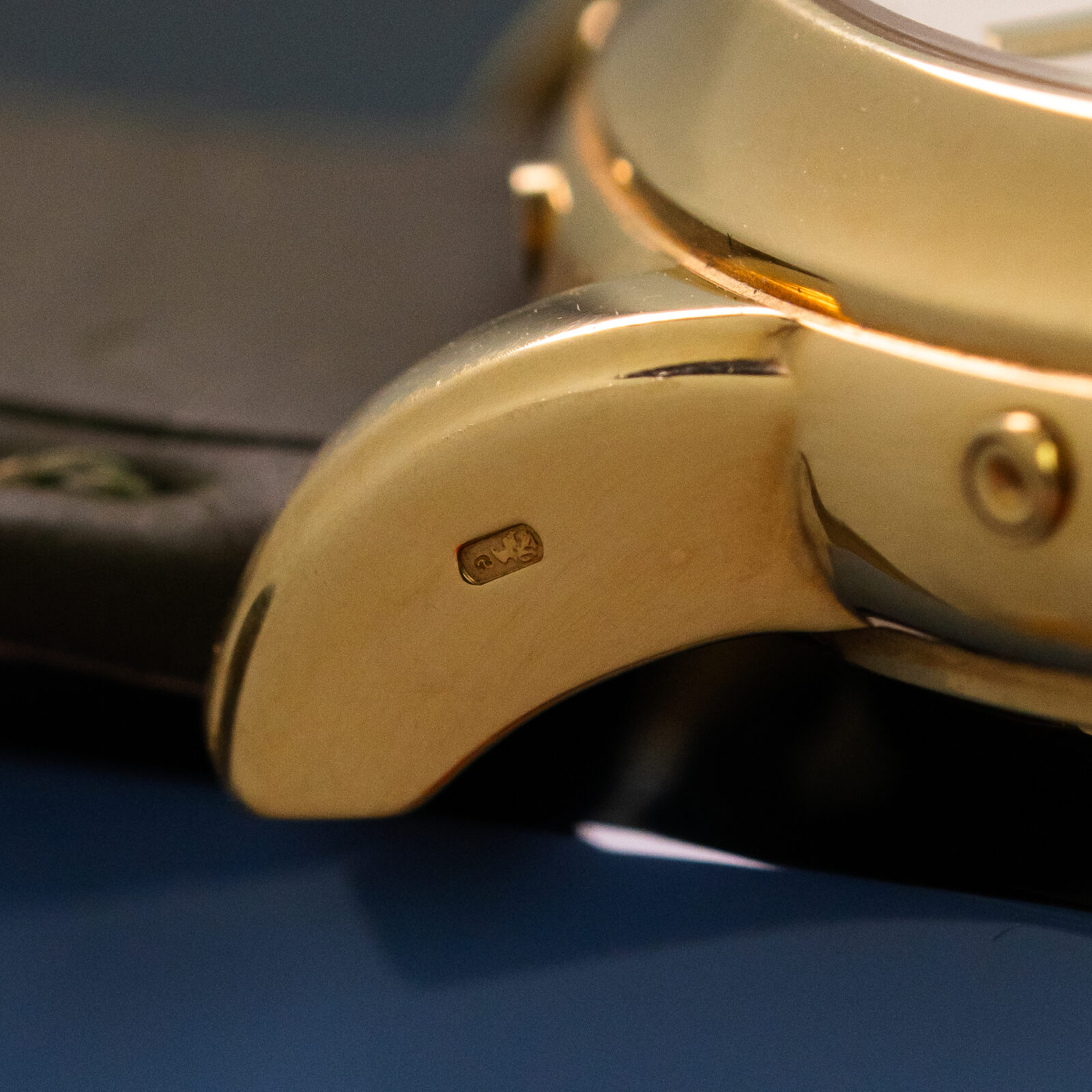
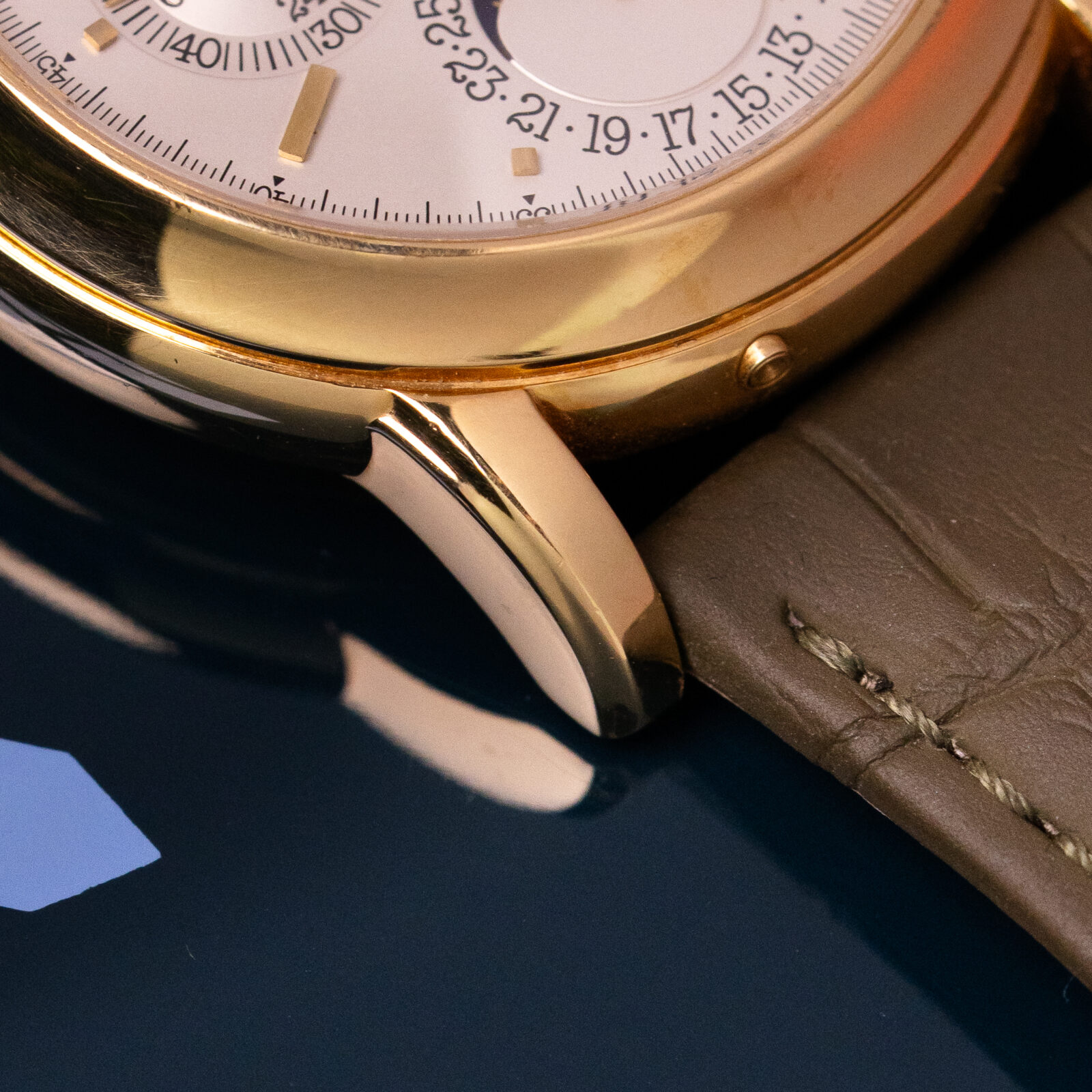
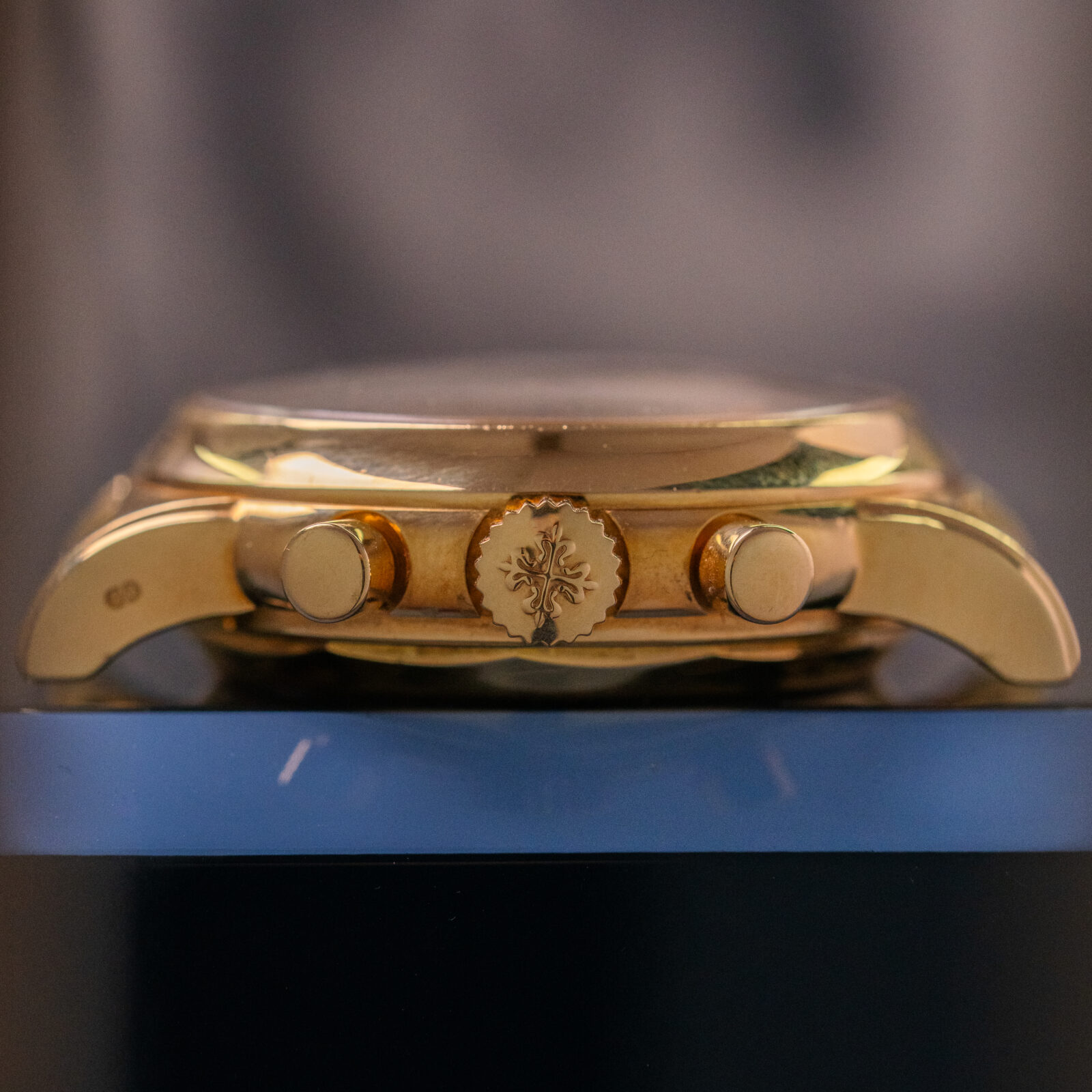
The three-piece case has the substantial profile associated with these early examples, balanced by the elegant concave bezel. Four recessed correctors along the caseband operate the various calendar functions, while the traditional round chronograph pushers sit at two and four o’clock. The ribbed crown, designed for better grip, is finished with the Calatrava cross. Condition is exceptional throughout, with crisp hallmarks and strong facets preserving the original definition of the case.
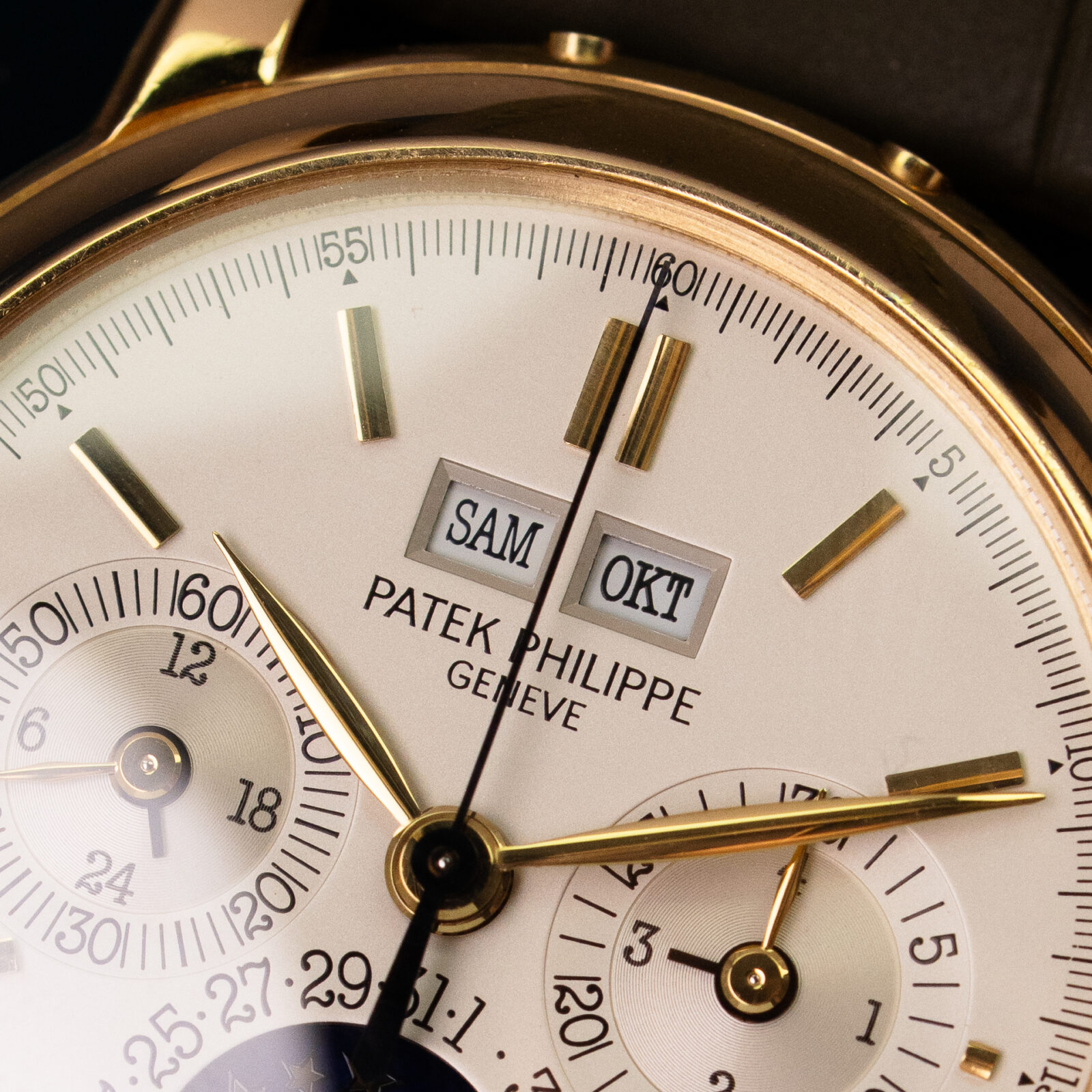
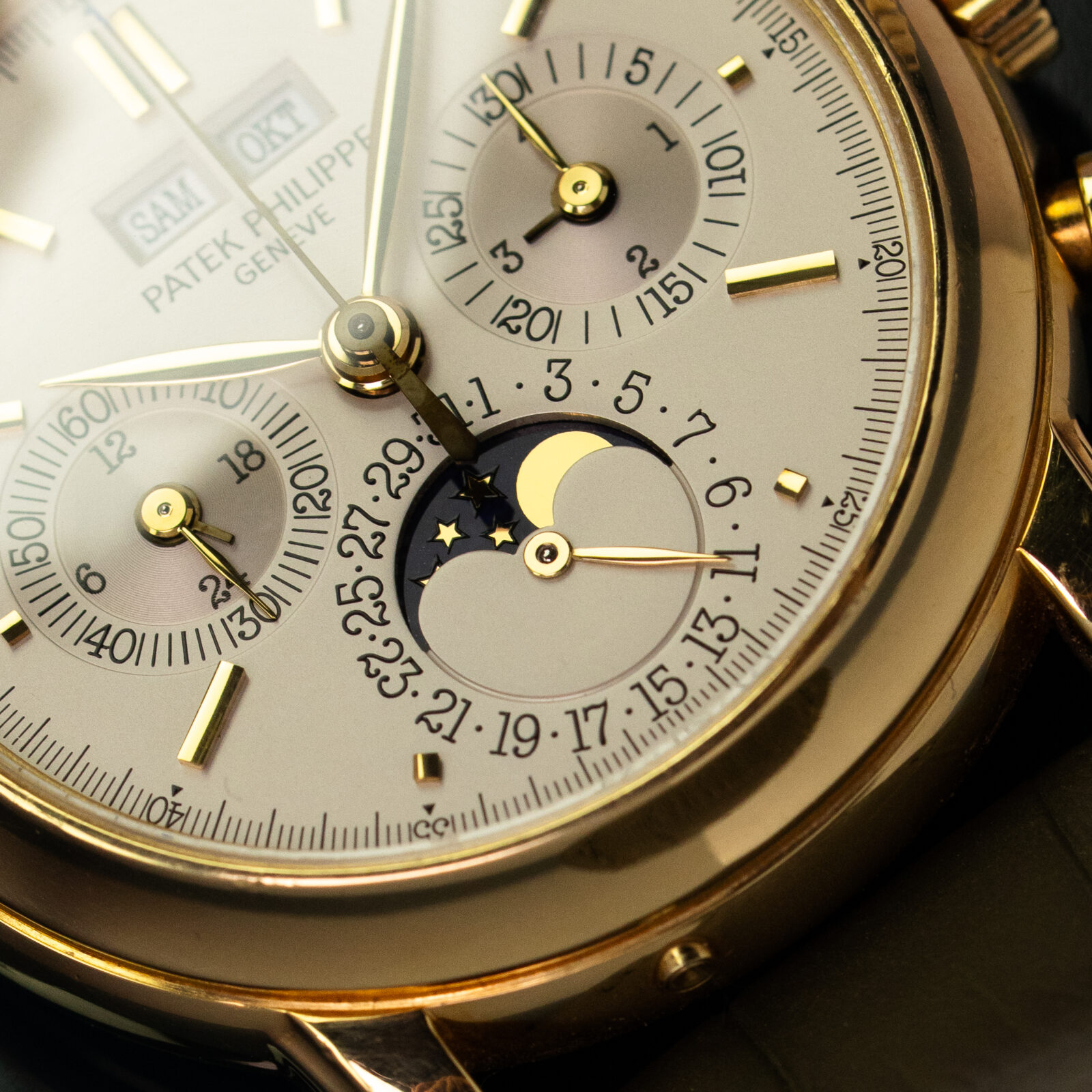
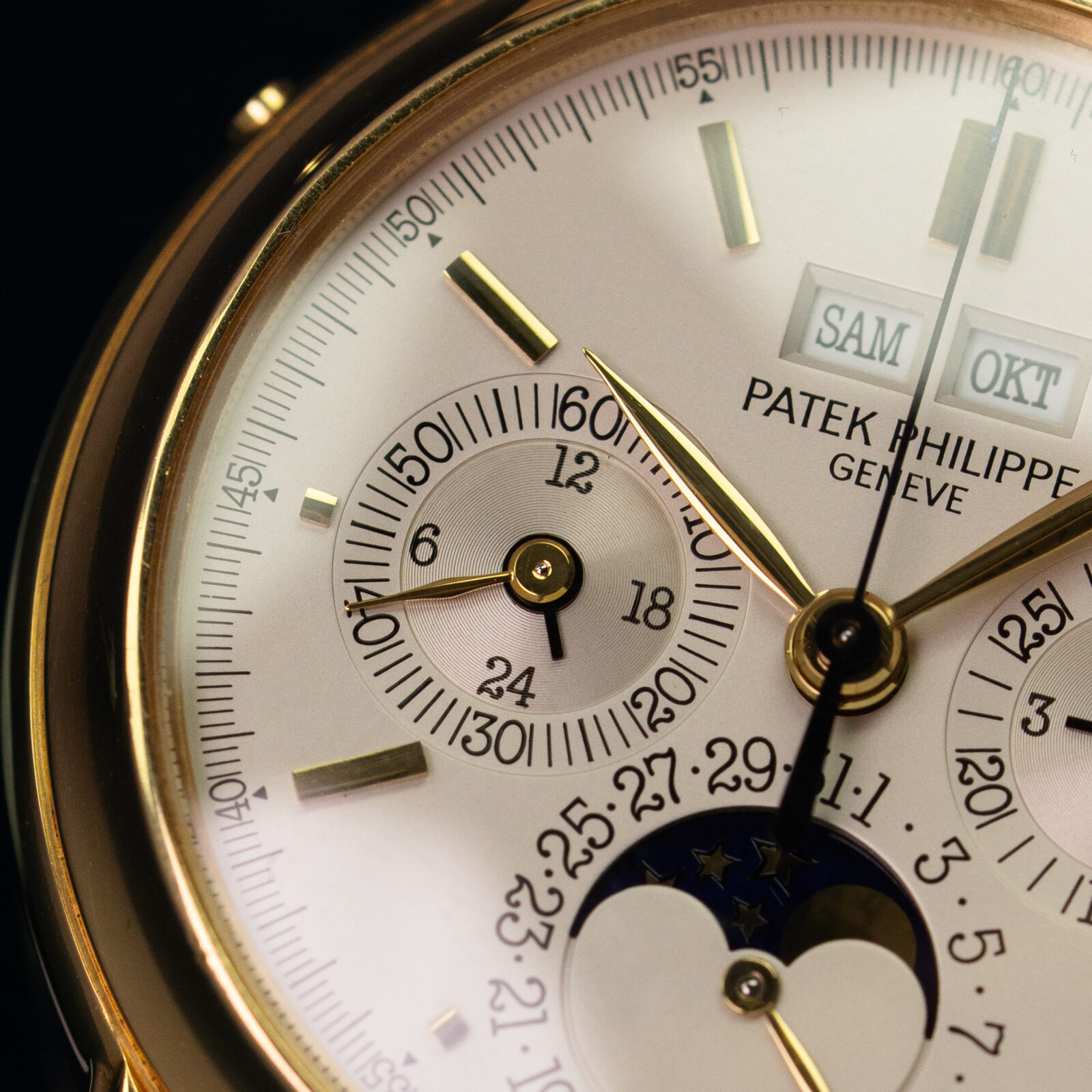
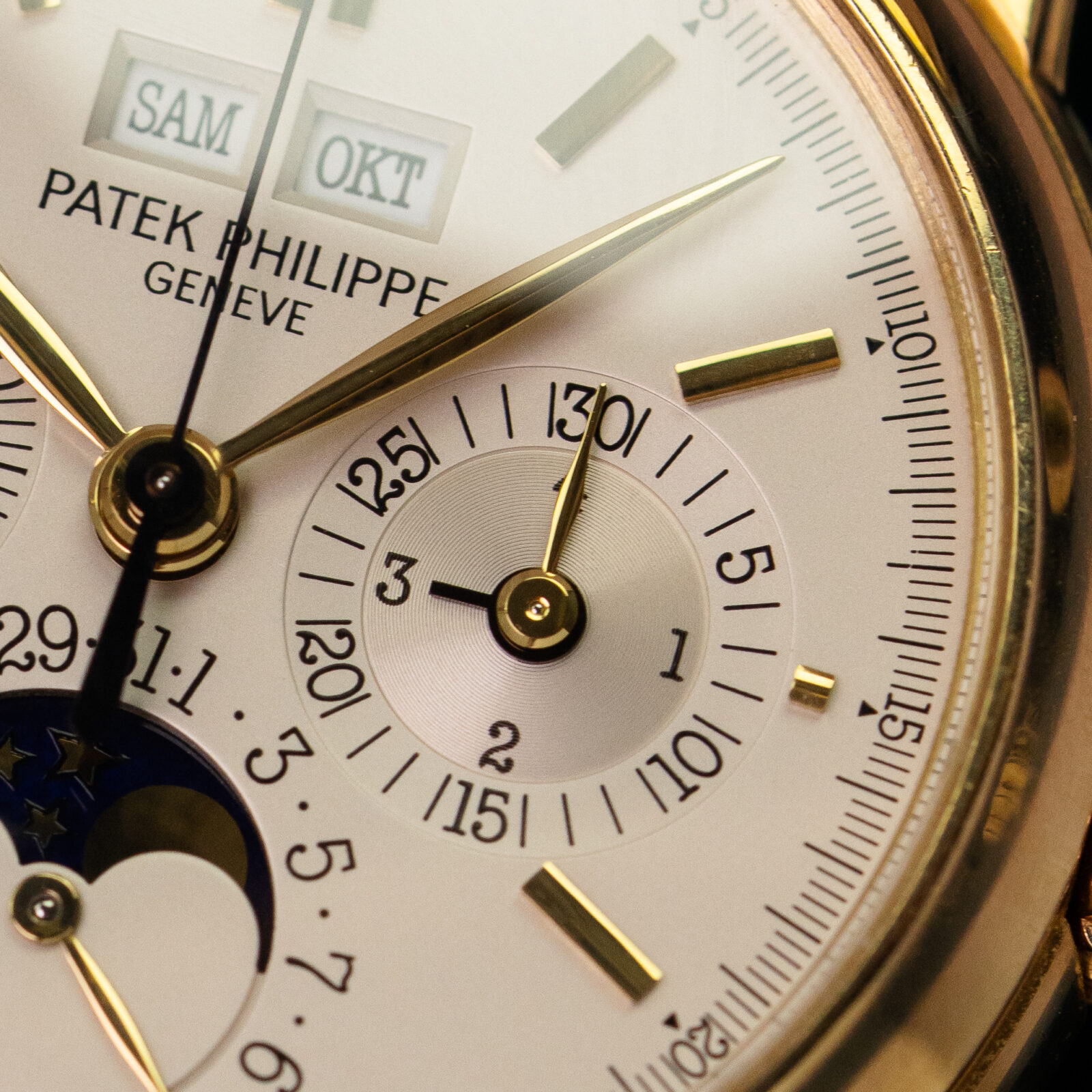
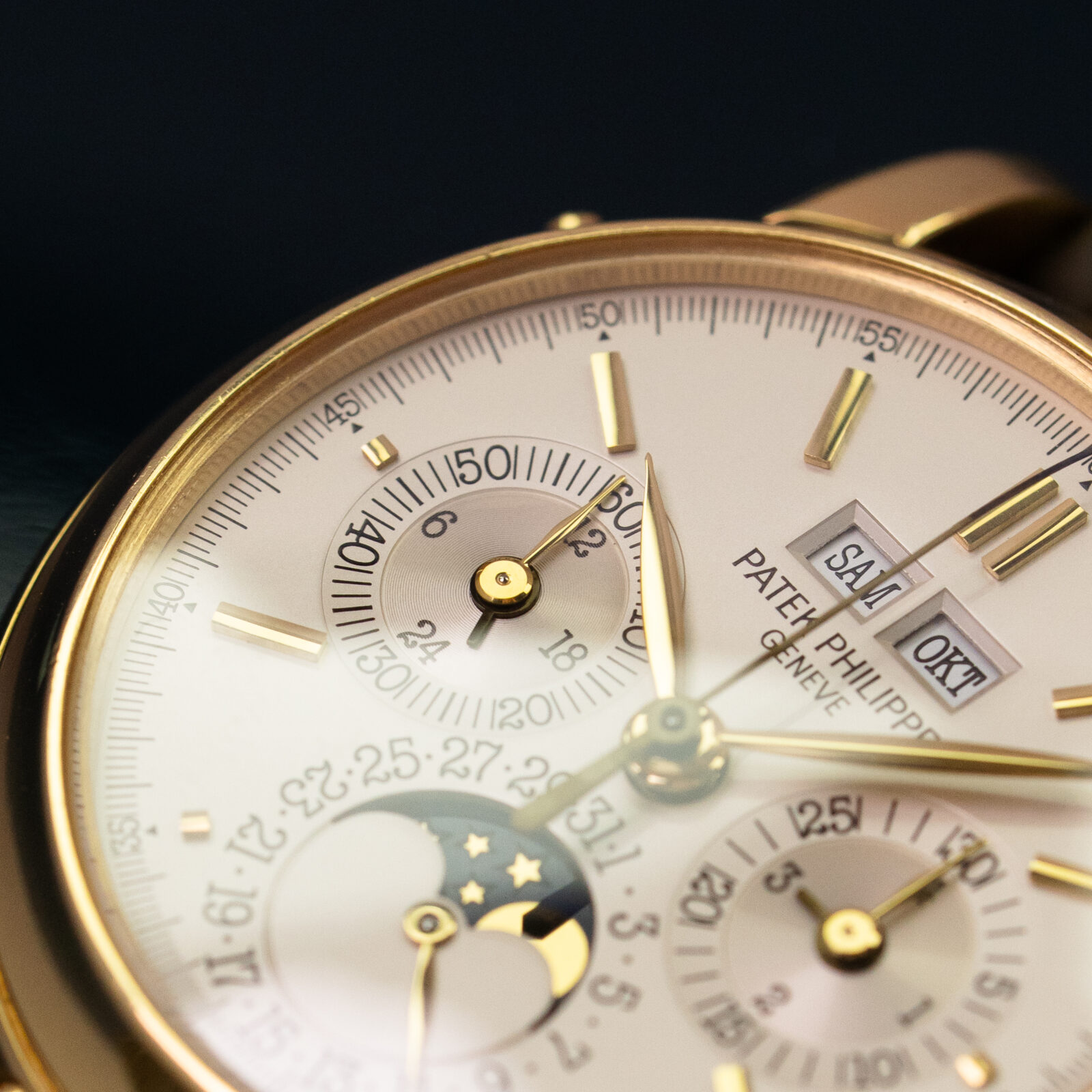
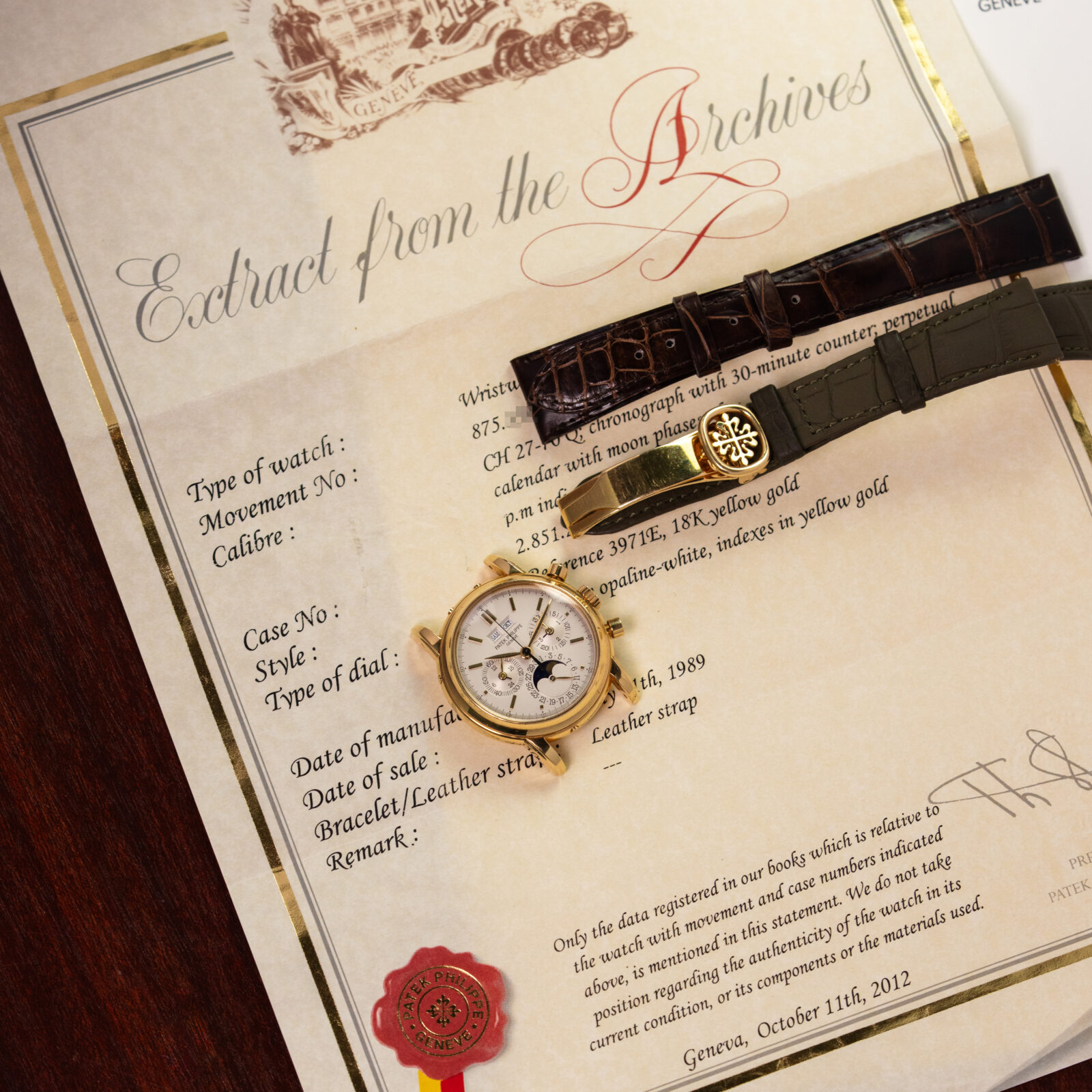
Few dial layouts manage to display this much information as successfully as the 3970 family. There is a perpetual calendar, chronograph, moon phase, leap-year indication and 24-hour display, all in great harmony. An open minute track frames the opaline dial, with the day and month displayed through two faceted apertures beneath twelve o’clock. At three o’clock sits the chronograph minute counter together with the leap-year indication, while the opposing register combines running seconds with the 24-hour display. At six, the moon phase shares its register with the pointer date.
Being a second-series watch, it retains the beautiful combination of applied baton indexes and leaf hands. These would disappear on the subsequent series, replaced by pointed indexes and baton hands, making the second-series aesthetic immediately recognizable. The dark printing contrasts beautifully against the opaline surface, while the typography has exactly the classical character one wants from a late-1980s Patek Philippe Grand Complication.
And then there is the reason that sapphire caseback matters so much. Inside is the calibre CH 27-70 Q, based on the Lemania 2310 ébauche but extensively reworked by Patek Philippe and fitted with its perpetual-calendar mechanism. Calling it merely “Lemania-based” hardly does the finished movement justice. The bridges, levers and chronograph components received the level of hand-finishing expected from Patek Philippe at the time, with beautiful anglage, polished details and Geneva striping across the bridges. The result is not only one of the most important manually wound perpetual-calendar chronograph movements of its generation, but also one of the most beautiful. On a normal second-series 3970E, all of this remains hidden; on the 3971E, it becomes part of the experience.
A watch this special deserves a good story, and fortunately this one has considerably more provenance than the usual Extract from the Archives. The Extract dates the watch to 1989, but its known history becomes particularly interesting through its first owner: Arman Fernandez, better known simply as Arman.
Arman was one of the major figures of the Nouveau Réalisme movement and, as it turns out, also a serious watch collector. Following his death in 2005, Antiquorum presented The Arman Collection in 2010, an extensive selection of watches he had assembled throughout his life. This 3971E formed part of that collection. His relationship with watches went beyond collecting. In 1990, Movado commissioned Arman to create The Color of Time, a limited-edition artist’s watch based around one of his recurring themes: time as an adversary to man. Each hour was represented by a different colored brushstroke, while the hands themselves took the form of paintbrushes mounted on rotating transparent discs. Knowing that connection makes his ownership of a complicated Patek Philippe all the more fitting.
From one artist, the watch eventually passed to another, albeit one working in a very different medium: music. It was subsequently owned by a world-famous DJ before finding its way to another immensely respected name in electronic music: Kölsch.
That is where our part of the story begins. We acquired the watch directly from Kölsch after he invited us to Loveland. Considering the lifestyles of some of its previous custodians, it is almost remarkable how carefully the watch has been preserved. The case remains strong, the dial beautiful and the movement visible through the very feature that makes the 3971E such an unusual reference in the first place. From Arman’s collection, through the world of electronic music, and now to Amsterdam. After more than three decades and a rather colorful succession of owners, this second-series 3971E is ready for its next caretaker.
Specifications
- SKU 8401
- Bezel material
- Bracelet
- Caliber
- Case Dimensions
- Case Material
- Clasp
- Dial
- Extracts from the Archive
- Glass
- Index
-
Reference
3971E
- Movement
- Year