Rolex Day-Date Oysterquartz Perpetual Calendar Prototype
€ 250.000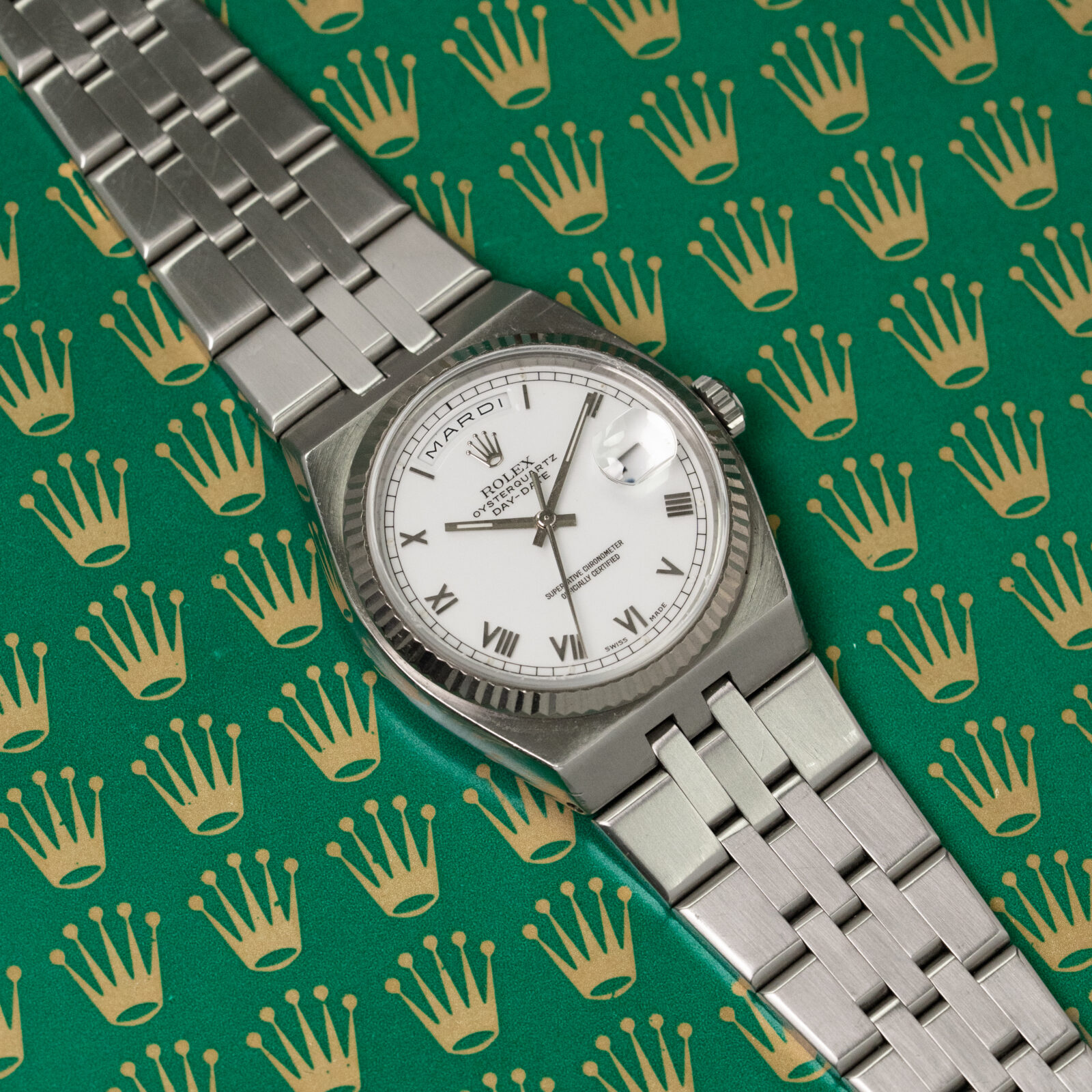
Rolex Day-Date Oysterquartz Perpetual Calendar Prototype
€ 250.000- Free worldwide delivery
You really thought the recently released Padellone was Rolex' first perpetual calendar? This prototype Day-Date in steel was produced some decades earlier.
Rolex has produced some of the most recognizable watches in history, yet some of its most fascinating creations were never intended for the public. Behind the manufacturer's reputation for gradual evolution lies a history of experimentation, technical innovation and ambitious projects that never made it beyond the prototype stage. The present Oysterquartz Perpetual Calendar is arguably one of the most extraordinary examples.
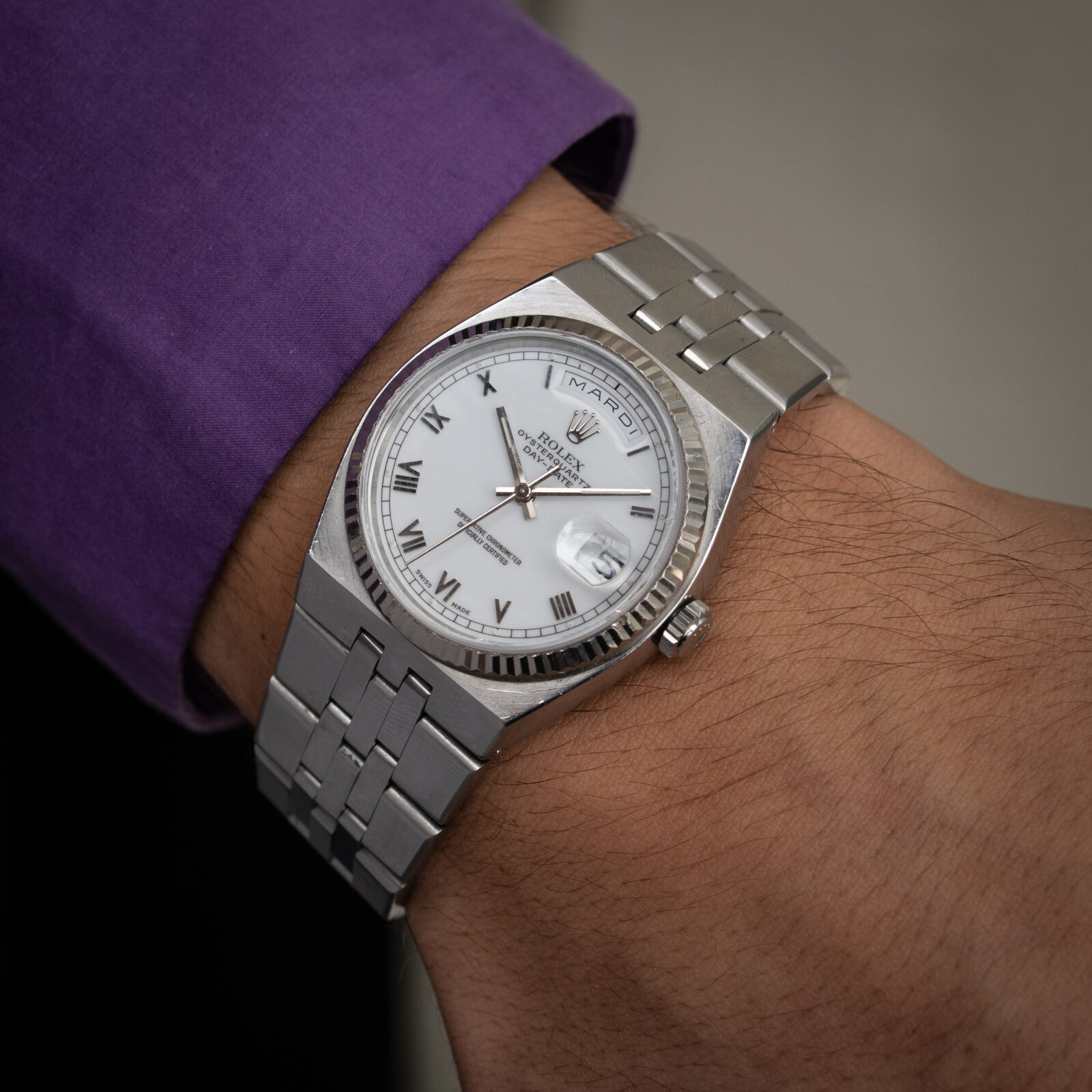
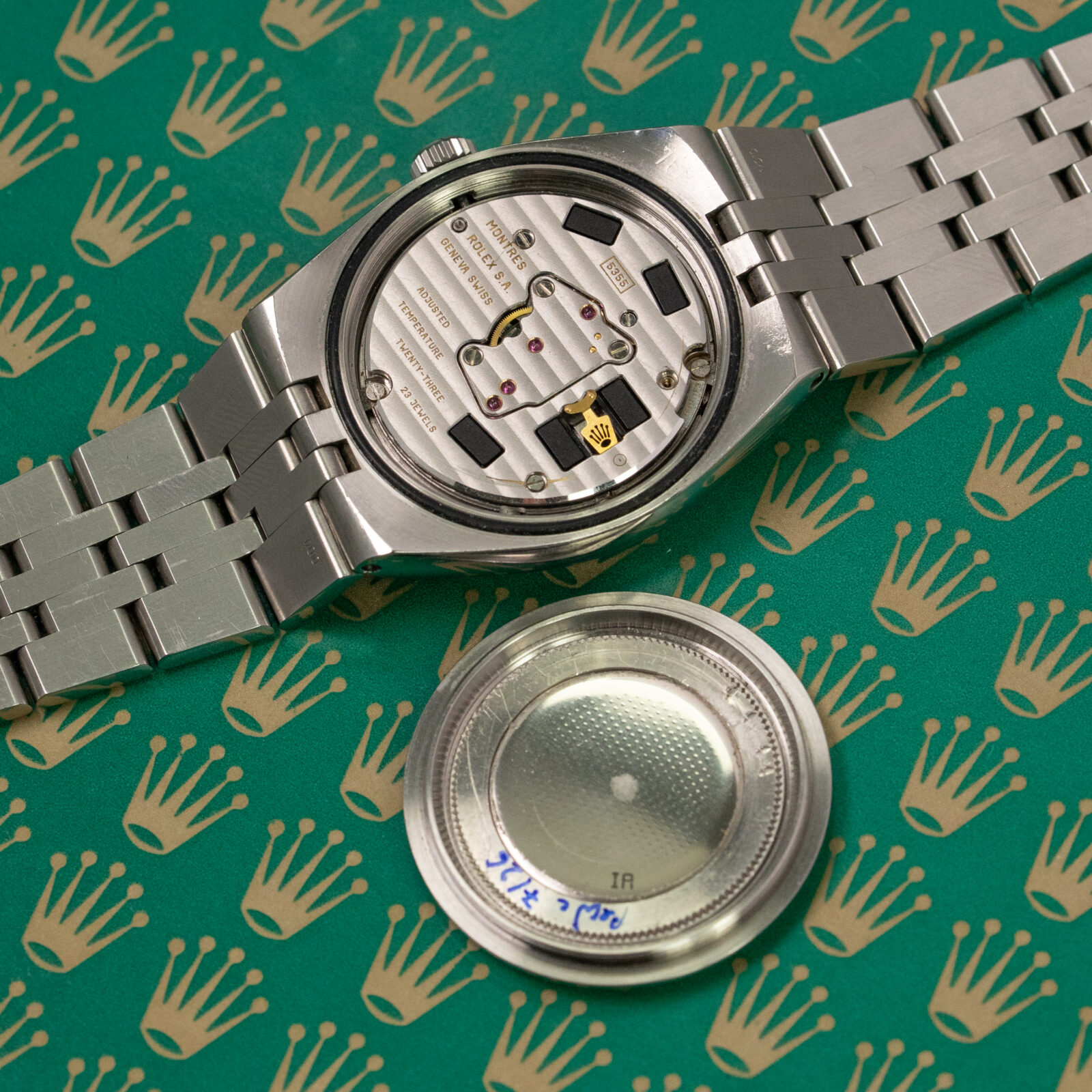
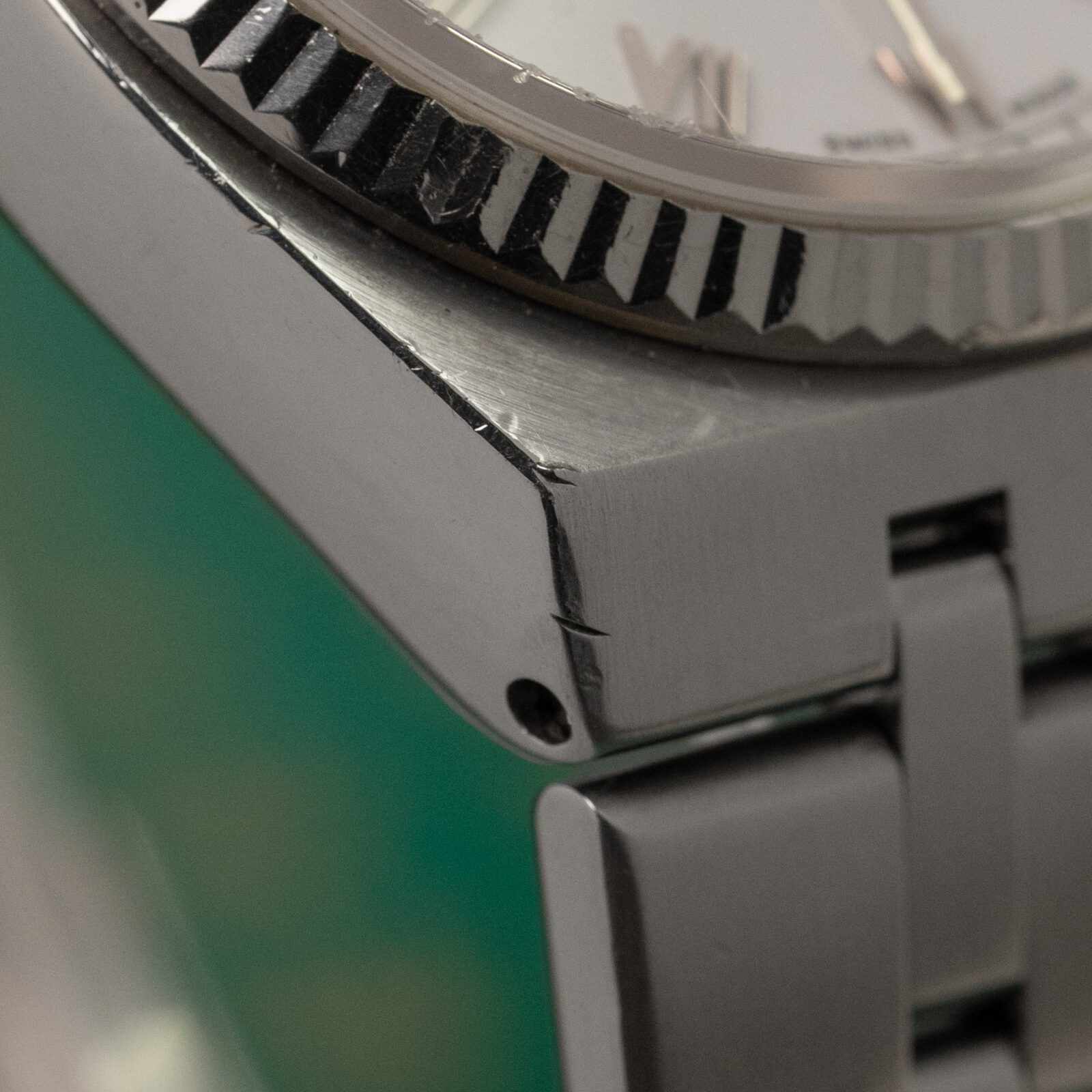
At first glance, there is little to distinguish this watch from a conventional Oysterquartz Datejust reference 17014. It features the familiar angular stainless steel case, integrated bracelet and fluted white gold bezel. However, a closer look reveals something rather unusual: a Day-Date dial, a configuration never commercially offered in a steel Oysterquartz. More importantly, beneath its seemingly familiar exterior lies one of the most sophisticated quartz movements ever developed, the experimental calibre 5355, incorporating a fully functional perpetual calendar.
The origins of this remarkable watch can be traced to November 11, 1987, when Rolex filed Swiss patent CH672222 (together with 673555 the following year). The man behind this invention? René Besson, Rolex's technical director from 1985 to 1998. His contributions to the manufacture extend far beyond this remarkable perpetual calendar. With patents to his name dating back to 1964, Besson played an instrumental role in some of Rolex's most ambitious technical developments. His greatest achievement was his involvement in the creation of the calibre 4130, Rolex's first fully in-house chronograph movement, which would go on to power the legendary Daytona.
With this ambitious project he accomplished the programming of a perpetual calendar wristwatch entirely through the winding crown, eliminating the need for additional pushers or correctors. By using the seconds hand as an indicator during the setting process, the wearer could programme the date, month and position within the four-year leap-year cycle. An elegant technical solution that was particularly ambitious for its time. This was accomplished by developing an altogether more advanced movement. Rather than simply modifying the existing Oysterquartz calibres. Unlike the production calibre 5055, with its characteristic audible ticking, the 5355 operates virtually silently. The minute hand advances in half-minute increments, while the independently adjustable jumping hour hand allows for convenient changes between time zones without interrupting the watch's accuracy. The date can be adjusted both forwards and backwards, and the movement was designed to achieve an impressive battery life of approximately ten years. (in practice probably most likely around 7 years). Even its decorative movement finishing was an unusual departure from Rolex's conventional approach to quartz watchmaking.
For all its technical accomplishments, the Oysterquartz Perpetual Calendar never entered commercial production and Rolex stopped paying for the patent renewal in 2001. The precise number of prototypes remains uncertain, with historical accounts suggesting somewhere around a dozen examples. These figures illustrate just how seldom such watches have surfaced, even within the most knowledgeable collecting circles.
The story took an intriguing turn in November 2004, when an Oysterquartz Perpetual Calendar appeared as lot 121 at an Antiquorum auction in Geneva. Shortly before the sale the watch was abruptly withdrawn after Rolex claimed that the prototype had been ill-gotten. What followed was a legal battle, pitting the might of Rolex against a single individual: Jeff Harris, one of the pioneers of the vintage watch trade. Ultimately, Rolex's ownership claim was dismissed, clearing the way for the watch to be traded without the legal cloud that had surrounded it. Ironically, Rolex's attempt to reclaim this obscure prototype only served to confirming its historical significance and bringing greater attention to one of the manufacture's most fascinating and least-known technical achievements.
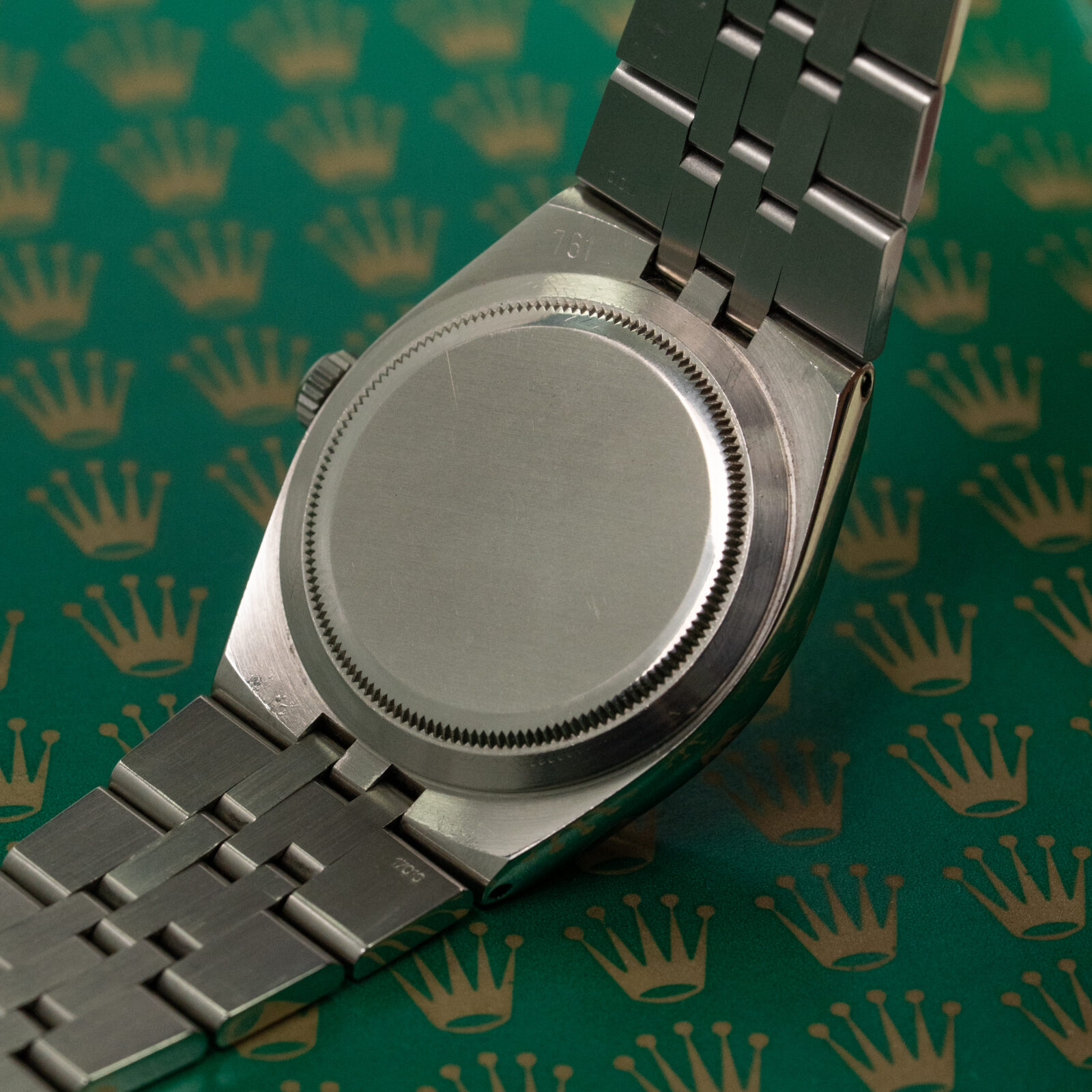
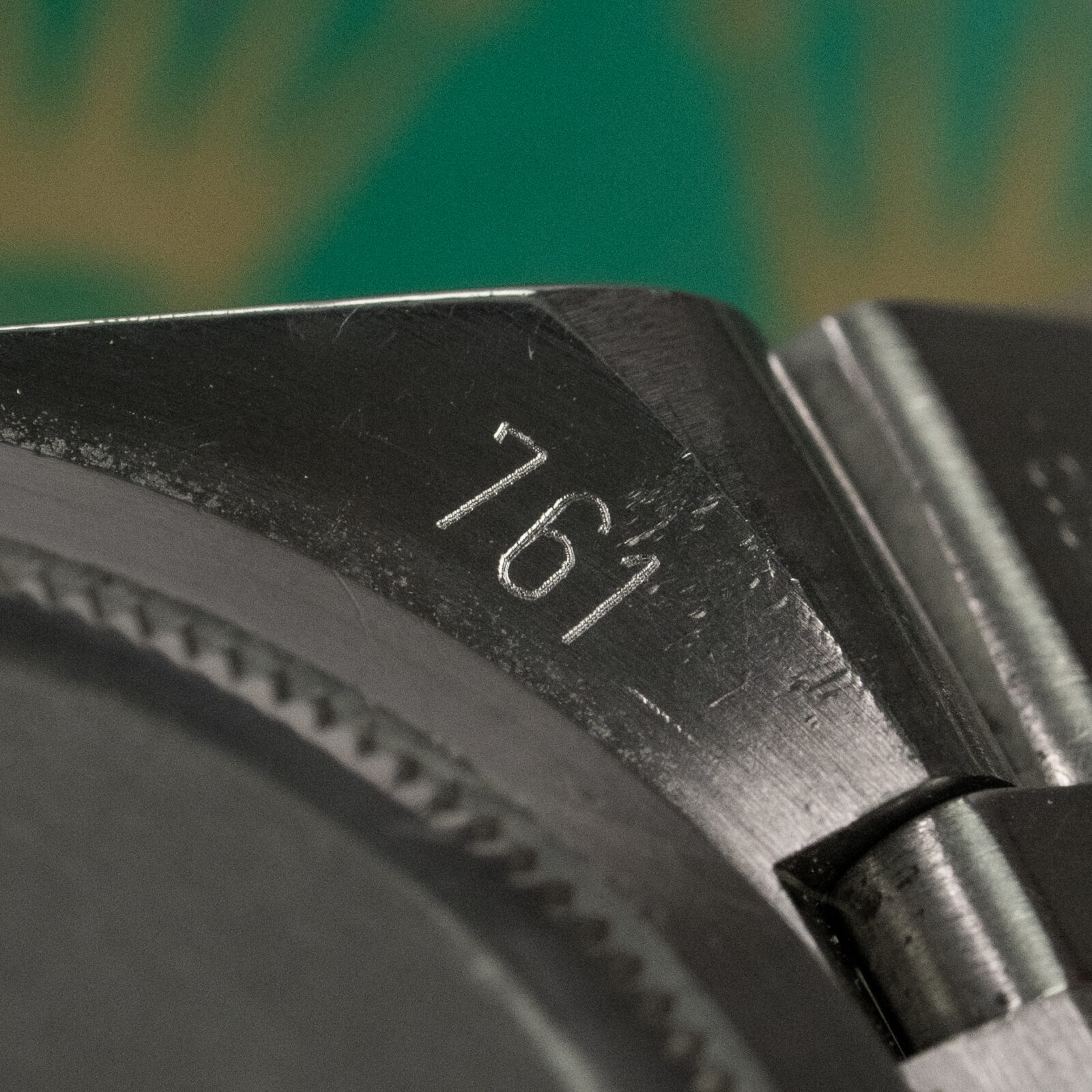
The initial excitement and controversy gradually faded, and it would take until 2020 before another example resurfaced publicly. Once again, it was Antiquorum that brought the watch to auction, although this time the sale proceeded without interruption, as the earlier allegations surrounding the provenance of these prototypes having remained unsubstantiated. The watch achieved an impressive CHF 243,750, establishing somewhat of a benchmark for a prototype that is notoriously difficult to value. Especially as the following year Christie's achieved a near-identical result of CHF 250,000 for another example. That watch was none other than the very piece presented here, bearing serial number 761.
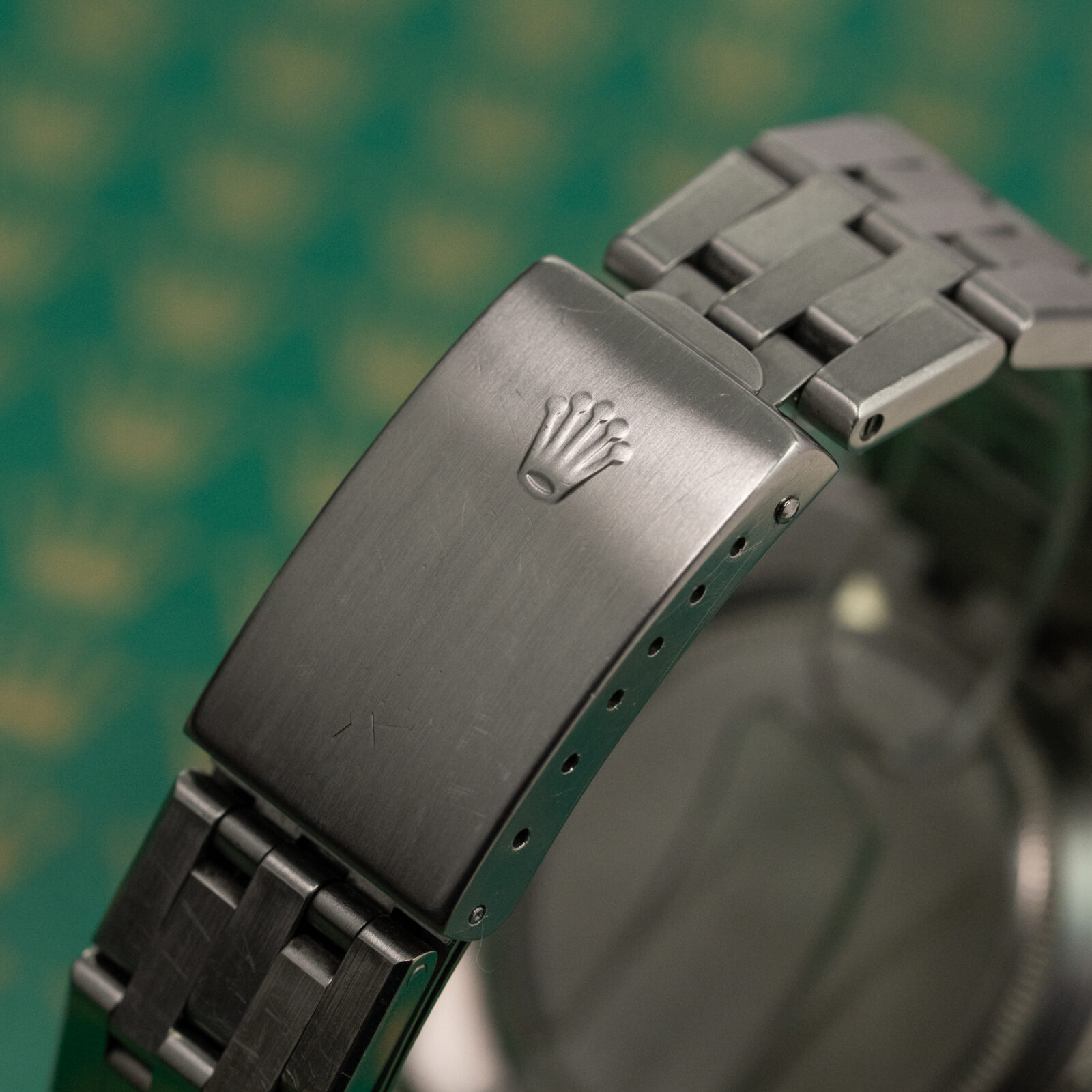
Aside from its individual serial number, the watch lacks the conventional external reference engraving, another reminder of its experimental origins. Curiously, the bracelet clasp bears an additional, rather unusual engraving: ‘1014’, alongside the customary date code indicating the year 2000. Although the original patent dates back to 1987, these details suggest that the watch may not have been cased until around the turn of the millennium. This would also explain the presence of Luminova on the dial. All known examples share the same white dial with applied Roman numerals, and is fitted with a French-language day disc.
It is tangible evidence of the manufacturer's willingness to challenge its own conventions, and a fascinating reminder that the history of watchmaking is shaped as much by the watches that never reached production as by those that did. This is one of the few mysterious specimens that offer a glimpse into a direction Rolex explored but ultimately chose not to pursue. Naturally we are excited to offer this extraordinary opportunity to acquire one of the most technically ambitious and historically intriguing Rolex wristwatches ever created. Fully functioning and recently serviced.
Specifications
- SKU 8155
- Bracelet
- Bezel material
- Caliber
- Case Material
- Dial
- Clasp
- Glass
- Index
- Model
- Movement
- Year