Rolex Daytona 6241 'Paul Newman'
Sold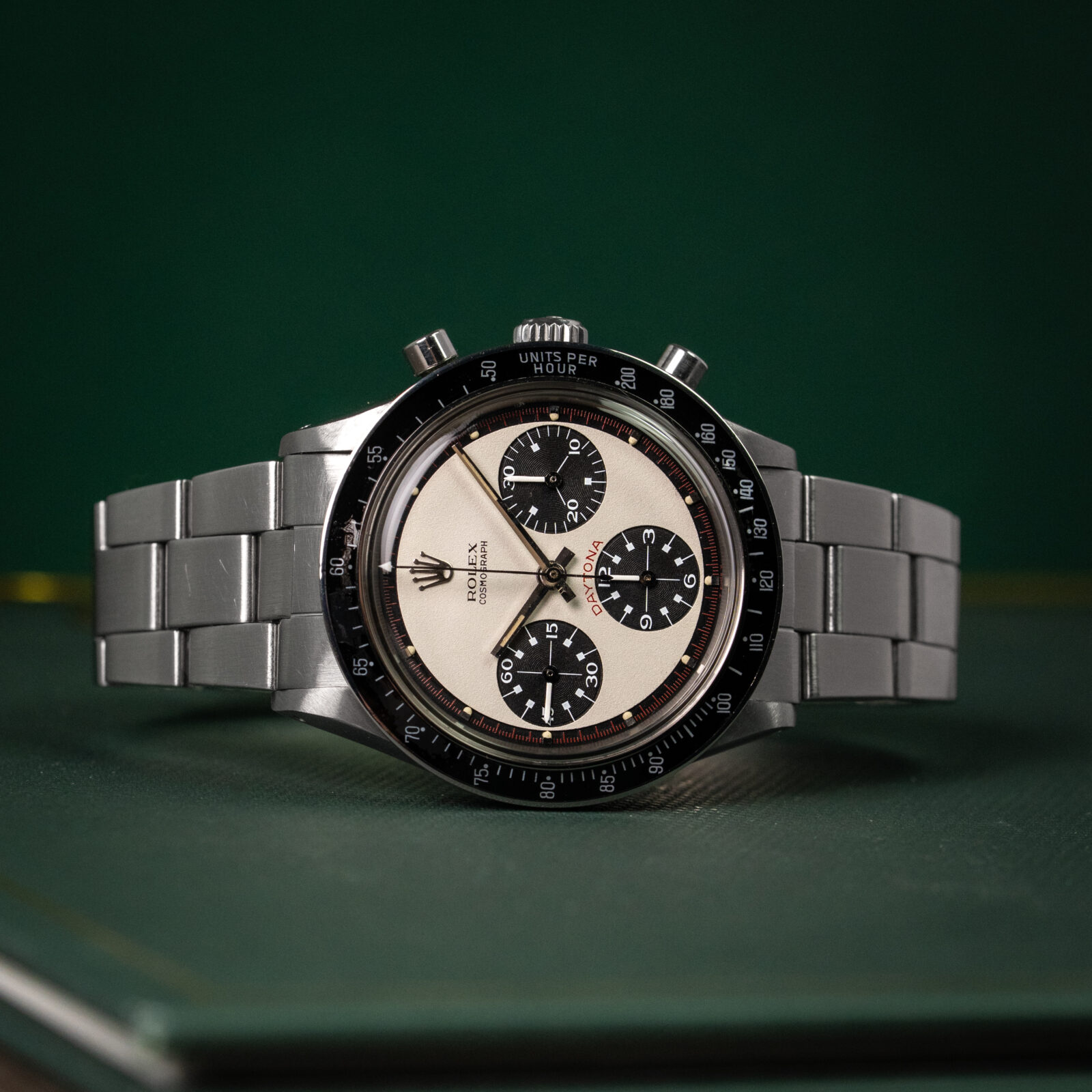
Rolex Daytona 6241 'Paul Newman'
Sold- Free worldwide delivery
Extraordinary 6241 with 2nd series 'Exotic' dial.
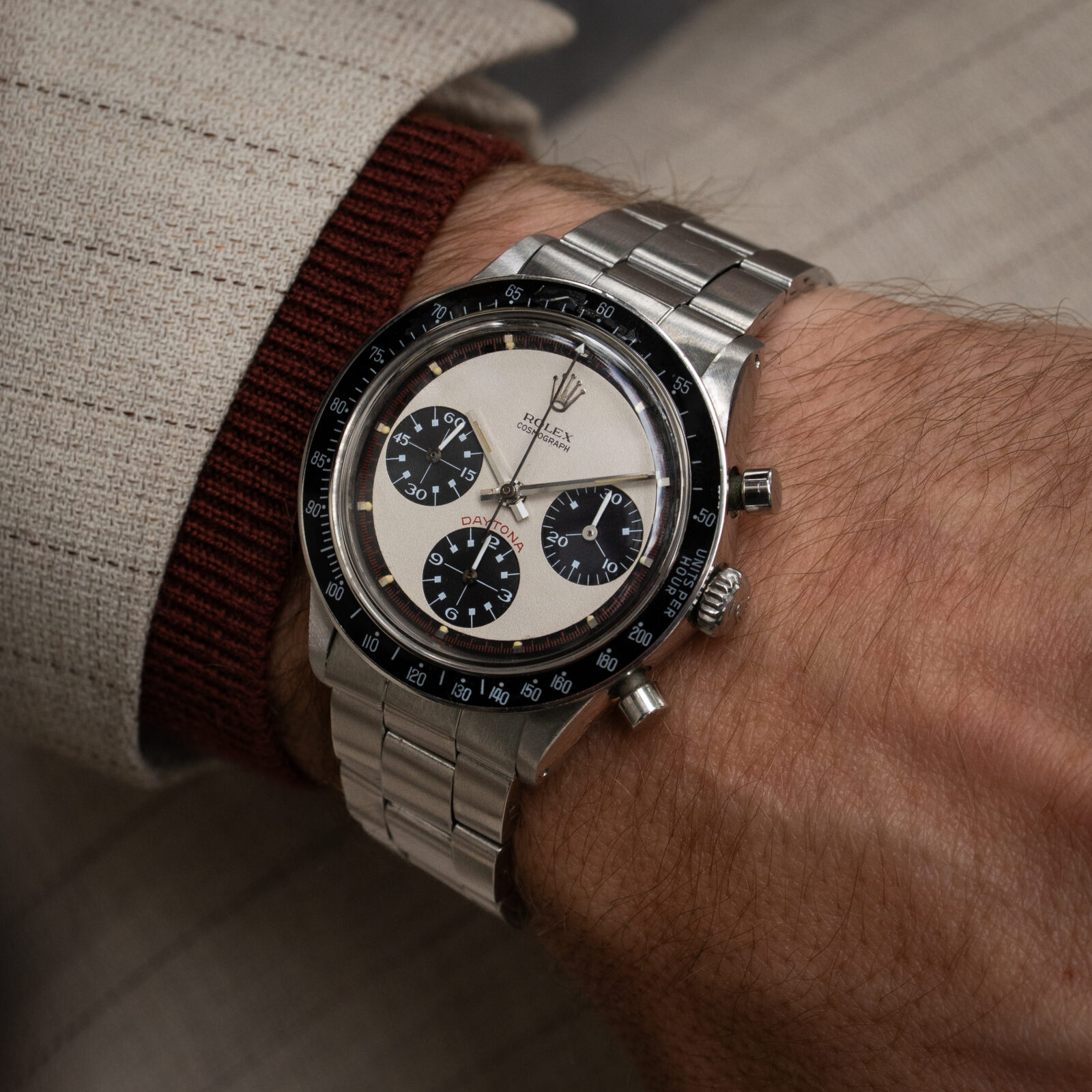
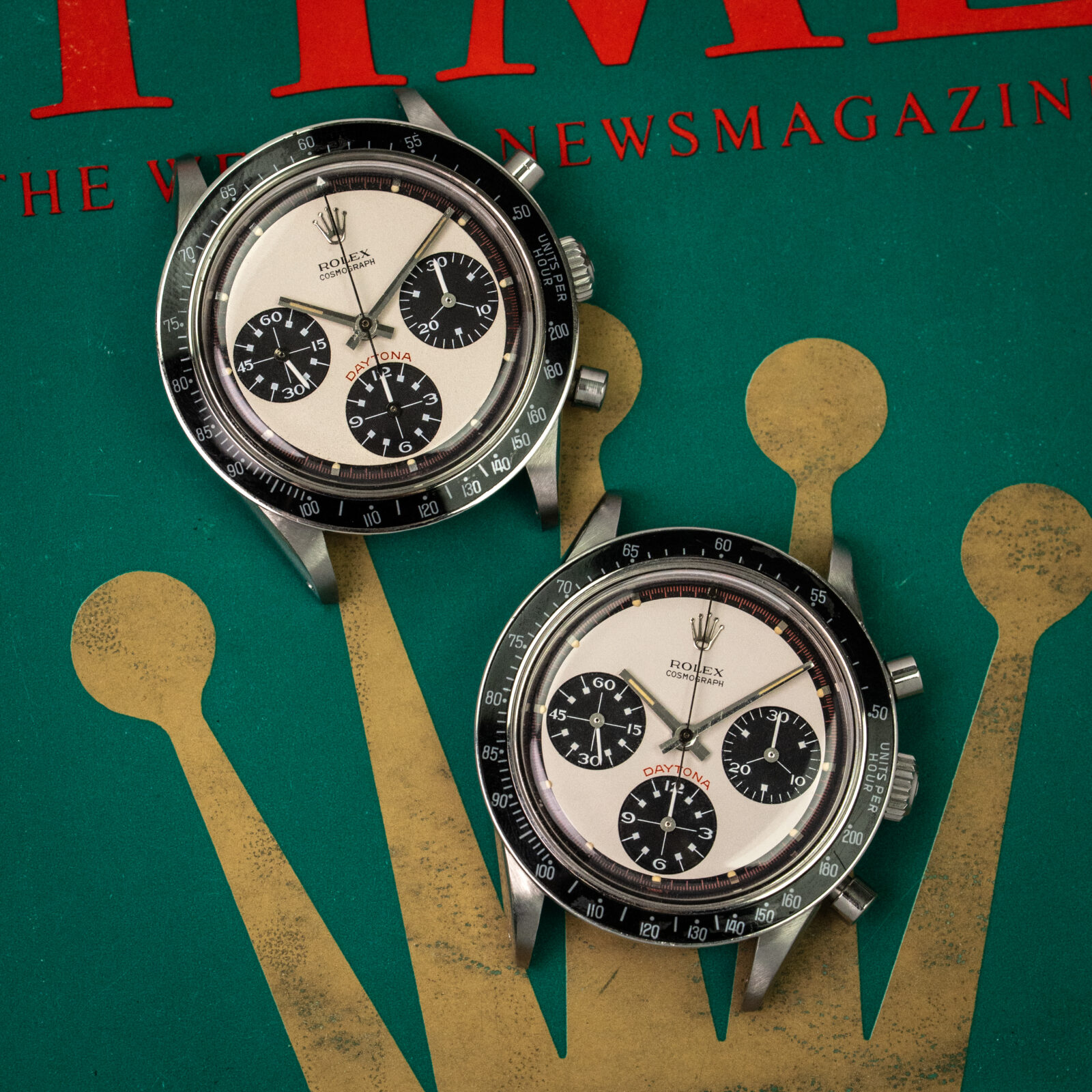
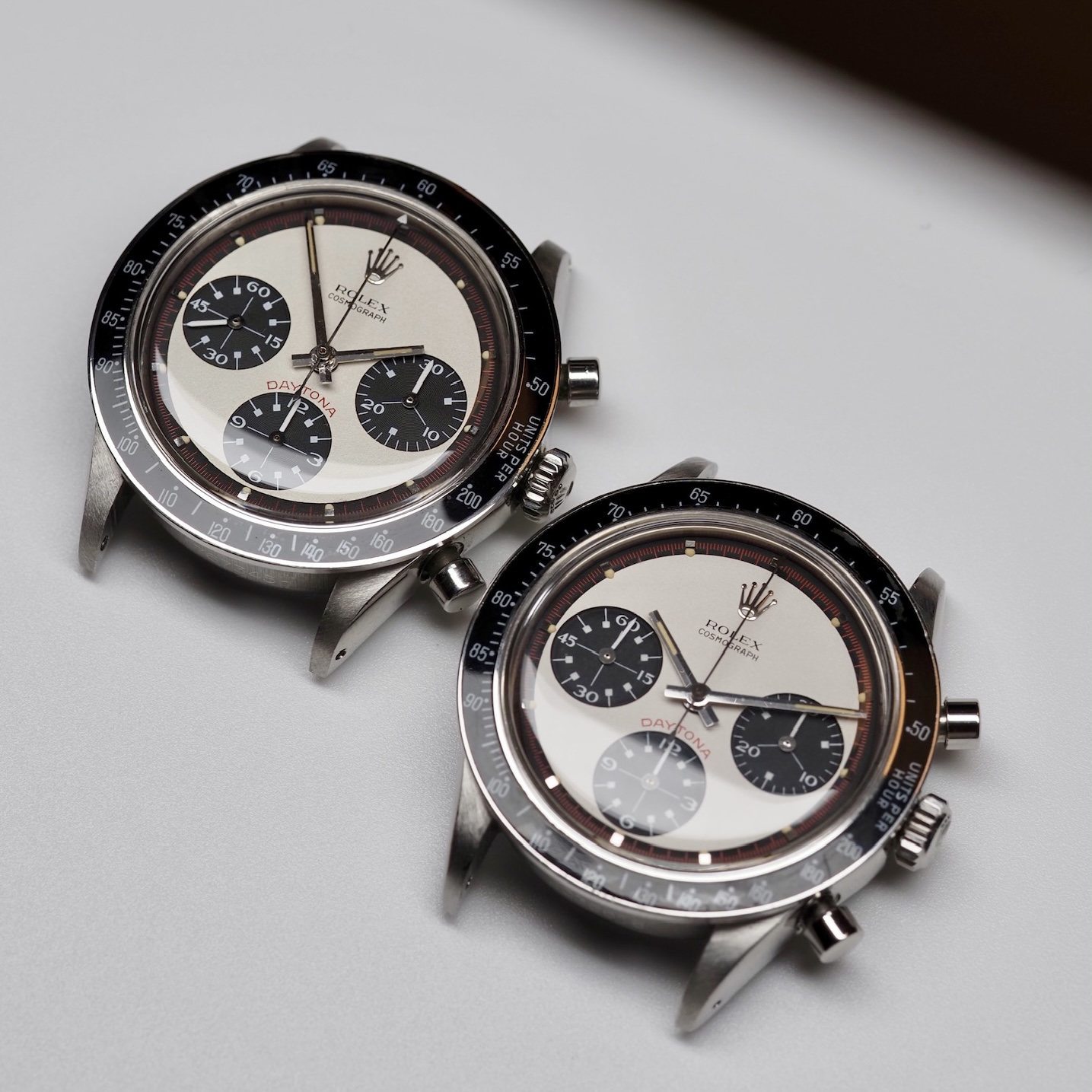
Few vintage Rolex watches have achieved the legendary status of the Paul Newman Daytona. What was once an unpopular dial variation has become one of the most celebrated designs in the history of watch collecting. And looking at this remarkably preserved Rolex Daytona ref. 6241 from 1968, it is not difficult to understand why.
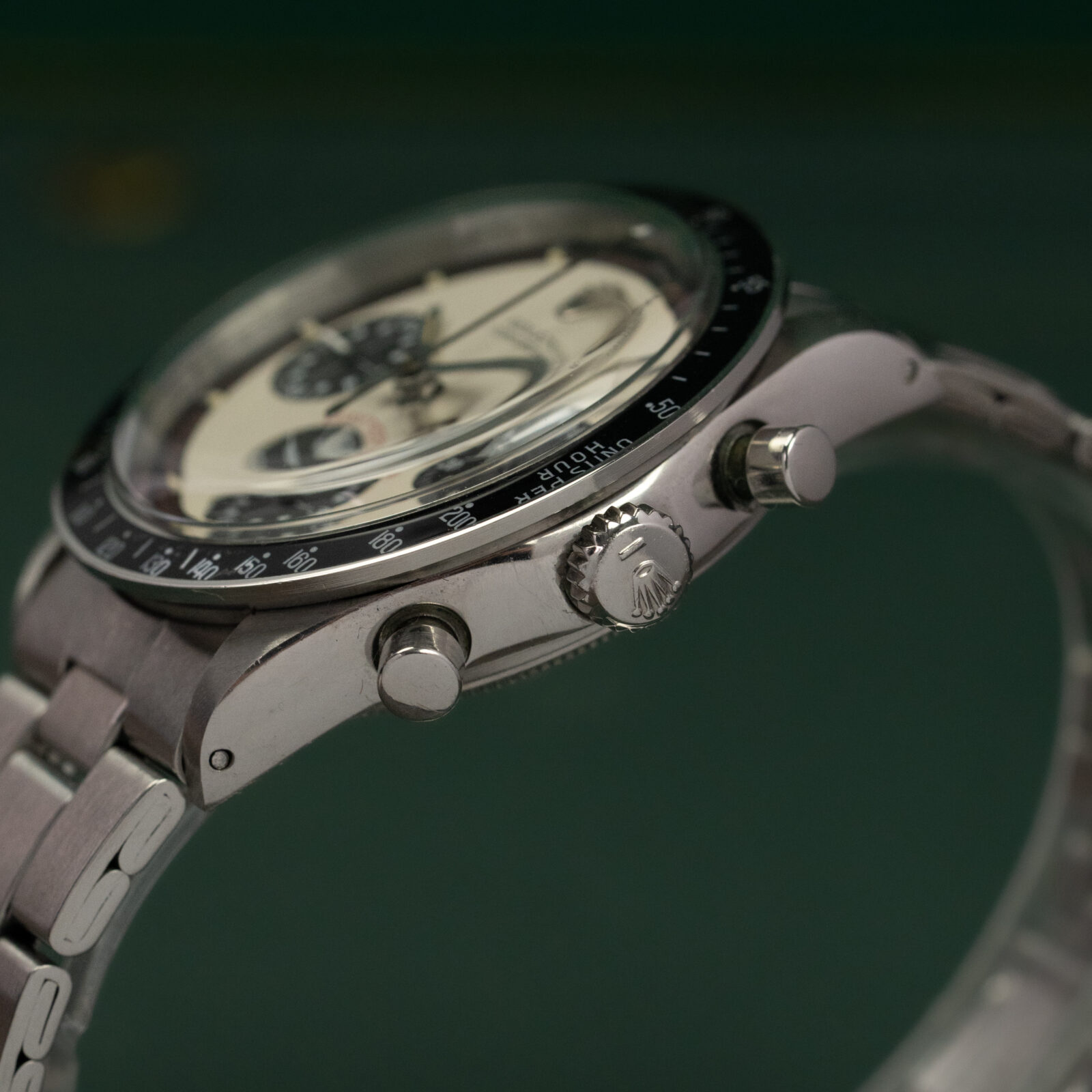
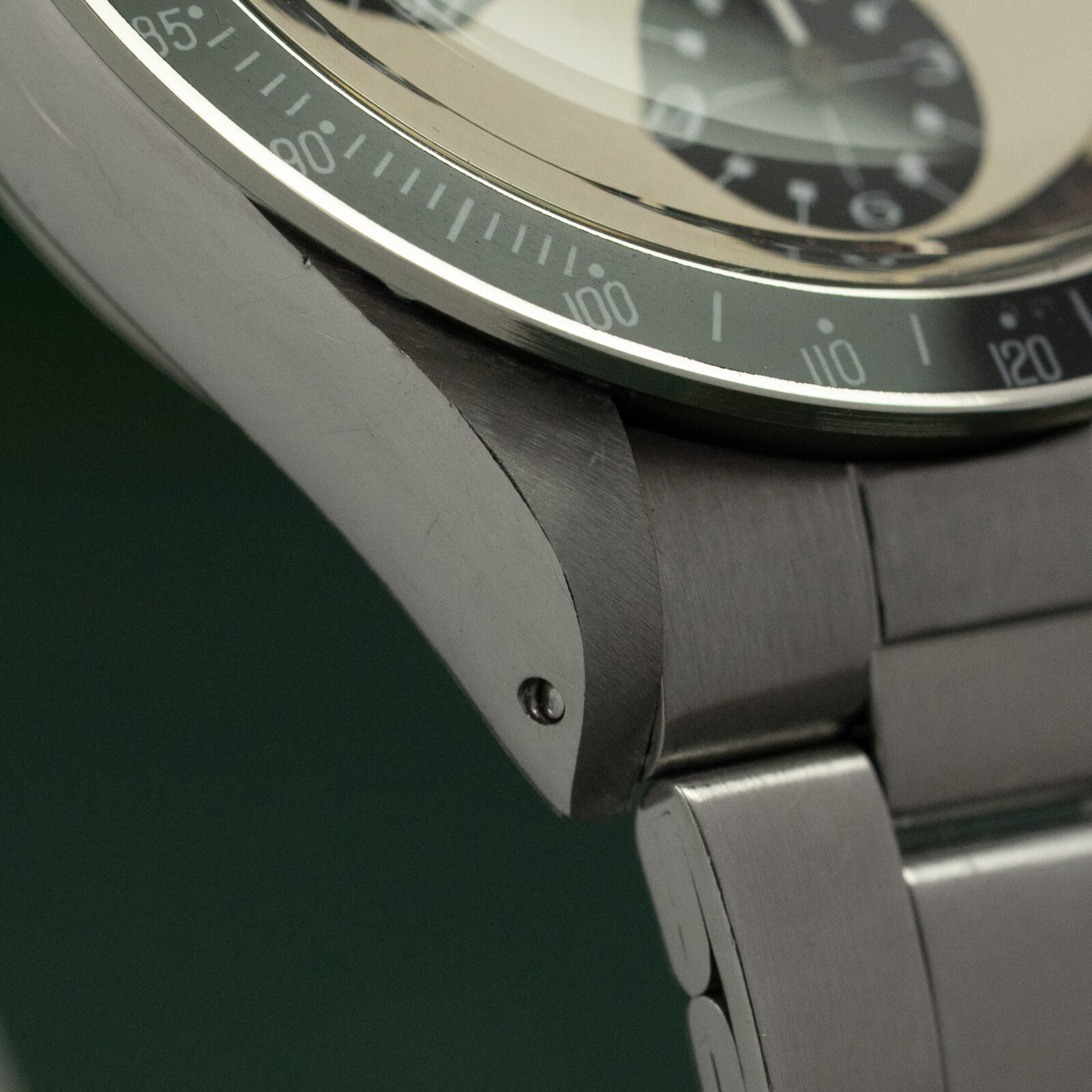
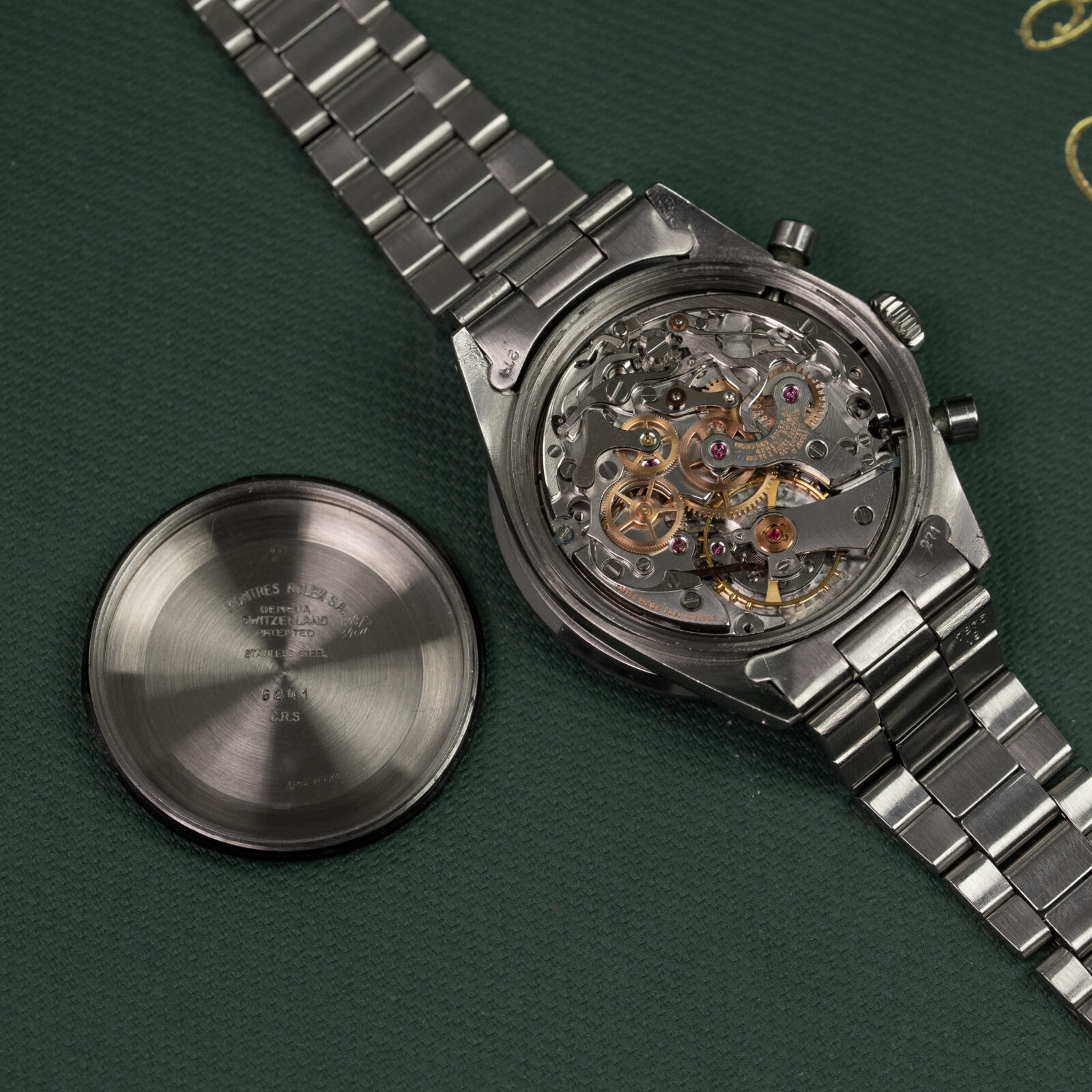
The easiest way to distinguish the various four-digit Daytona references is by their bezels and chronograph pushers. In the case of the reference 6241, we find the elegant pump pushers combined with a black acrylic bezel. This particular example still retains its original P3 pushers and a rare first-series bezel, entirely appropriate for its production period. The latter is beautifully preserved, showing only some ageing in the upper-left quarter.
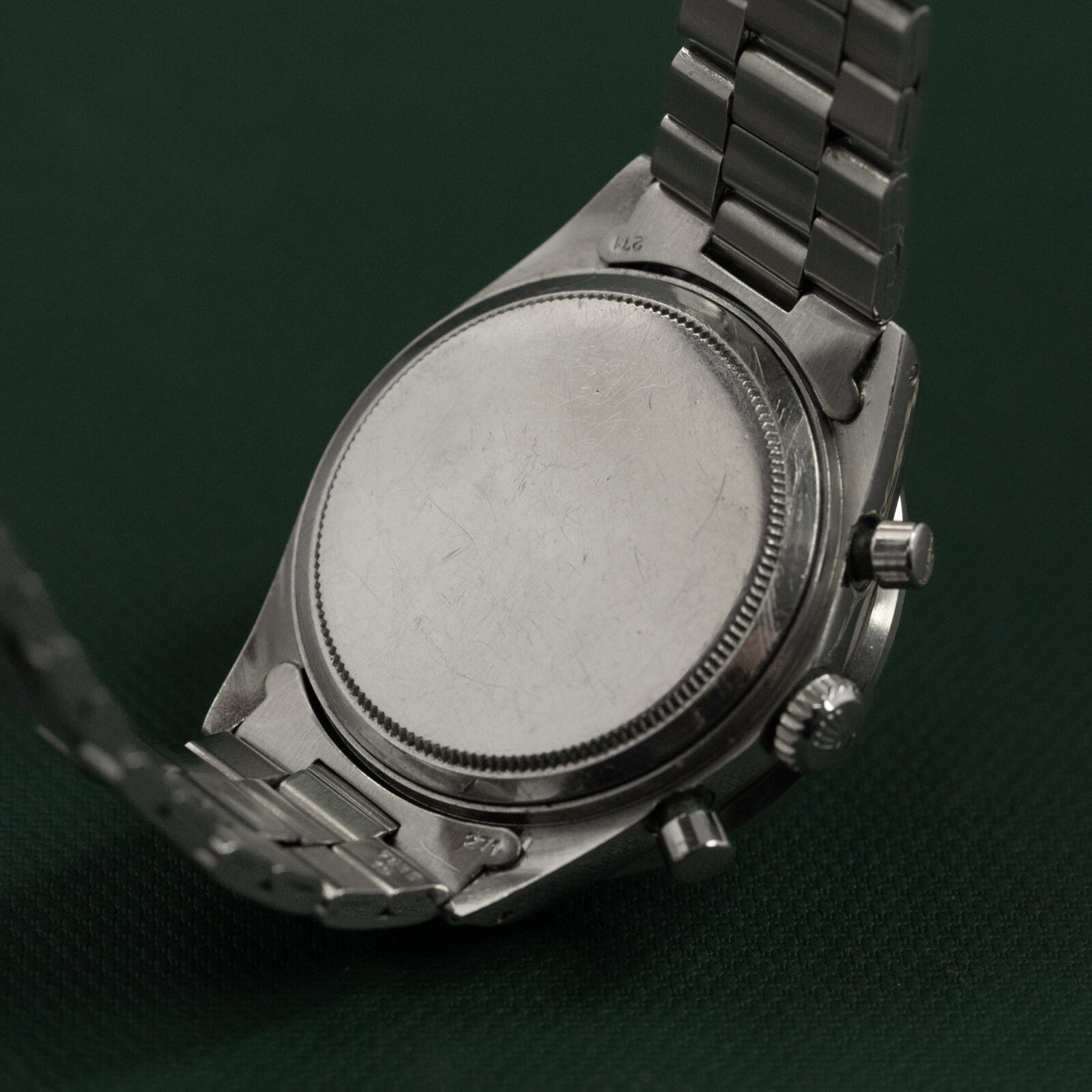
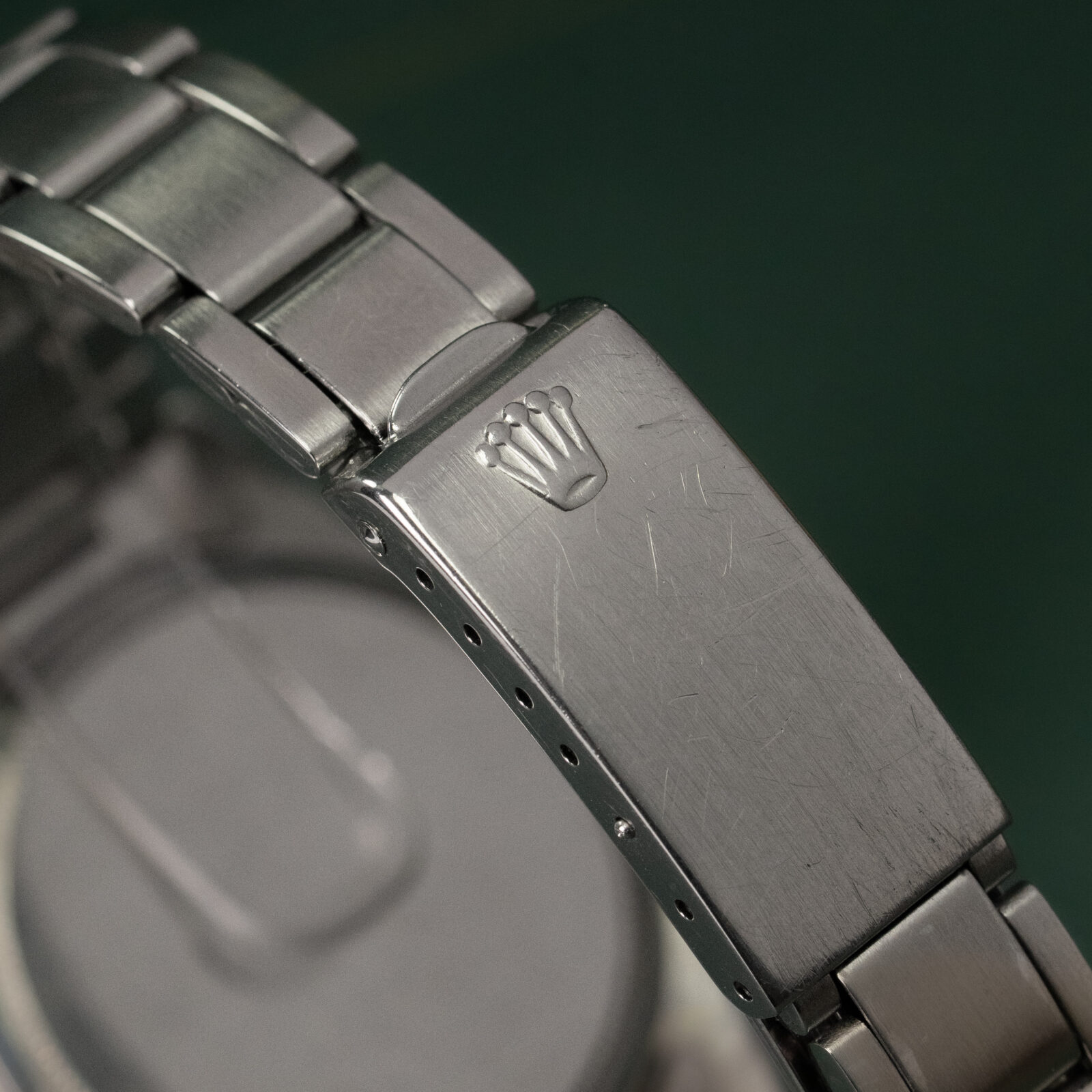
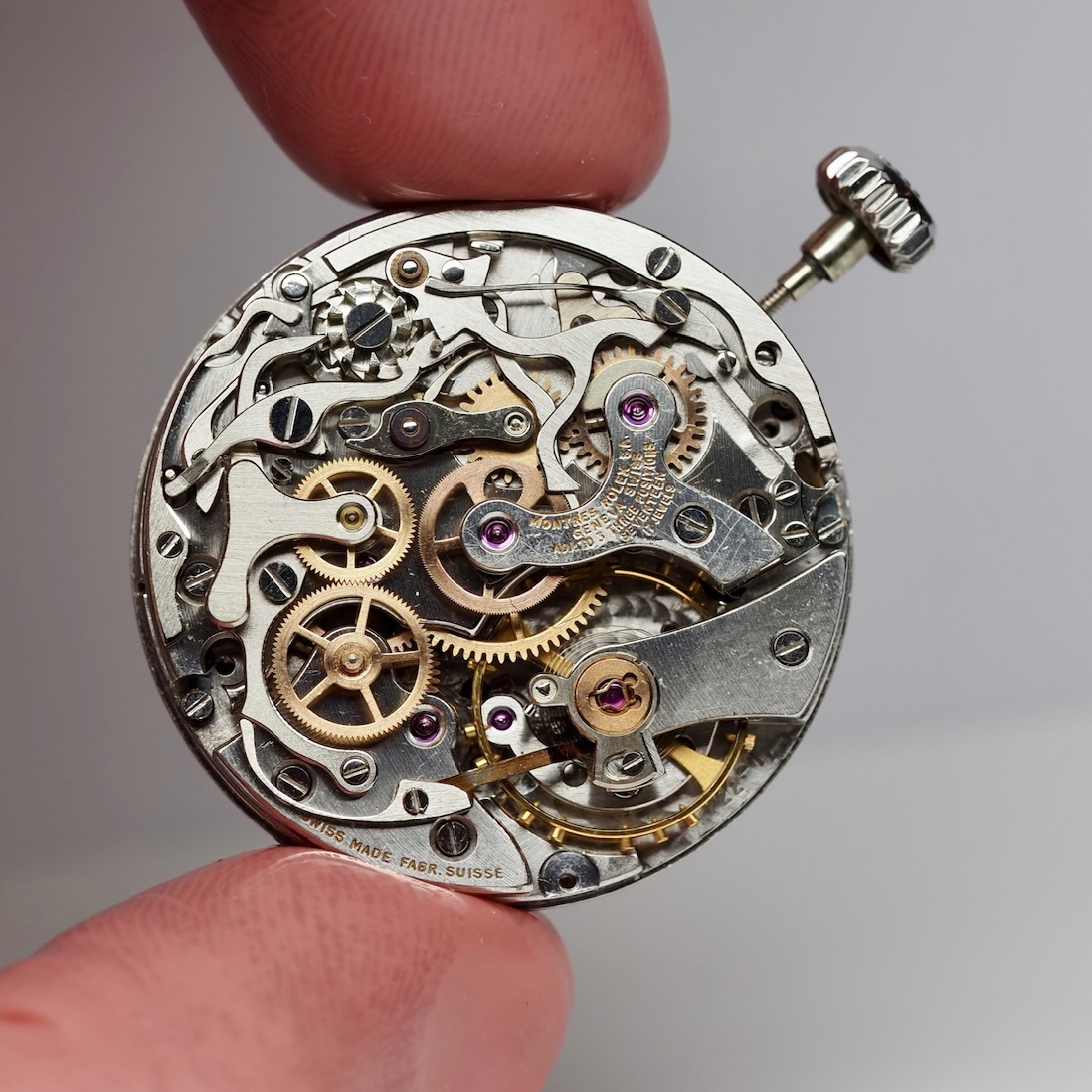
The stainless steel case is equally impressive, with thick, strong lugs and well-preserved proportions. Its 1.76 million serial number places production in 1968. Inside beats the Valjoux-based calibre 722-1, while the folded Oyster reference 7835 bracelet, fitted with the correct 271 end links, dates to 1970. The reference 6241 enjoyed a relatively brief production run of approximately four years, with commonly cited estimates suggesting fewer than 2,000 examples were manufactured. Only a small proportion of those were fitted with the extraordinary dial we find here: the *Paul Newman*.
But what actually makes a Daytona a Paul Newman? Essentially, it is a particular dial configuration found on select four-digit Daytonas from the late 1960s and early 1970s. Rolex itself referred to these as "exotic dials", a rather fitting description. Compared to the straightforward and functional design language normally associated with Rolex, these dials were remarkably experimental, almost avant-garde. Interestingly, the public did not particularly appreciate them when they were introduced. Rolex was already struggling to sell its manually wound Daytona, and the exotic dial was an even less conventional proposition. What was once the unpopular choice would eventually become the one everybody wanted.
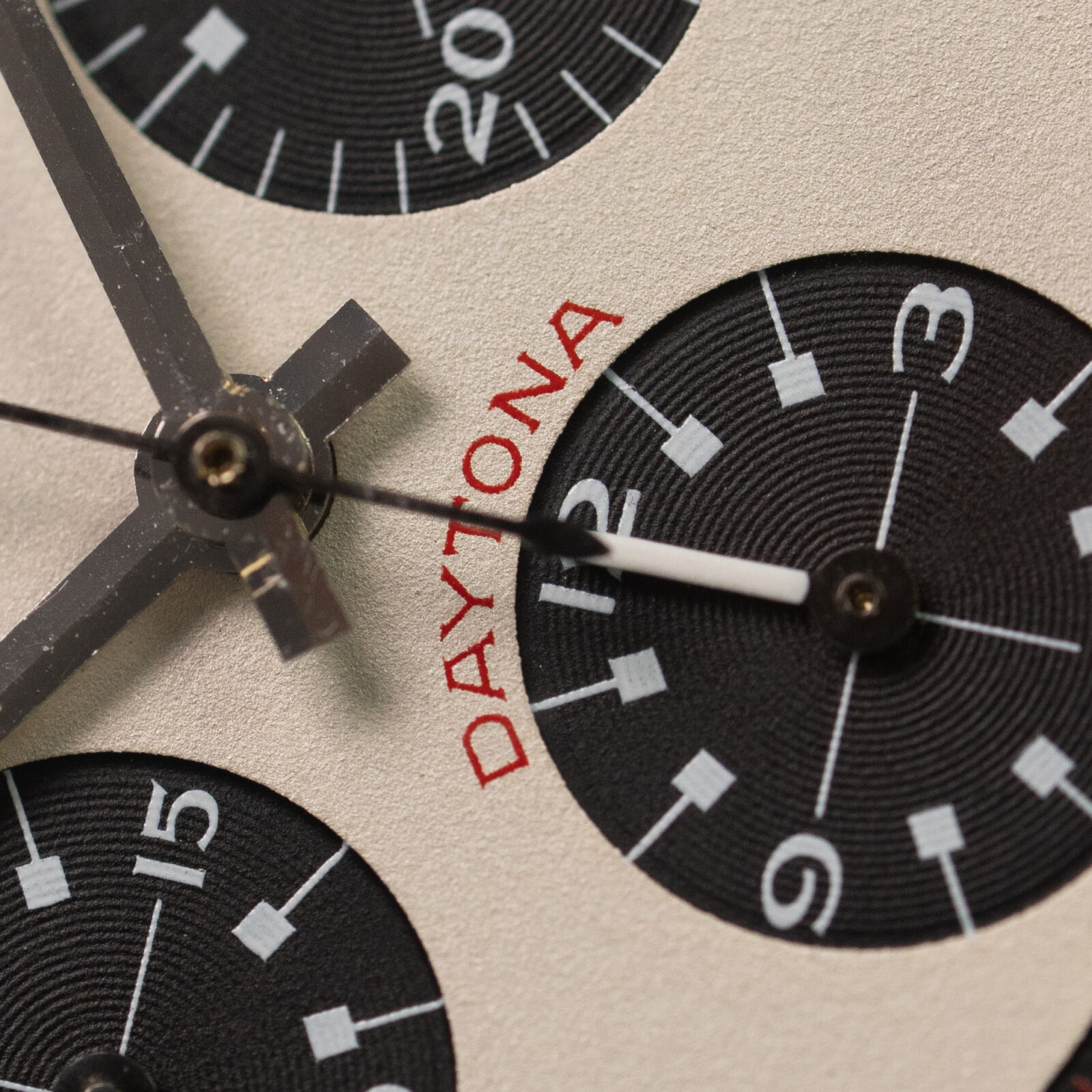
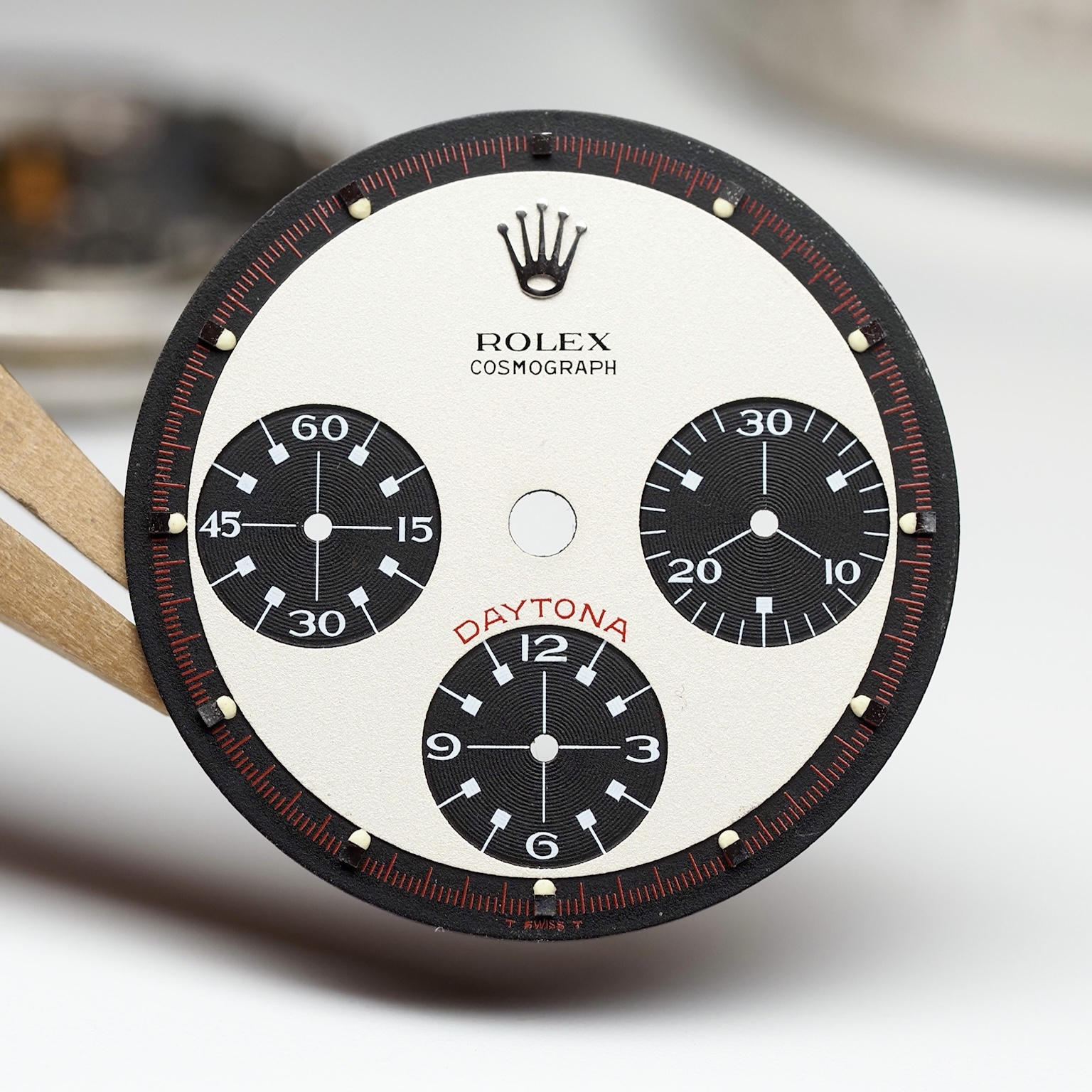
Manufactured by Singer, the same company responsible for the regular Daytona dials of the period, the exotic dial differs in several fascinating details. Most recognisable are the Art Deco-inspired subsidiary registers, featuring distinctive block-shaped markers connected by fine lines. They give the chronograph a considerably more decorative and playful appearance than its conventional counterpart. The hour markers are equally distinctive. Instead of the familiar applied baton indices, we find small applied square markers positioned around the dial's perimeter. The outer minute track sits slightly lower than the central dial surface, much like the recessed subsidiary registers. Together, these different levels create an impressive sense of depth.
As expected from a pump-pusher Paul Newman, the dial does not carry the word Oyster, but it does feature the model name in red above the six o'clock register. The configuration is the desirable "tricolore", combining an off-white dial with contrasting black registers and outer minute track, brought to life by subtle touches of red. This light-dial execution is considered scarcer than its black-dial counterpart. More specifically, we find a second-series exotic dial, most easily identified by its characteristic house-shaped "T SWISS T: signature at six o'clock.
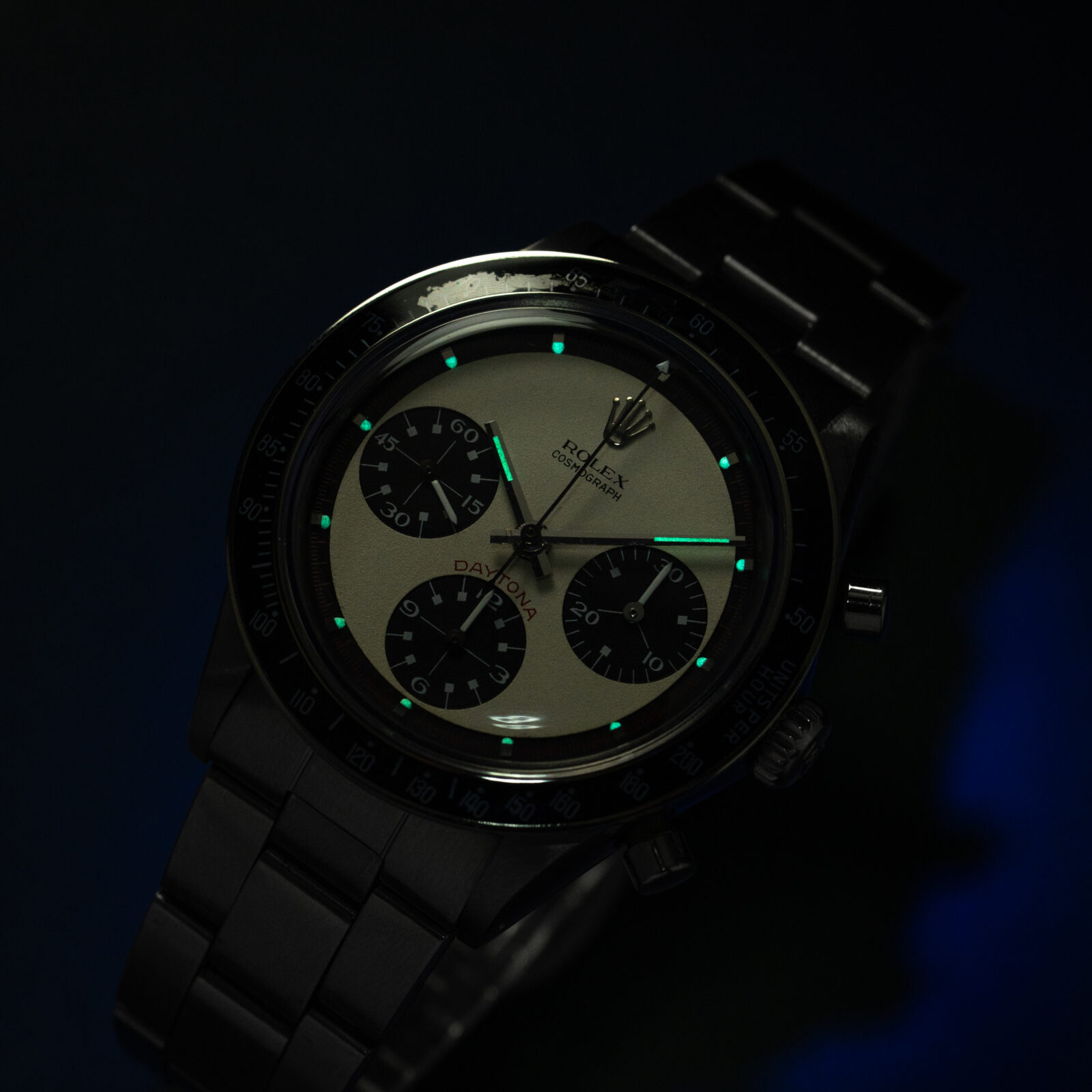
The condition of the dial is nothing short of extraordinary. Its surface remains beautifully clean, without any distracting blemishes or discolouration. The black outer track is exceptionally well preserved, with all luminous plots retaining their attractive shape and appearance. The subsidiary registers display their sharply defined concentric ridges, accompanied by the desirable fat hands. All printing remains crisp and perfectly legible throughout. Considering the age of this watch, such preservation is remarkable. Particularly with Paul Newman dials, where the smallest imperfection can make a serious difference, finding an example of this quality is becoming increasingly difficult.
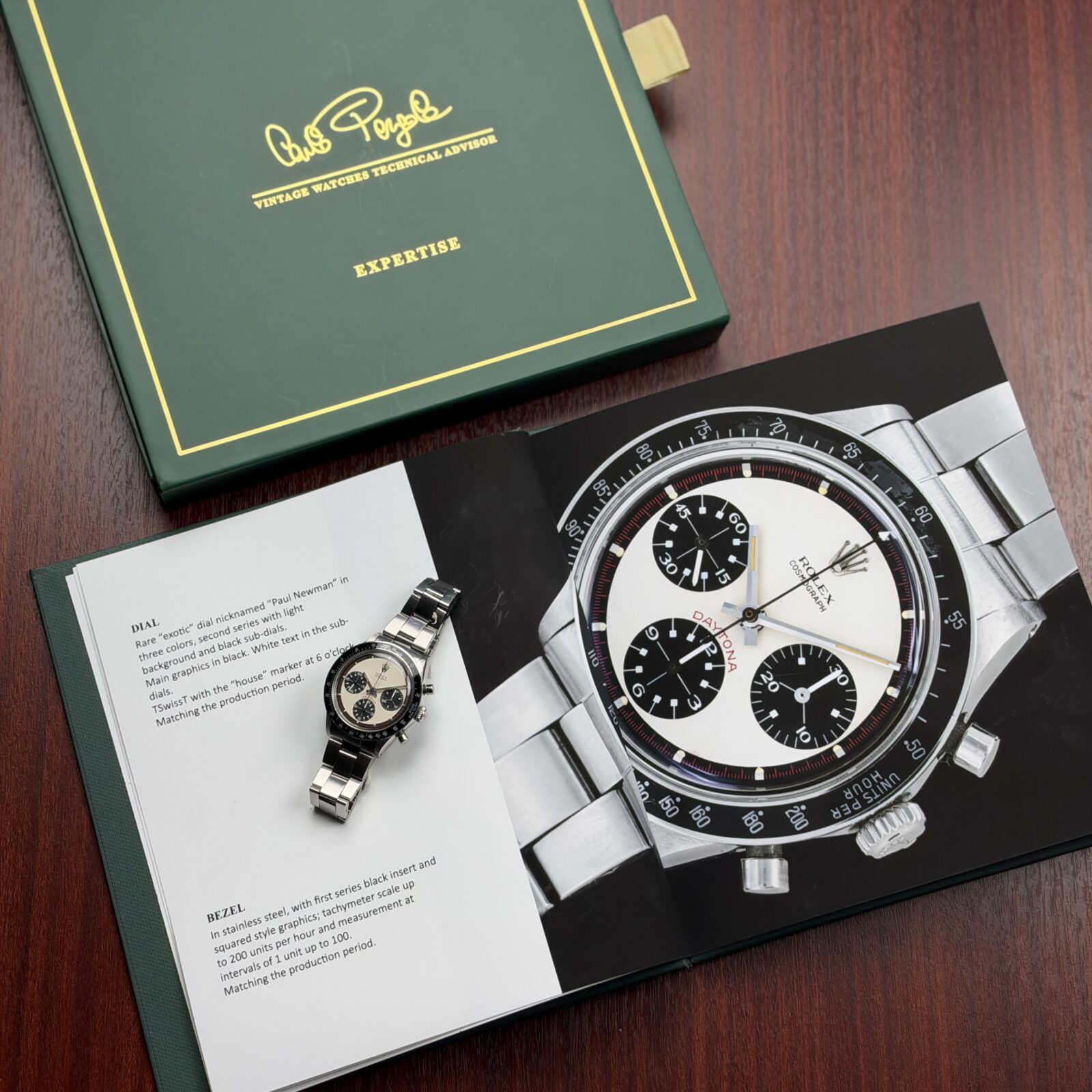
Of course, with a watch of this significance, originality is every bit as important as condition. To provide its next custodian with additional confidence, this Daytona is accompanied by a comprehensive report on condition and originality by Carlo Pergola, as well as an independent assessment by Perezcope. Both support the originality and exceptional qualities of this particular specimen.
A rare reference, a highly desirable dial configuration and a level of preservation that is increasingly difficult to encounter. This 1968 Rolex Daytona 6241 is a wonderful reminder of why the Paul Newman continues to hold such a special place in the hearts of vintage Rolex collectors.
Specifications
- SKU 8399
- Bezel material
- Bracelet
- Caliber
- Case Dimensions
- Case Material
- Clasp
- Documents
- Dial
- Index
- Inlay
- Model
- Movement
-
Reference
6241
- Year