Rolex Day-Date 1803/9 'Stella'
Sold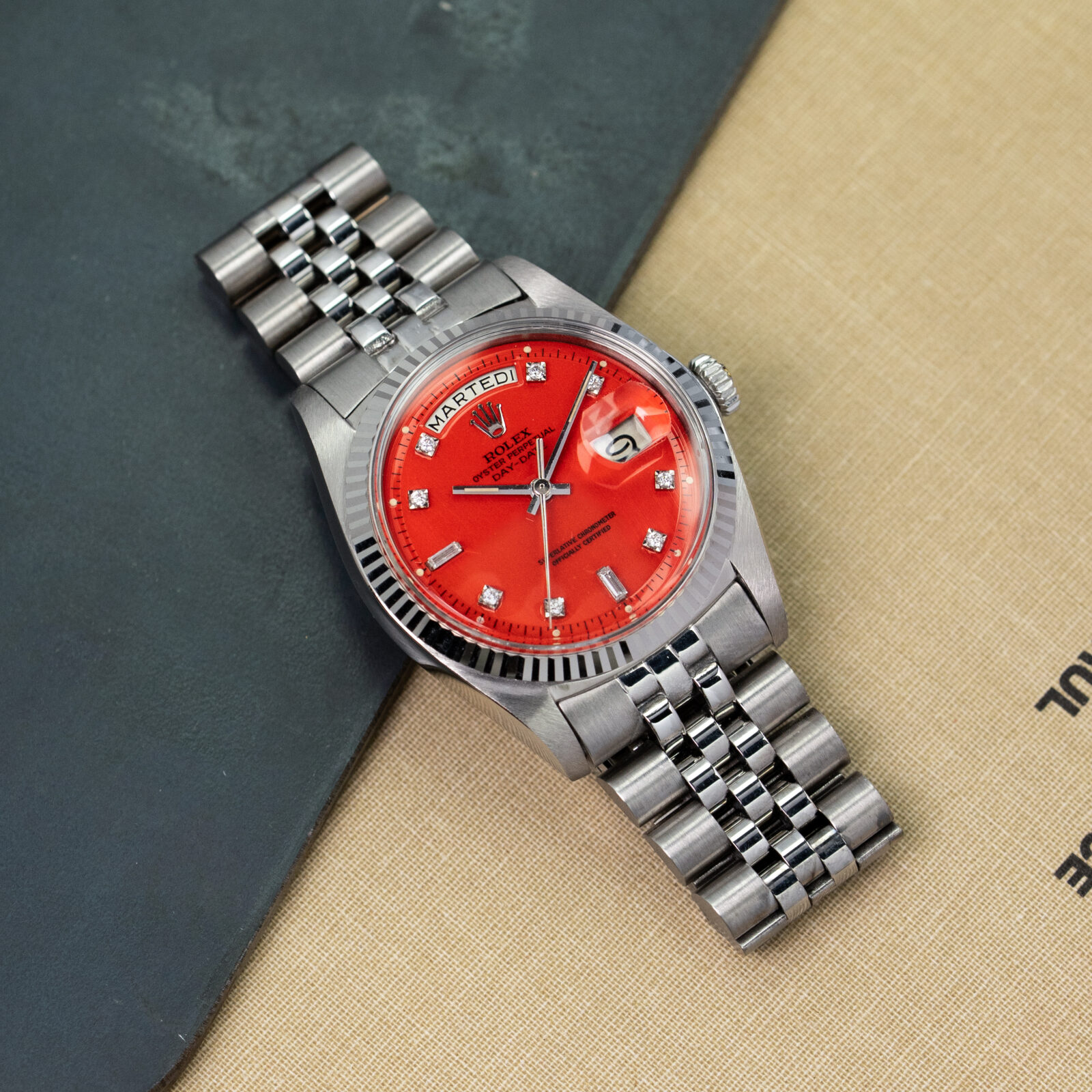


Rolex Day-Date 1803/9 'Stella'
Sold- Free worldwide delivery
First-Generation “Stella Dial” in vivid red.
It’s difficult to imagine what Rolex’s design department had in mind when they introduced the wildly colorful Stella dials for the Day-Date line. Perhaps the spirit of the 1970s had finally reached Geneva. In any case, these high-gloss lacquer dials marked a radical departure from Rolex’s traditionally restrained aesthetic. And perhaps that explains why they were never immediate commercial successes. The Day-Date was the watch of presidents, industrialists, and old-world aristocracy; not exactly the clientele one would expect to embrace psychedelic colors on the wrist. Ironically, that initial lack of popularity is precisely what makes Stella dials so coveted today. Production numbers were low, and rarity remains one of the most prized qualities in the world of vintage Rolex collecting.
The term “Stella” originates from Stella S.A., the Swiss company that supplied the lacquer used for these dials. Interestingly, the name was not merely coined by collectors; Rolex itself referred to them internally as “Lacquered Stella” dials in period documentation and master catalogues. Although the deep, glossy finish resembles enamel, the manufacturing process was somewhat more industrialized, yet no less demanding in execution.
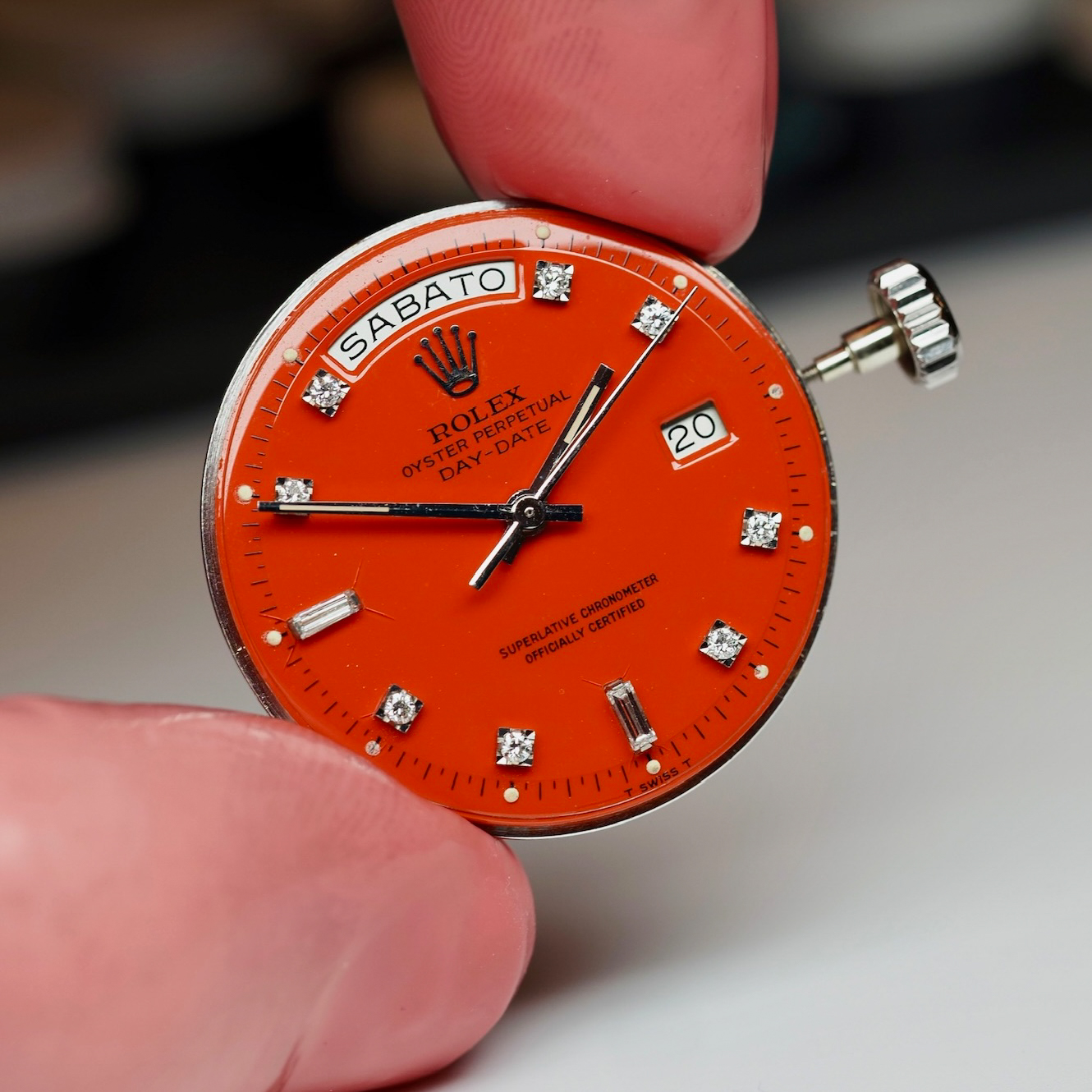
Each lacquer mixture was prepared by hand, resulting in subtle tonal variations from dial to dial, even within the same color family. Place two red Stella dials side by side, and the differences become immediately apparent. This particularly bright shade is among the most striking examples one is ever likely to encounter. The lacquer was applied manually by skilled craftsmen using a spray gun, layer upon layer, with each coat requiring sufficient drying time before the next could be added. The process concluded with a final transparent sealing layer, meticulously polished by hand to achieve the unmistakable mirror-like gloss for which Stella dials are celebrated.
The present dial is fitted with white gold hour markers and coronet to complement its white metal Day-Date case; a far rarer configuration than the more commonly encountered yellow gold examples. It furthermore features factory-set diamond indexes, combining brilliant-cut stones with baguette diamonds at the quarters. As often seen on early Stella dials, faint hairline cracks are visible around some of the applied markers, a characteristic collectors have come to accept as part of their delicate nature. The bold black printing remains exceptionally crisp and untouched. Its typography configuration is furthermore known among collectors as a “rail dial,” referring to the perfectly aligned spacing within the chronometer text.
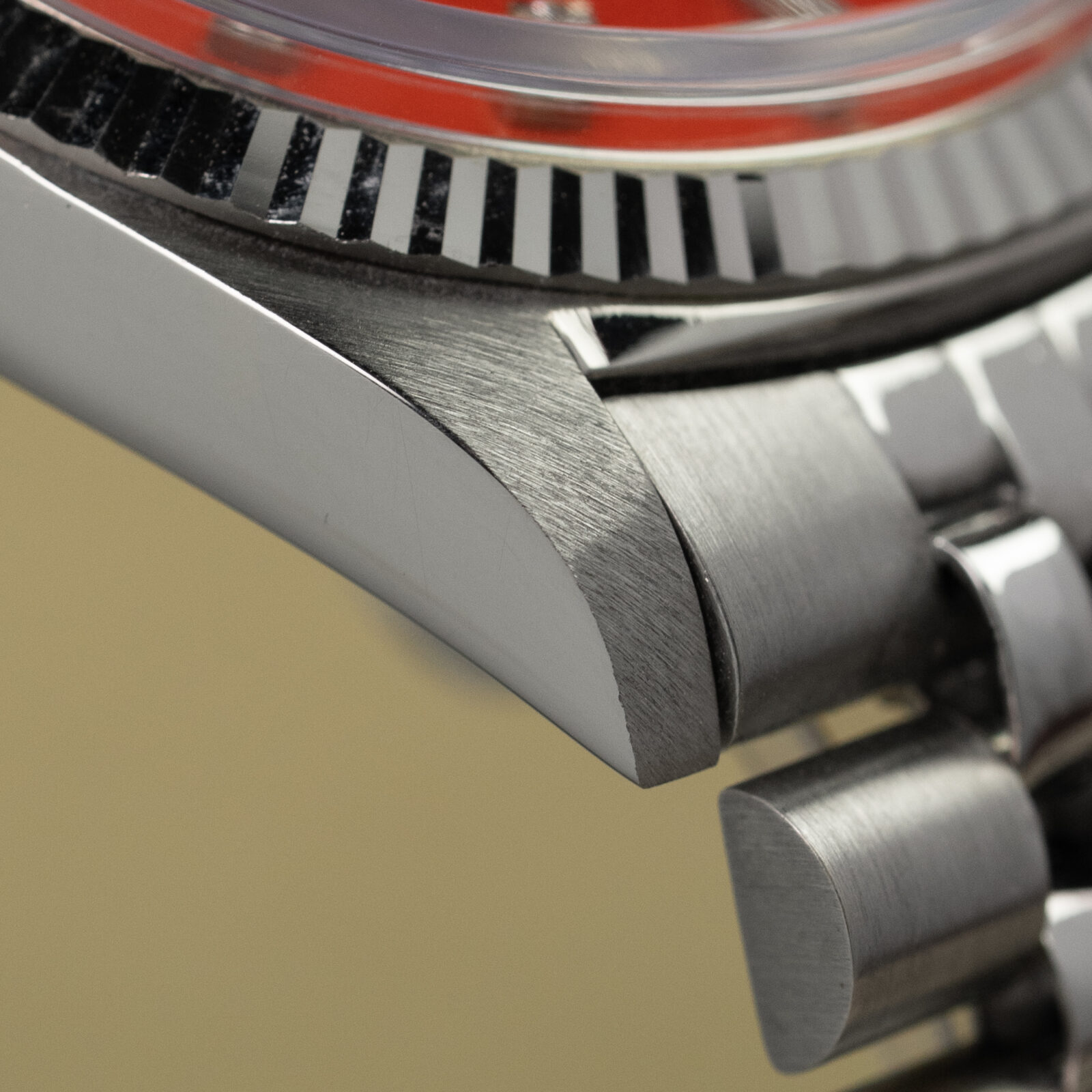
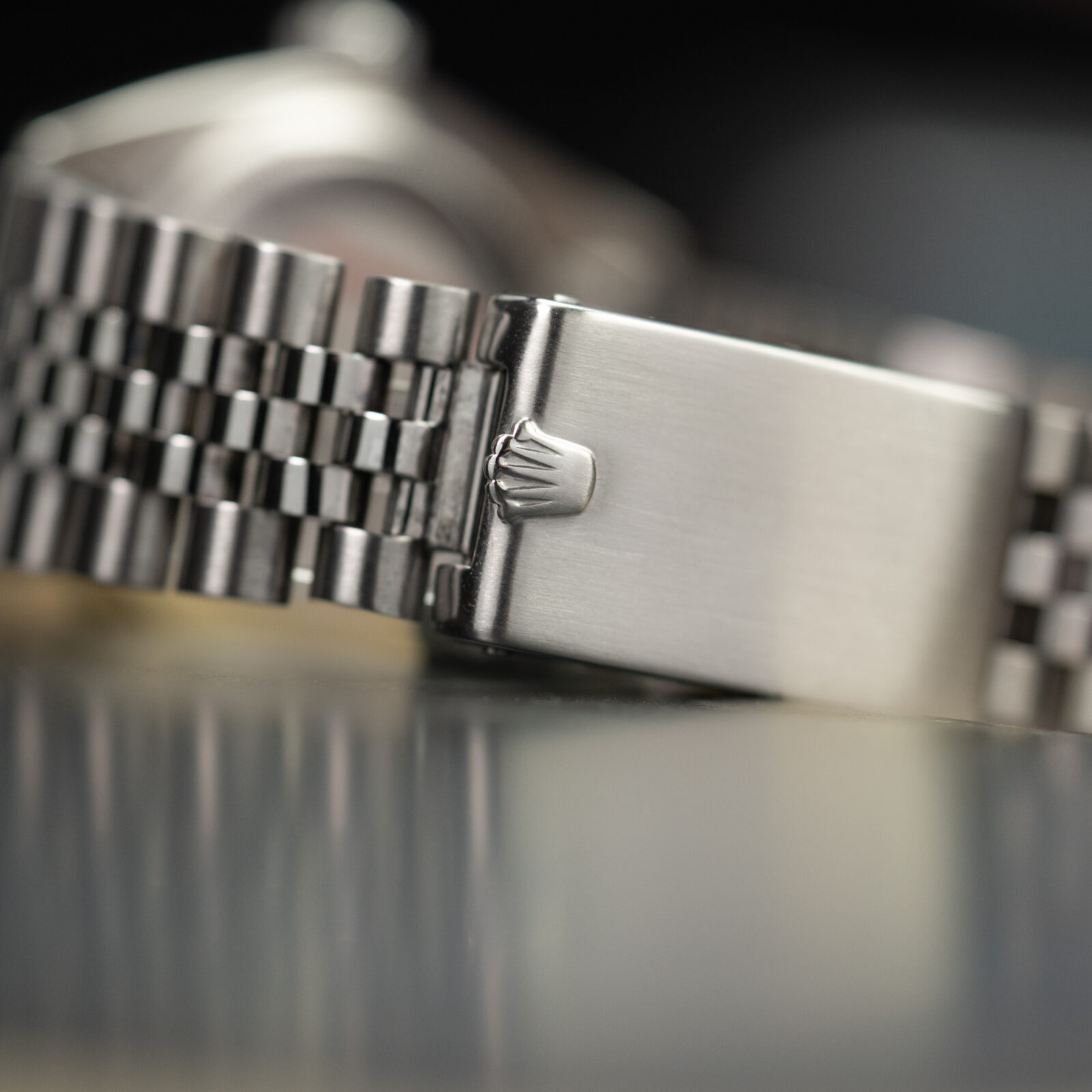
This reference 1803 dates to 1972 and remains in excellent overall condition, showing strong, full lugs, a sharply defined fluted bezel, and a tight Jubilee bracelet with minimal stretch. The Jubilee itself is a somewhat less conventional choice compared to the President bracelet, though entirely fitting for a watch that was never intended to be ordinary.
Among enthusiasts, the four-digit Day-Date references represent the golden age of Stella production, thanks in part to the elegant pie-pan dial profile that adds remarkable depth and character. Early Stella dials such as this example also display the charming so-called “bathtub” effect around the day and date apertures, where the lacquer subtly pools during production; an endearing hallmark of early manufacture.
For collectors who find Rolex’s more no-nonsense tool watch aesthetic a touch too conservative, Stella dials offer something altogether more daring. Their unapologetic colors, combined with genuine rarity and unmistakable presence, have secured their place among the most fascinating and desirable chapters in vintage Rolex history. This extraordinary red example captures exactly why.
Specifications
- SKU 8121
- Bracelet
- Case Material
- Dial
-
Reference
1803/9
- Year