Rolex Daytona 16520 "4 Line"
Sold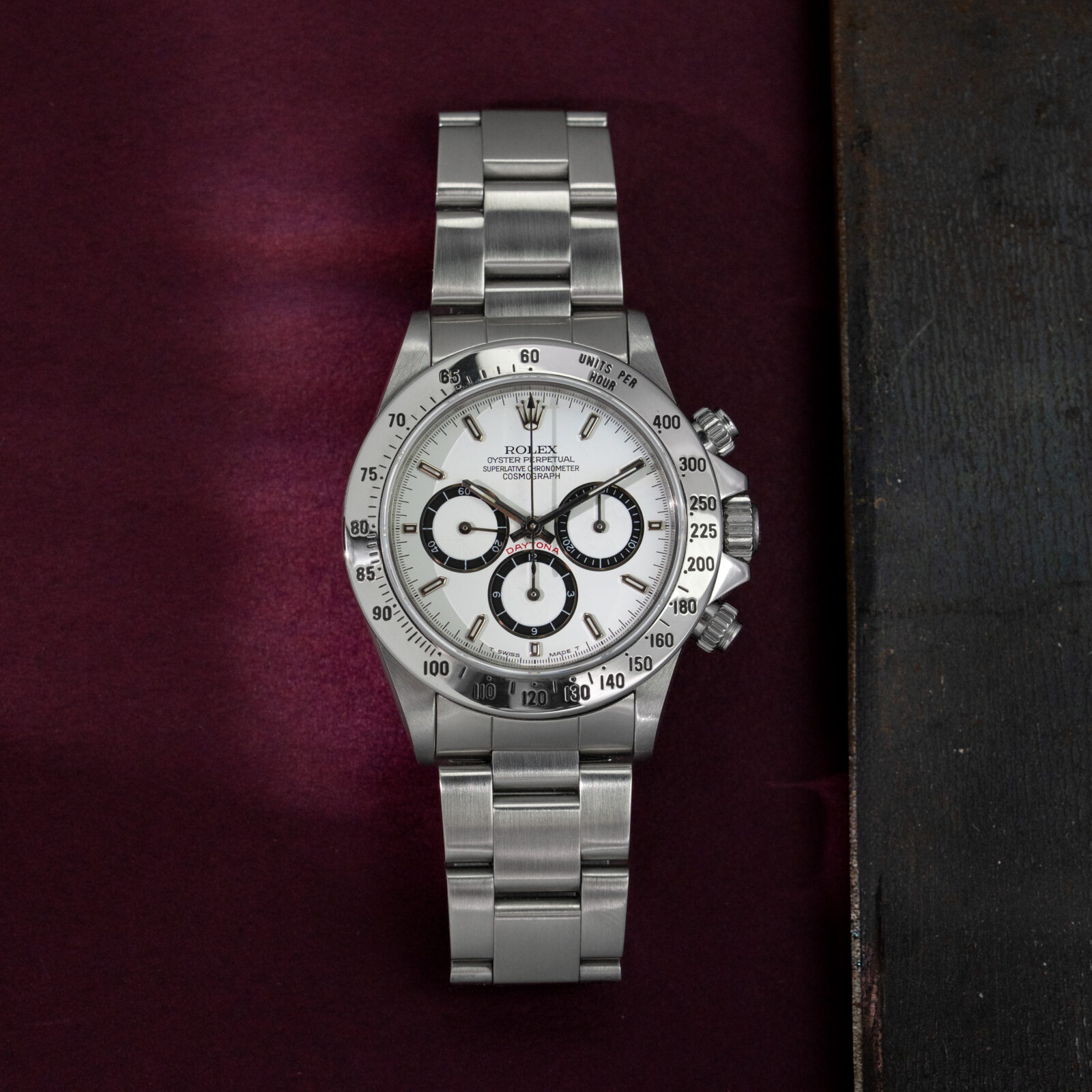
Rolex Daytona 16520 "4 Line"
Sold- Free worldwide delivery
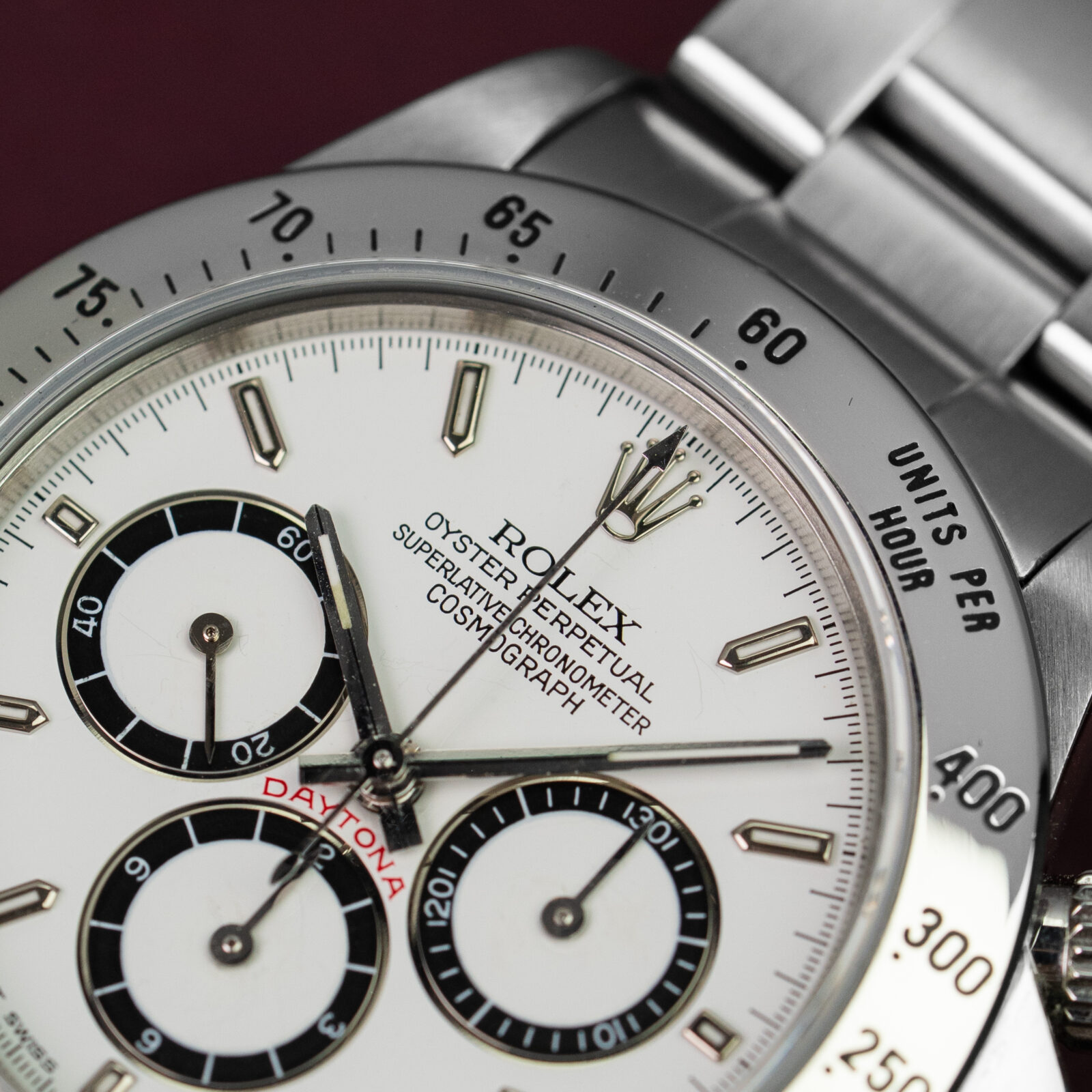
Produced for just a single year: a 16520 "4 line", where the usual “Officially Certified” text was omitted.
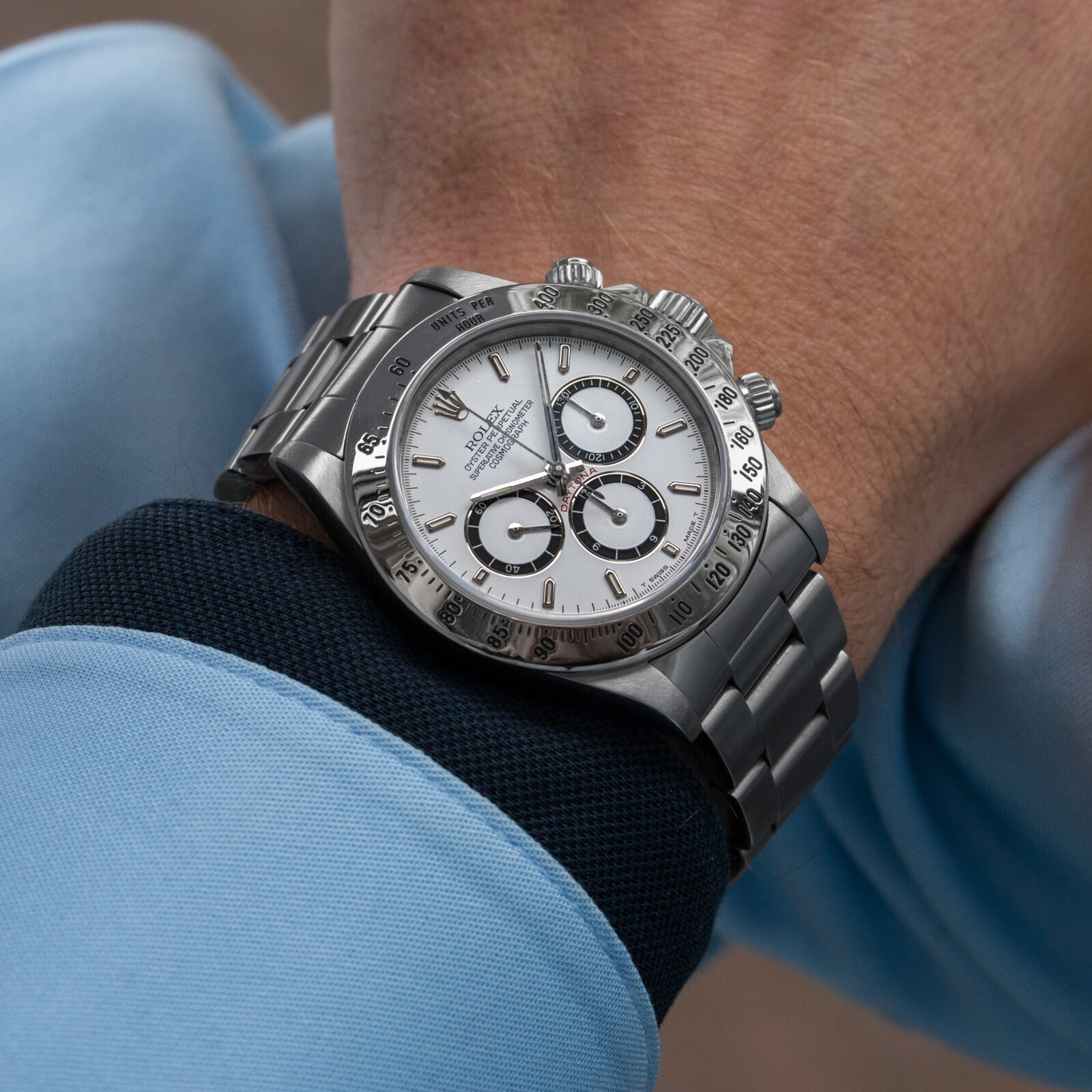
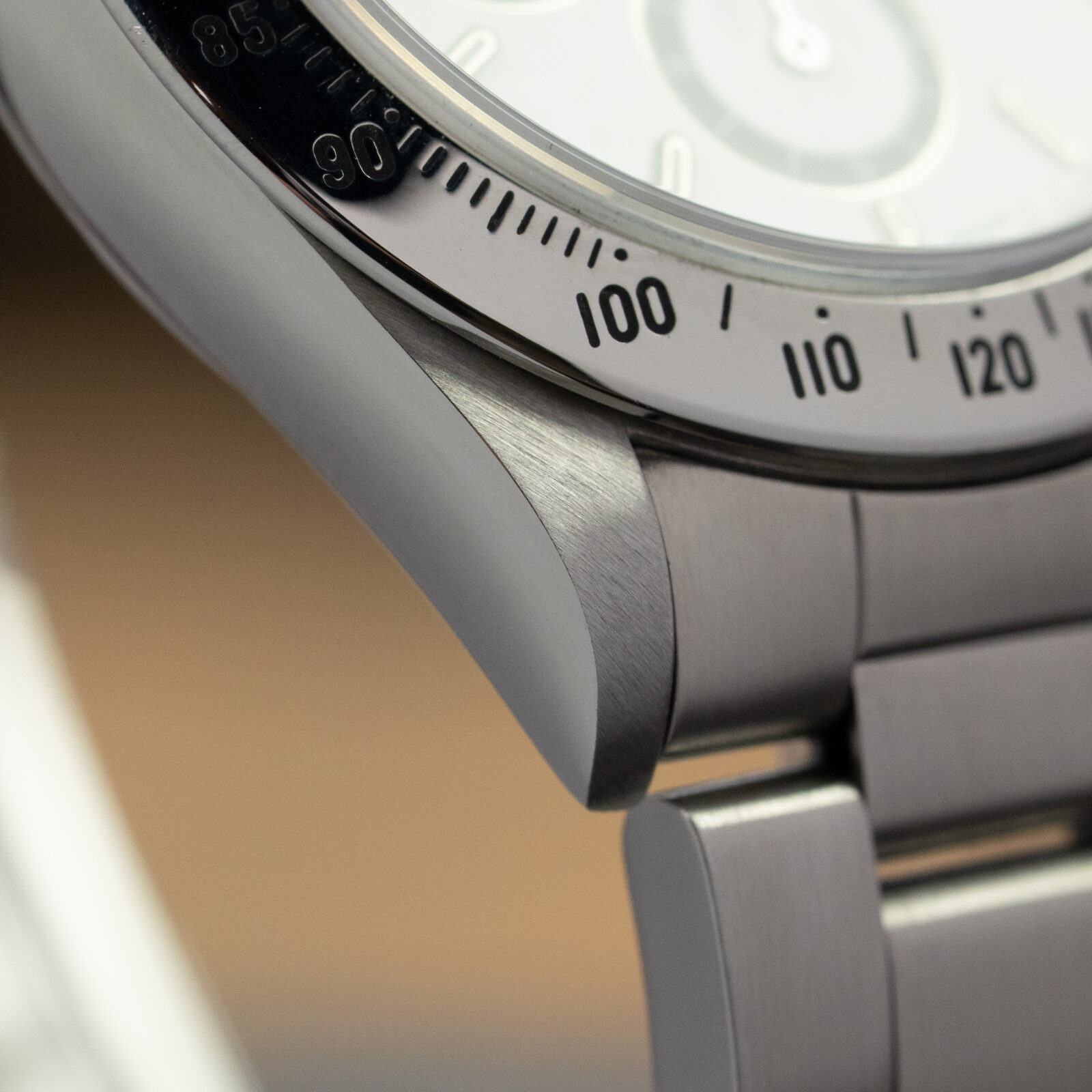
1988 Marked a true turning point for the Daytona. After decades of manual-wind models, Rolex introduced the automatic reference 16520, powered by a reworked Zenith El Primero (caliber 4030). It was the first Daytona built for everyday wear: a 40 mm case, crown guards, screw-down pushers, and a sapphire crystal. Sporty and substantial, unmistakably modern; yet still carrying the charm of its hand-wound predecessors.
This particular example dates to 1989, from the earliest years of production. It features a white dial from the rare “four-line” series, produced briefly within L-serial cases, where the usual “Officially Certified” text was omitted. The result is a cleaner, more balanced layout; one that collectors have come to value highly. Look closer and you’ll notice the inverted six on the lower subdial, another hallmark of these early dials.
Inside beats the Zenith El Primero 4030, still regarded as one of the finest automatic chronograph movements ever made. Rolex didn’t simply adopt it; they re-engineered it, reducing its frequency and extensively modifying it to meet their own exacting standards for precision and reliability. It’s a movement that reflects a time when mechanical refinement was everything.
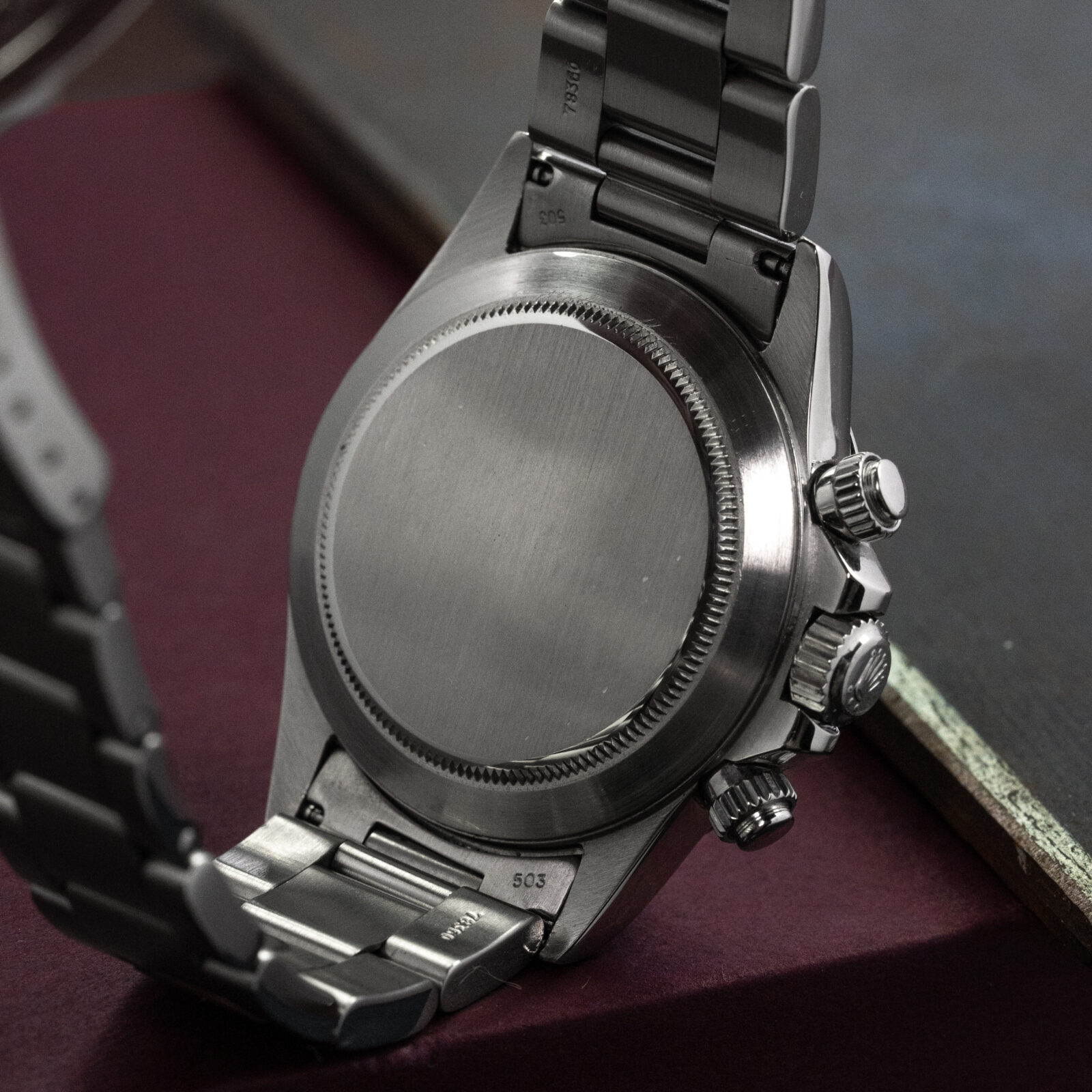
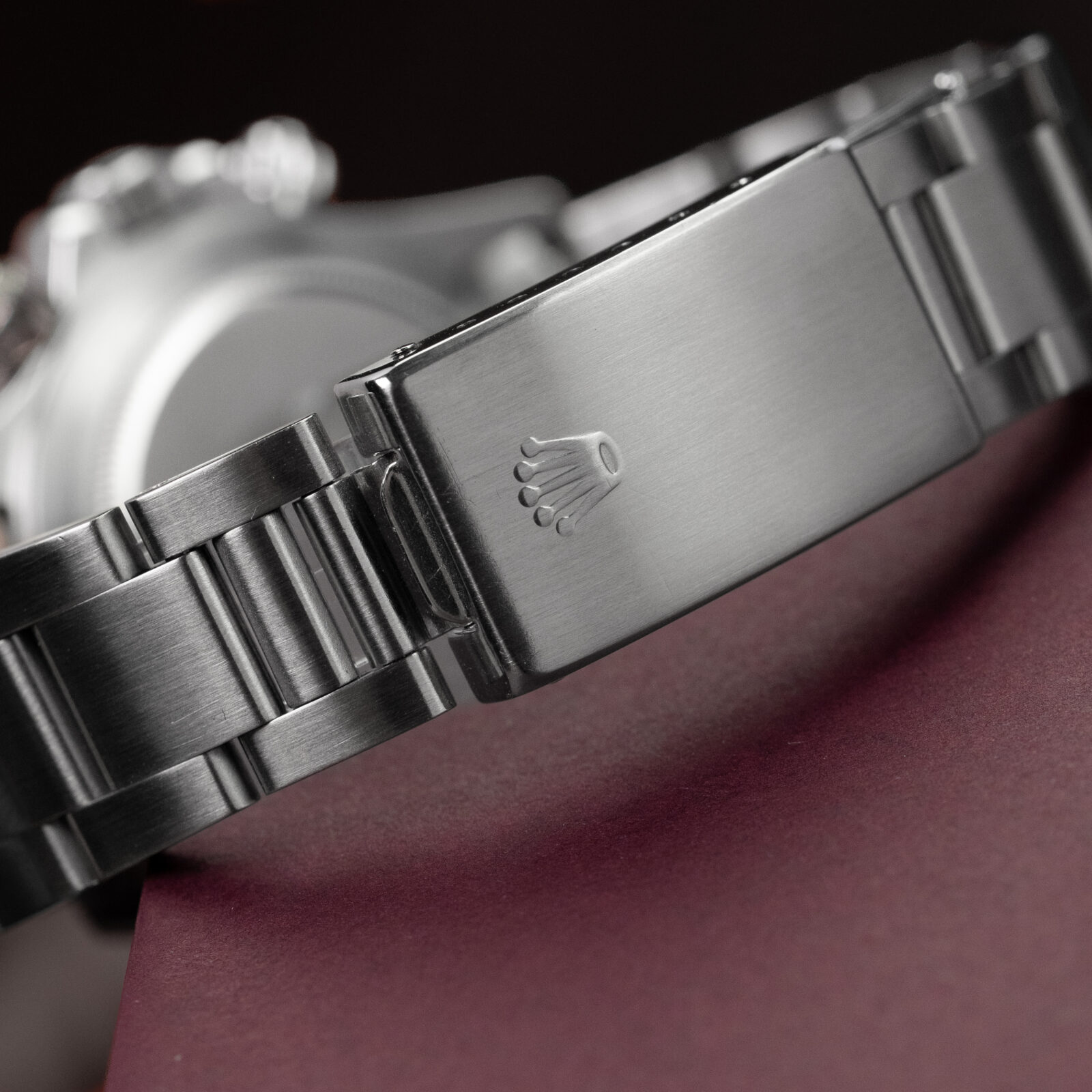
It still comes with its original Oyster bracelet with brushed centerlines as opposed to the later ones with polished centerlines. The original dial, hands, pushers and bezel are all present. Almost four decades later, the Zenith Daytona stands apart; not just as a bridge between vintage and modern, but as -arguably- the last Daytona with real soul.
Introduction
Rolex DaytonaRolex started making chronographs in the 1930s, but it was only in 1963 that a named product line was introduced: the Cosmograph. In some early advertisements, Rolex referred to the watch as the ‘Le Mans’ after the famous race track in France, although the name never appeared on the dial. After a few years, the line was officially renamed Cosmograph Daytona, after the racetrack in Florida.The most noticeable difference between these Cosmograph (Daytona) models and earlier Rolex chronographs, was the tachymeter scale (used for measuring distance and speed) that was moved from its traditional placement on the dial to the bezel. Furthermore, the dial was updated with the introduction of contrasting sub-dials.It’s hard to imagine now, but Daytonas received little love after their release. Most Daytonas languished in dealer displays for years and were only started to get noticed by Italian collectors and dealers in the late 1980s. Nowadays, Daytonas are among the most sought after Rolex models, fetching prices from $15,000 for modern ones to many millions for rare vintage references. A big contrast with the $210 list price when it was first released!
Specifications
- SKU 8144
- Bezel material
- Bracelet
- Caliber
- Case Dimensions
- Case Material
- Clasp
- Dial
- Glass
- Index
- Model
- Movement
-
Reference
16520
- Year