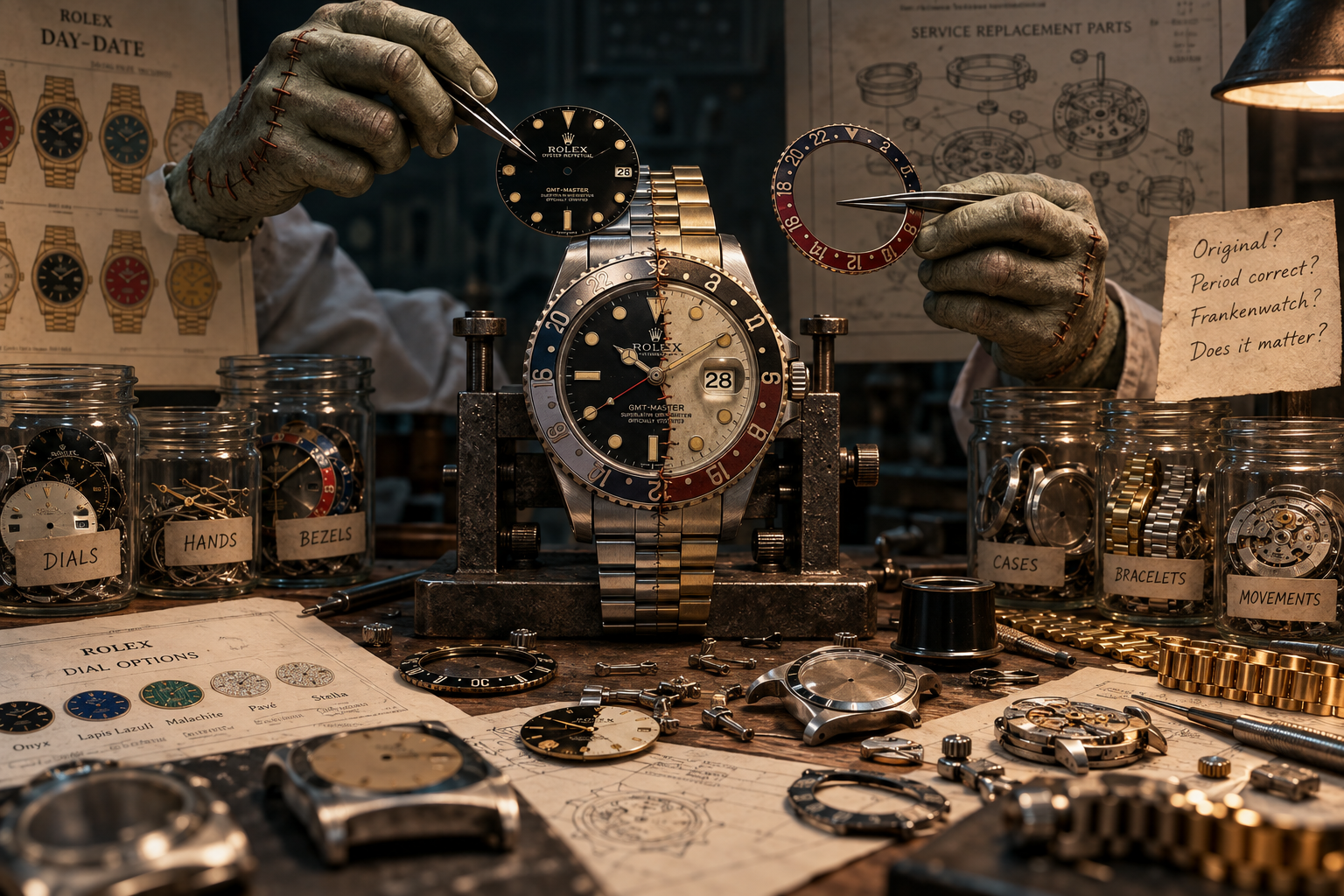
To controversial topics: “Frankenwatch”
Frankenstein’s monster was brought to life from a collection of body parts taken from different corpses. Spend enough time in the watch world, however, and the word “Frankenstein” will probably make you think of something else entirely: a watch assembled using parts from several different watches.
We are taught from an early stage in collecting that “Frankenwatch” is a dirty word. Something has been tampered with. Parts have been swapped. The watch is no longer “original”. Stay away. But when does a watch actually become a Frankenwatch? How much does it matter? And perhaps most importantly: how much should it affect the value? That is where things become considerably less binary.
Definition
You could write an entire article about the definition alone. At what point does replacing or combining components turn a vintage watch into a Frankenwatch? It is generally accepted that certain parts simply need to be replaced over the course of a watch’s life. If the escape wheel in your 1950s Patek Philippe has been replaced during servicing, nobody in their right mind would suddenly call the watch a Frankenwatch.
The same applies, to a certain degree, to external components that naturally suffer from wear. A Submariner might survive for generations, but if it has been worn every day for decades, its bracelet eventually reaches the end of its useful life. Replacing it with a later bracelet generally has only a limited negative effect on value. The manufacturers themselves have never been particularly sentimental about this either. During servicing, functionality has historically taken priority over preserving every aesthetic component that originally left the factory. Hence the familiar term “service replacement parts”.
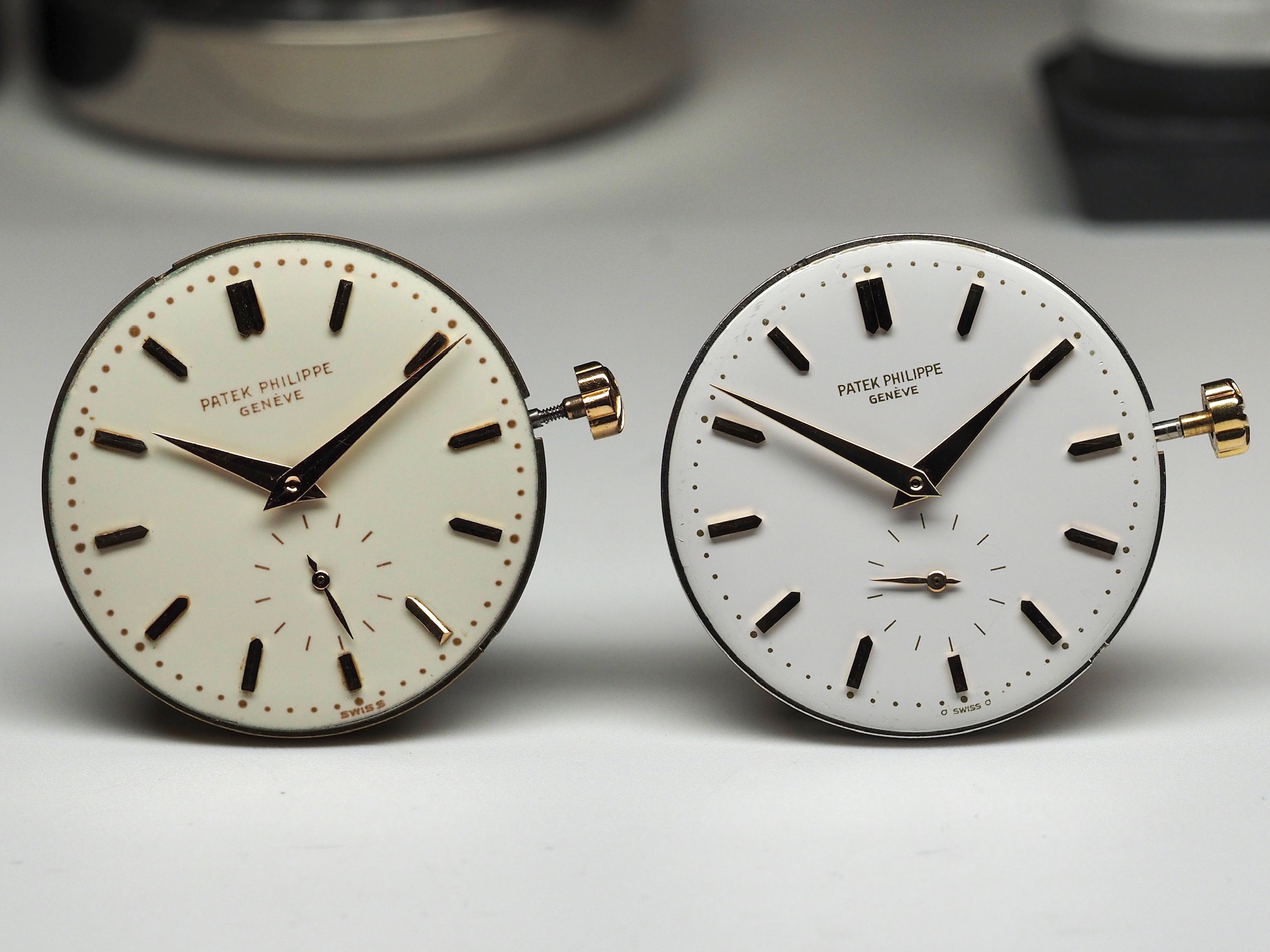
So when do we actually start calling something a Frankenwatch? Broadly speaking, the term is generally used when a watch has deliberately been assembled using significant components from different watches, particularly when those components were combined to create a more desirable or valuable configuration.
But even then, the question remains: how bad is it? My answer is: it depends. It depends on the extent of the changes, the intention behind them, the level of transparency, and, importantly, the brand and model involved. I want to explain how I look at this subject and, from my experience, how many dealers and collectors approach it behind closed doors.
It might be slightly taboo, but I have grown tired of some of the hypocrisy surrounding this subject.
Innocent until proven guilty?
At the risk of sounding controversial, I only consider a watch demonstrably “put together” when there is actual evidence to support that conclusion: Presumptio innocentiae. In other words, I start from the assumption that a watch could have left the retailer in its current configuration unless there is convincing evidence suggesting otherwise.
There is enough accumulated knowledge within the vintage-watch community to determine whether a particular configuration is plausible. We understand production periods, dial generations, case references, serial ranges, bracelet constructions, movements and countless smaller details.
If all the individual components are period-correct and the overall configuration itself is plausible, I do not see any reason to deem the watch possibly assembled. In many cases, there is simply no way to prove it. That changes when historical evidence exists. Perhaps the same watch appeared ten years ago at auction with a different dial. Maybe it was published in a book, on a forum, in an old dealer listing or somewhere else online. Suddenly you have something tangible.
The problem is that the reverse is equally true. In most cases, it is extremely difficult to prove with 100% certainty that every visible component of a vintage watch is exactly the component with which it left the factory. An Extract from the Archives, original papers or even the original sales invoice can provide information, but rarely tell the entire story. In a small number of cases, archival photography exists, but only for certain watches and certain manufacturers.
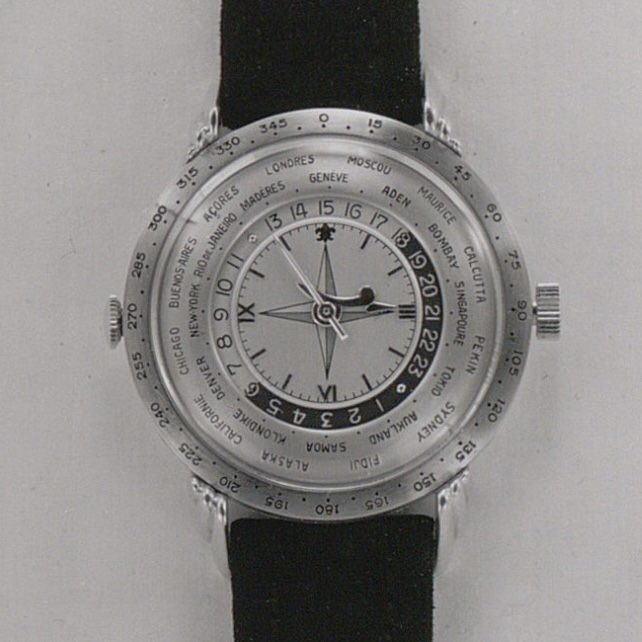
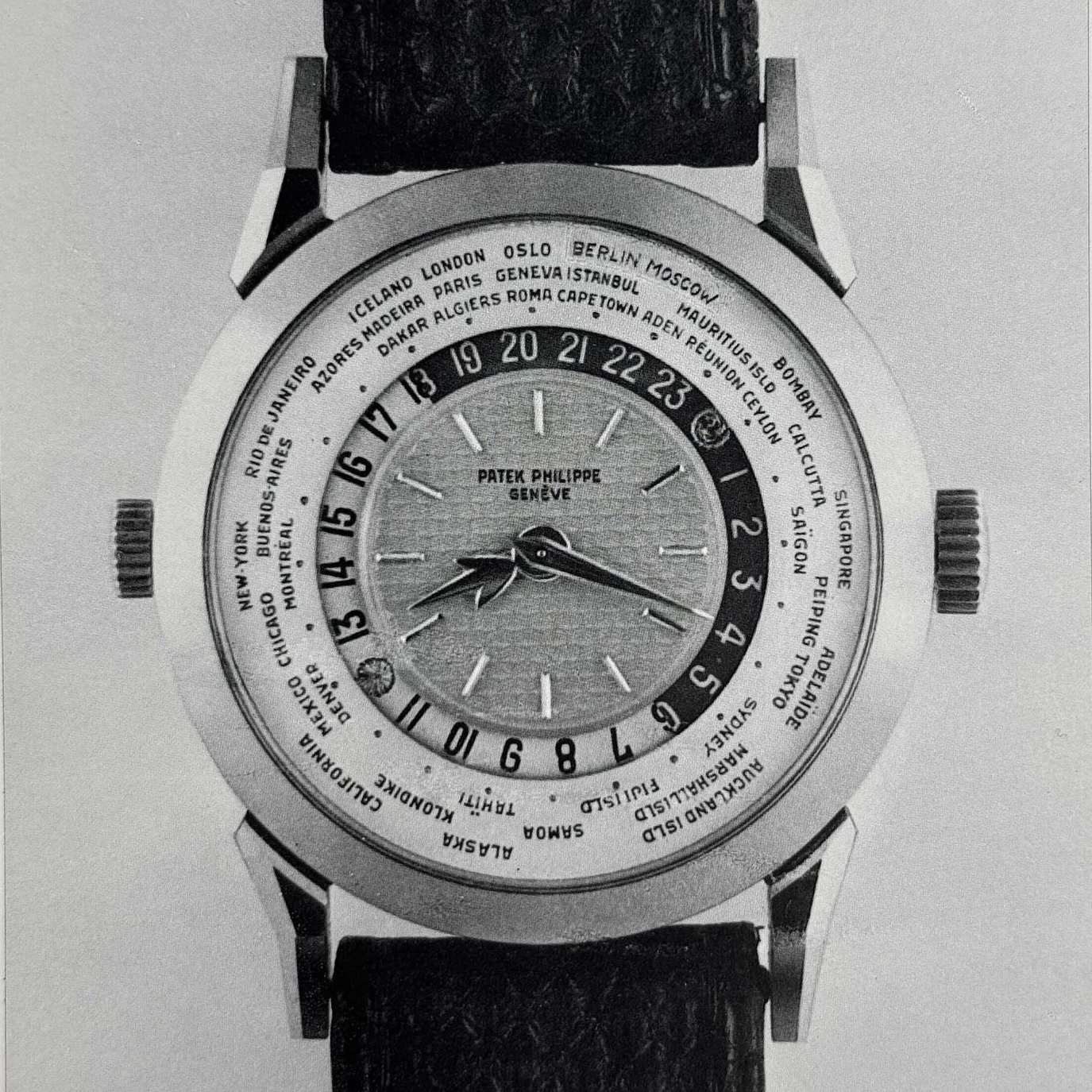
So my basic position is simple: I do not assume a watch has been assembled unless there is a good reason to believe that it has. Beginning collectors and first-time vintage buyers regularly ask us: “Is this watch completely factory original?” The uncomfortable reality is that there are relatively few vintage watches for which you can answer that question with absolute certainty. The more accurate answer is often: “We have no reason to believe it isn’t.” Unfortunately, that sounds considerably less reassuring from a sales perspective.
Personally, I think answering “yes” can be perfectly reasonable when the watch is correct, coherent and there is no evidence suggesting otherwise. What matters is that you do not say it when you possess information that proves the opposite.
But what is an “original configuration”?
This brings us to another problem: what exactly constitutes an original configuration? For many brands and references, the boundaries are reasonably clear. But there are exceptions where I think the usual obsession with configuration becomes particularly difficult to defend: the Rolex Day-Date.
The Day-Date was practically made to be configured. That is part of what makes the model so fascinating to collect. Over the decades, there have been countless possible combinations of dials, bezels, case finishes, hands, languages and bracelets. Rolex actively encouraged this to up-sell, particularly from the late 1970s onwards.
Bracelets, languages and dials are perhaps the most obvious examples because they were explicitly offered as options. Unlike buying many Rolex watches today, customers purchasing the flagship model historically had a considerable degree of choice. A Rolex master catalogue from the 1960s alone shows more than twenty bracelet options. Later catalogues from the 1980s clearly present different dials as “dial options”, including the additional price charged for certain executions.

Think about what that means in practice. Imagine walking into a Rolex retailer in 1985 to buy a Day-Date. The watch in the window has a blue dial, but you prefer Onyx. Or perhaps you want a pavé diamond dial. The retailer could arrange it. The dial might be ordered from Rolex or taken from the retailer’s own stock of available components so the watch could be delivered in the configuration the customer wanted. Now is that watch still “factory original”? Technically, perhaps Rolex did not ship that exact combination from the factory to the retailer. But the retailer delivered it that way to the first owner using fitting components supplied for exactly that purpose. My answer is rather simple: I don’t care.
Strangely enough, I think there is fairly broad acceptance of this reality among experienced dealers and collectors. Publicly, however, everyone suddenly becomes much more mysterious about it.
I’ll happily admit I have changed Day-Date configurations for clients on numerous occasions. Perhaps a collector desperately wants a particular stone dial but would rather have it paired with a smooth bezel. If all the components are correct and appropriate for the watch, I have absolutely no ethical problem making that change. To me, that is completely in keeping with what the Day-Date historically represented. Customers could also return to Rolex years after purchasing their watch and request changes or upgrades. These watches were never necessarily frozen in one configuration for eternity.
Take it one step further. Imagine finding a wonderful vintage Day-Date with an exceptional Stella dial. The dial is fantastic, but it happens to sit inside a heavily worn case with a stretched bracelet. Would it really be some terrible crime against horological history to place that dial into an exceptional, period-correct case? Personally, I would argue almost the opposite. I would rather see an important dial preserved in a beautiful and coherent watch than insist that it remains attached to a ruined case simply because somebody believes that combination might have been together for longer.
Many experienced dealers and collectors I know think along similar lines. Yet few people are particularly eager to say it publicly because of the stigma attached to that dreaded word: Frankenwatch.
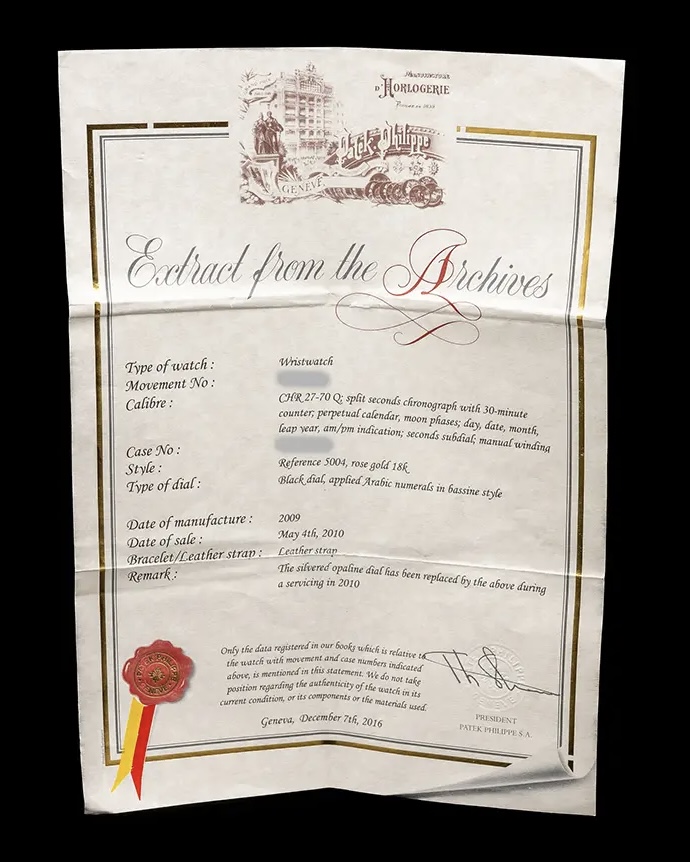
This is also why I think applying one universal standard to every vintage watch makes little sense. Patek Philippe, for example, operates in a very different historical context. When applying for an Extract from the Archives, significant discrepancies between a watch and the information recorded in the archives can prevent the watch from receiving an extract in the configuration presented.
Rolex does not offer a comparable public extract service. More importantly, the historical information available for Rolex watches varies enormously depending on the period. Earlier production records -below 7.8m serial- accessible within Rolex’s internal systems can be considerably more limited than collectors sometimes imagine, usually only matching a serial number with the reference and movement number. While information for later watches may be more extensive, it is trivial due to above mentioned scenarios. Additionally, the system is corrupted. Hence Rolex recently limiting in-depth access to top executives only instead of every Rolex service centre.
That makes the idea that every vintage Rolex can somehow be traced back to its exact birth configuration rather optimistic and quite frankly unrealistic. And even Rolex historically did not always display the obsession with matching numbers that modern collectors do. Look at four-digit Daytonas. It is not unusual to encounter watches where the reference stamped inside the caseback differs from the reference engraved between the lugs. A 6265 can be found with a 6263 caseback and still be “factory deliverd” like that.
From a modern collector’s perspective, that can look strange. From the manufacturer’s perspective at the time, the logic was often far more practical: the component fitted and did its job.
Different watches, different rules
So if you ask me, different rules should apply to different watches. Partly because the burden of proof is different. Patek Philippe often offers more archival information. But also because many Patek references were simply not designed to be altered. However, there are many exceptions there too; like the 5004R with black dial. Most did not leave the factory like that but have been retrofitted, on request, by Patek Philippe themselves.
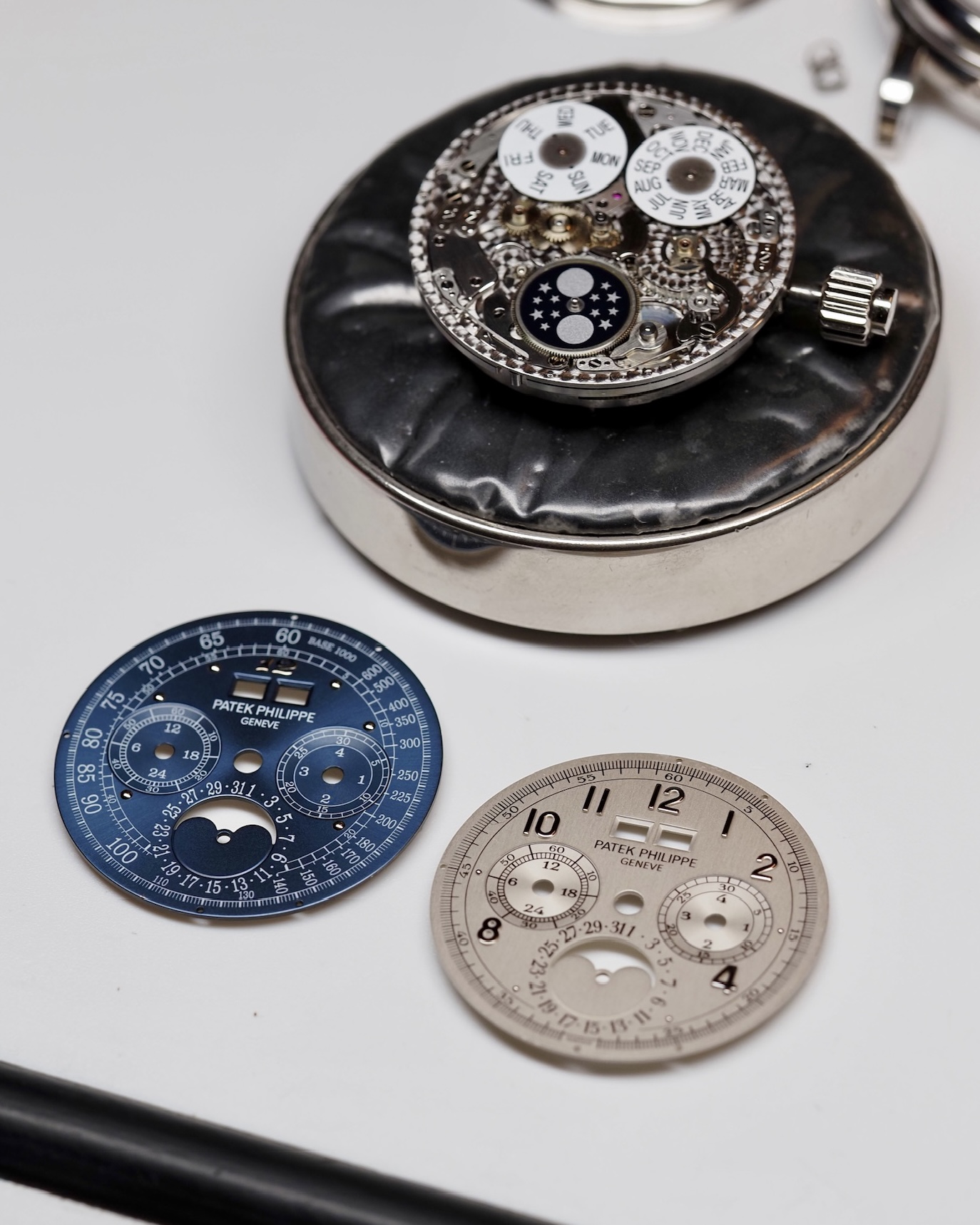
But within Rolex itself you could also argue its importance between the different lines. A steel Submariner or GMT-Master was not intended as a platform for endless aesthetic customisation. As a result, we have much clearer ideas about which dials, hands, bezels and other components belong to which periods and serial ranges. If there is an obvious discrepancy, that matters.
A later matte dial inside a 1964 GMT-Master 1675 cannot represent its original production configuration. Likewise, a “meters-first dial” in a Submariner 1680 from a period when that dial generation had already disappeared raises an obvious problem. Those inconsistencies can have a significant effect on value.
But now it becomes interesting. Suppose you buy that 1675 with an incorrect later dial. You subsequently source an absolutely correct, period-appropriate gilt dial and install it. What is the watch now? If there is no previous publication showing it with the wrong dial, nobody looking at the watch today could reasonably demonstrate that the gilt dial was installed decades later.
Under the standard I described earlier, the watch is now period-correct, aesthetically coherent and impossible to prove as having been assembled. Does that make it acceptable? And should the dealer disclose the dial change anyway? This is where the real discussion begins.
I suspect many dealers would follow some version of “what you don’t know won’t hurt you”. Not necessarily because they are deliberately trying to deceive somebody, but because the market places value on the romantic idea that a watch must remain exactly “as born”, while in most cases nobody can actually prove what “as born” looked like.
But I also think there is an enormous difference between restoring a watch to a correct, coherent period configuration and deliberately manufacturing a rare configuration from unrelated components purely to create something “rare” and hence more valuable. Those two things are too often thrown into the same Frankenwatch bucket.
Conclusion
Have I established a perfect definition of a Frankenwatch and written a universal set of rules? No. That wasn’t really the point. The purpose was to be transparent about how this part of the vintage-watch world actually works and to remove some of the fairy tales surrounding originality. More importantly, it was to question how relevant some of those fairy tales really are.
How important is it that a watch remains in exactly the configuration in which it was “born”? How much evidence do you require before believing that it has? And how much value do you personally attach to a configuration that may be impossible to prove either way?
Ultimately, only one person can answer those questions: you. For me, two things carry enormous weight: aesthetic coherence and period correctness. I want a vintage watch to make sense. The dial, case, hands, bezel and bracelet should belong together historically and aesthetically. I care about what we know about the watch, and I care about transparency when its history is known. Sometimes wrong parts can be an indicator a configuration or the entirety is fraudulent.
But I don’t believe every vintage watch needs an imaginary, unbroken umbilical cord connecting every component to the exact moment it left the factory. Sometimes a watch is simply better judged by what is actually in front of you.