Patek Philippe World-Time 2523 'Prototype'
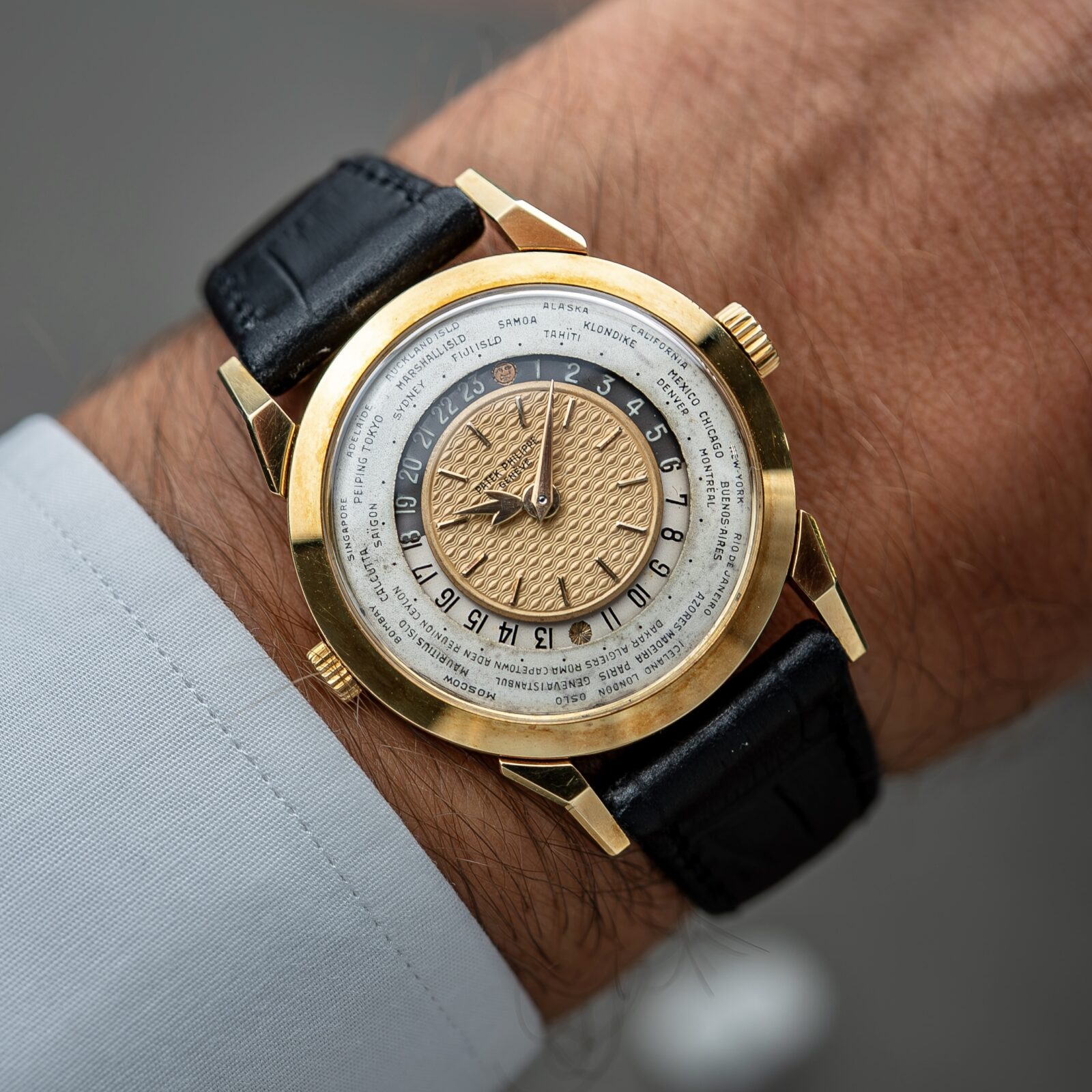
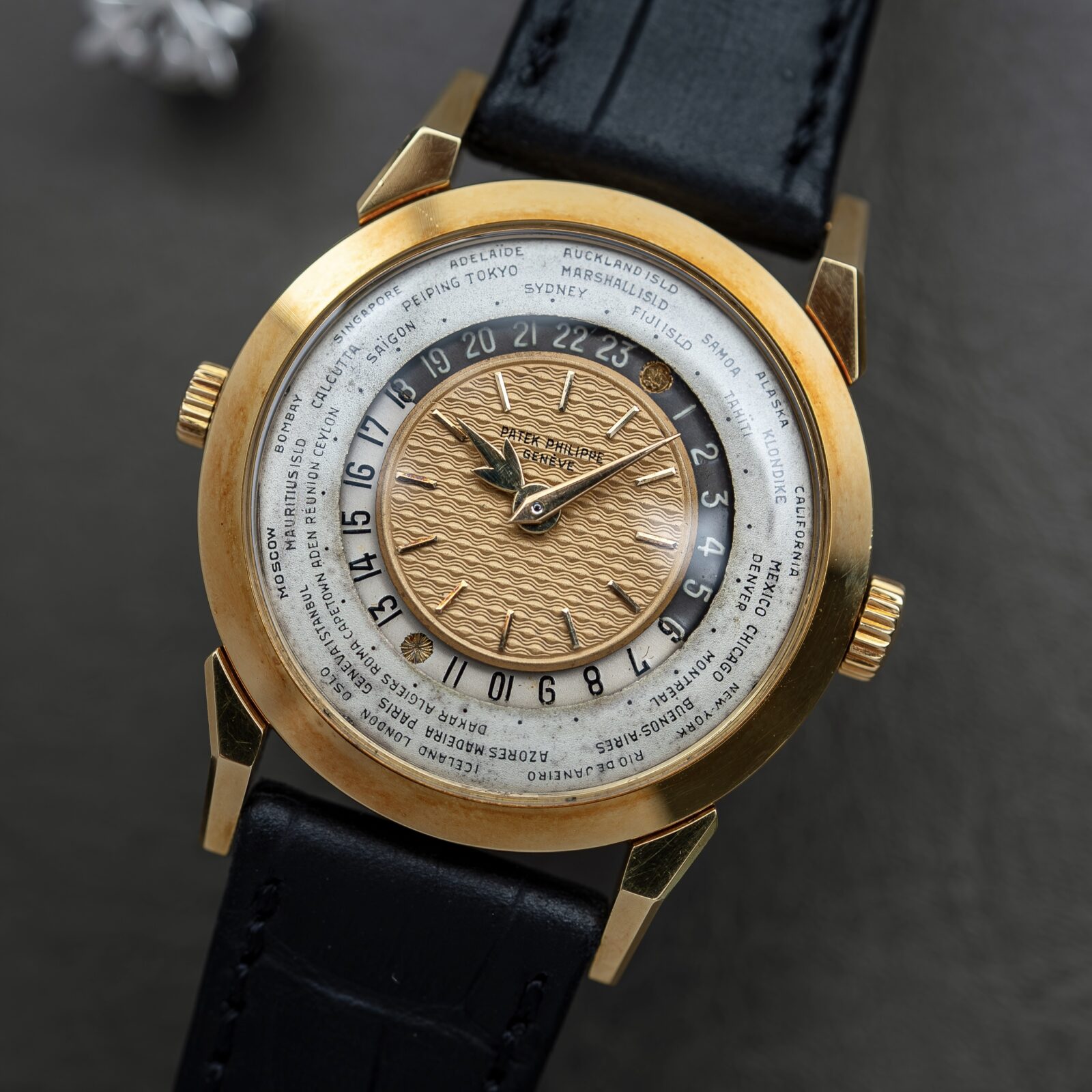
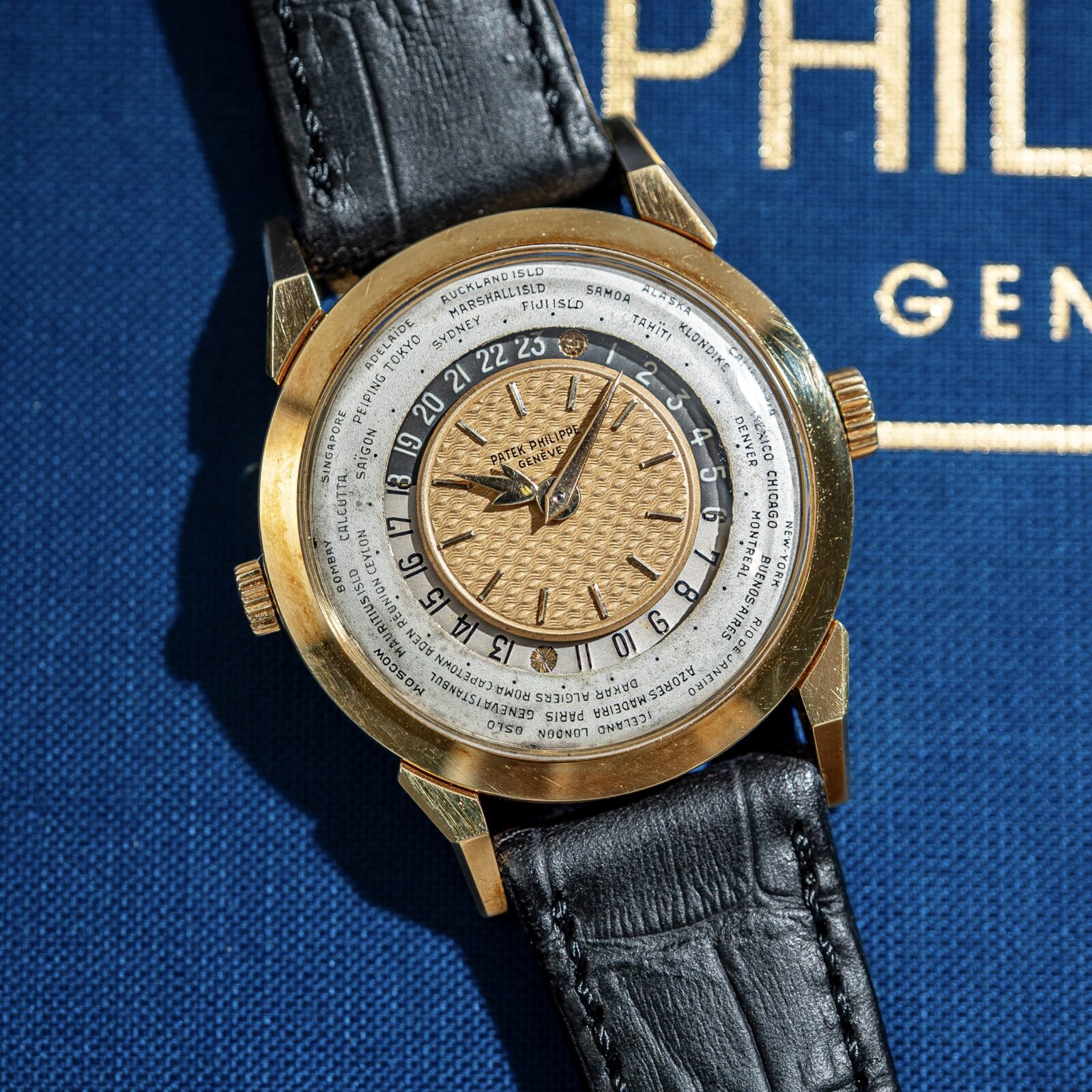
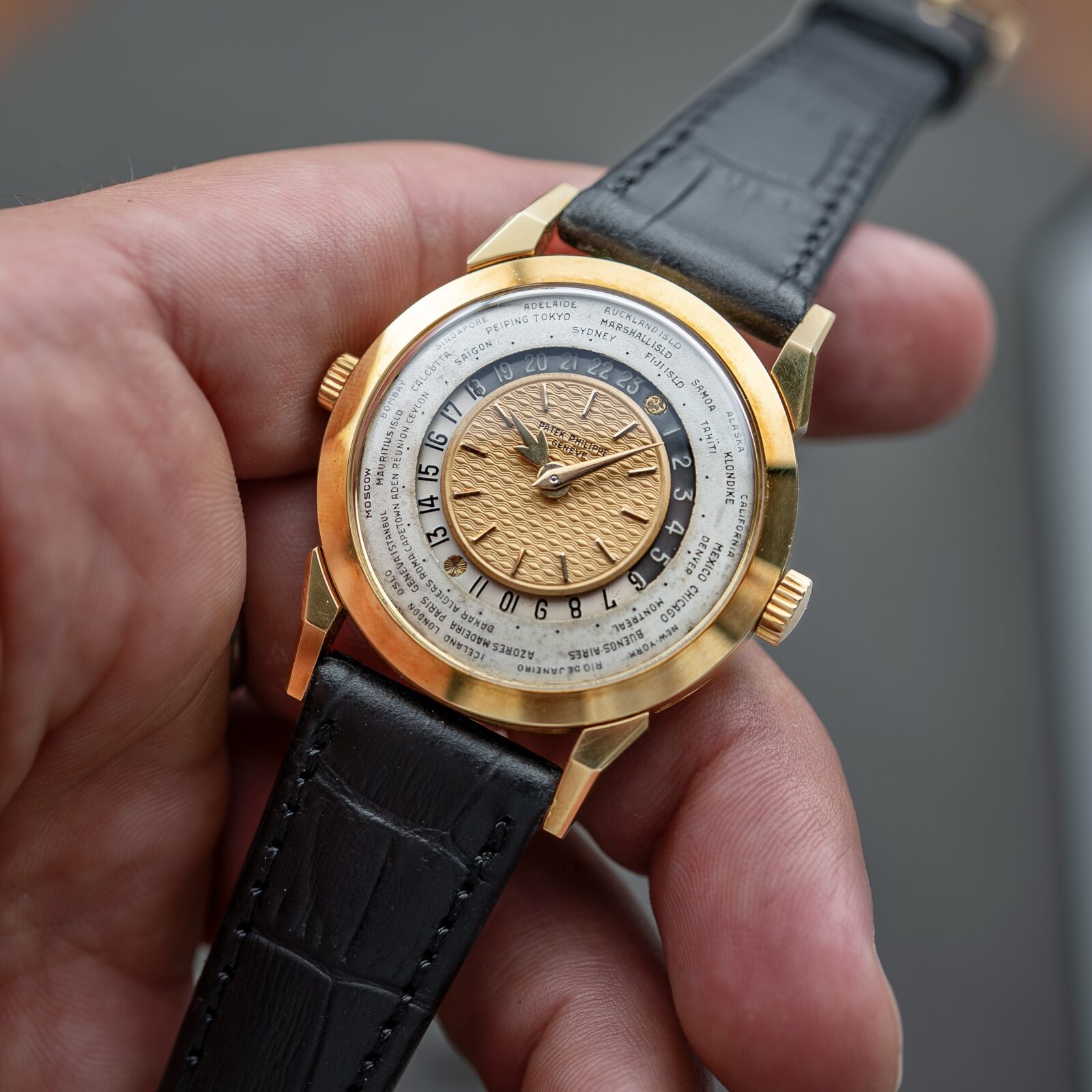
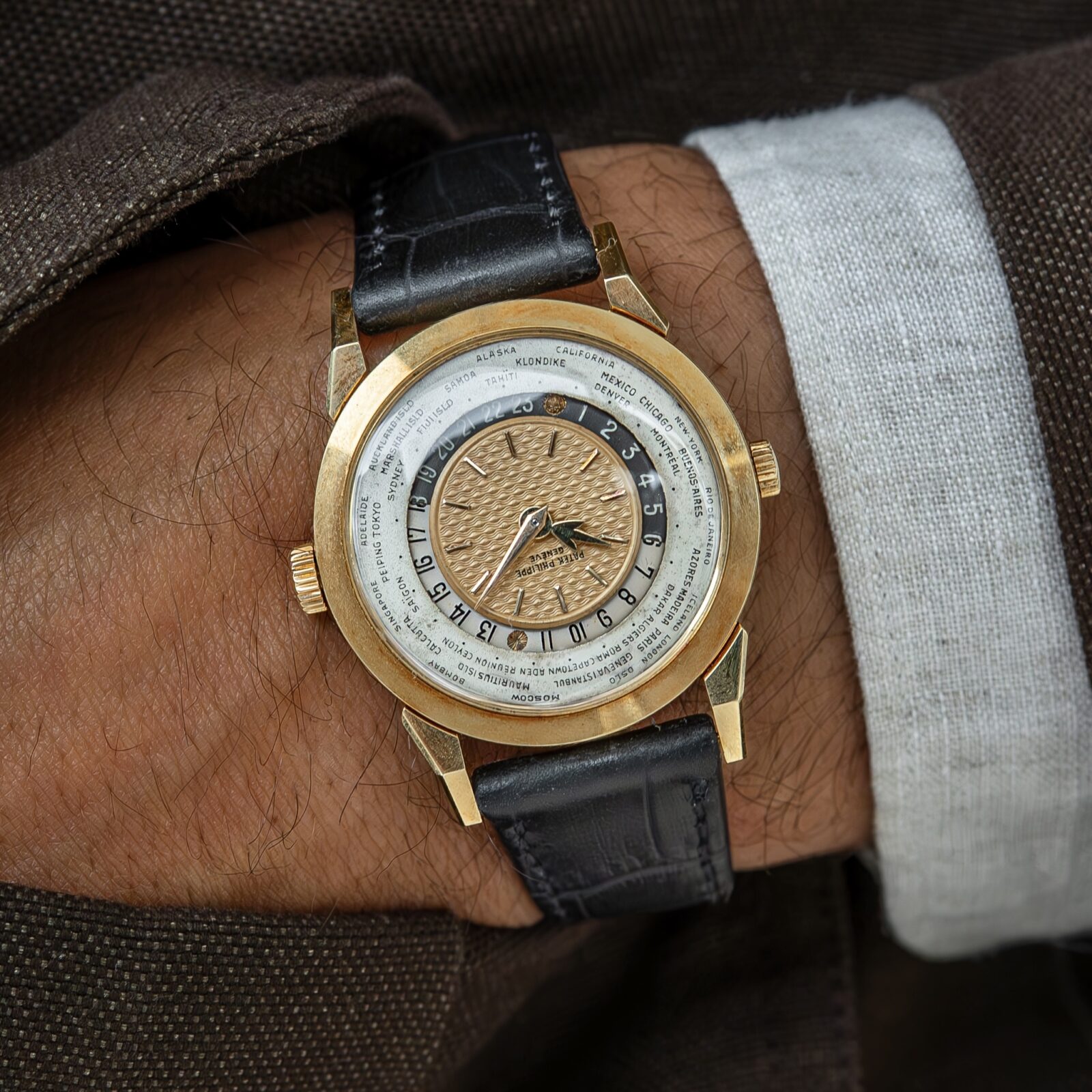
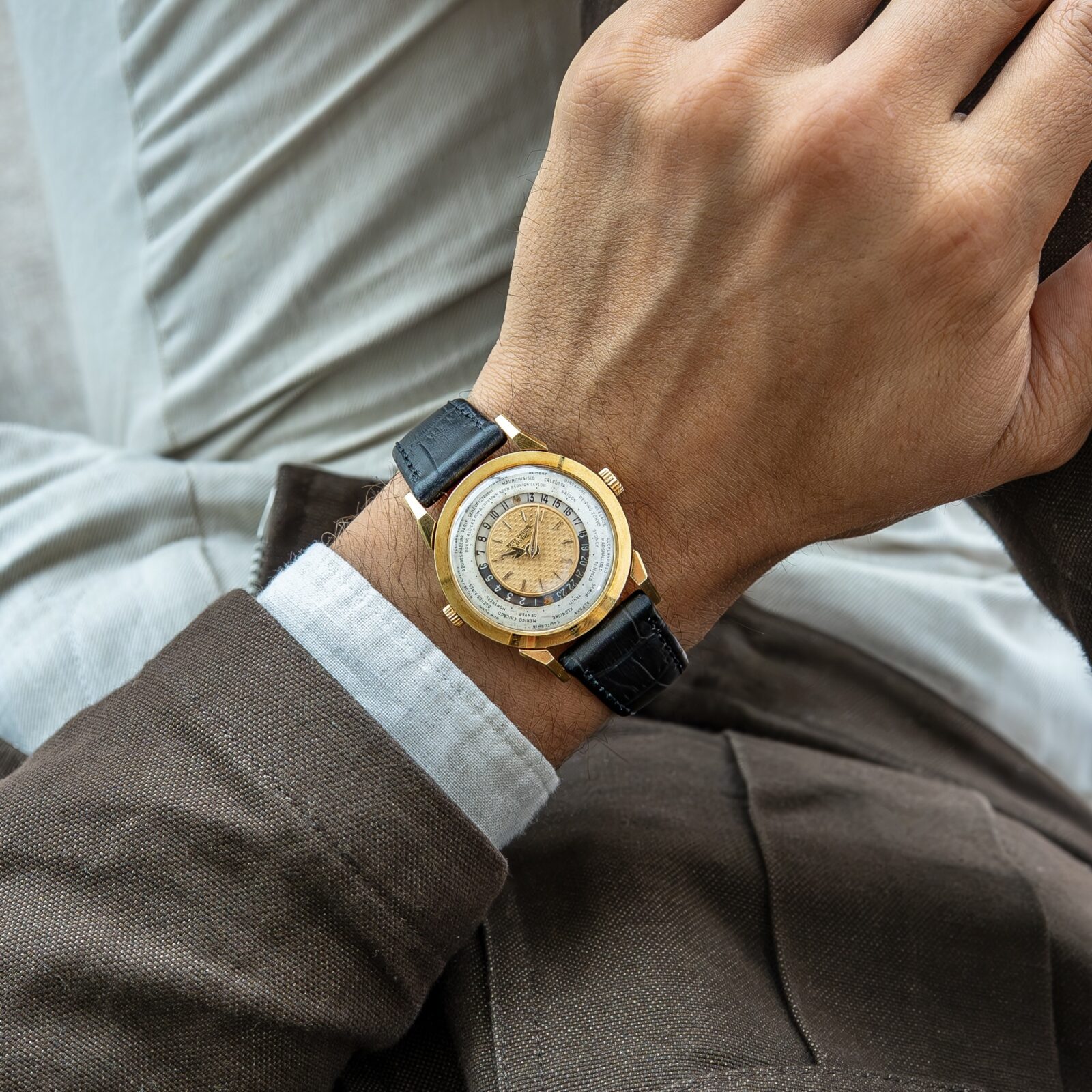
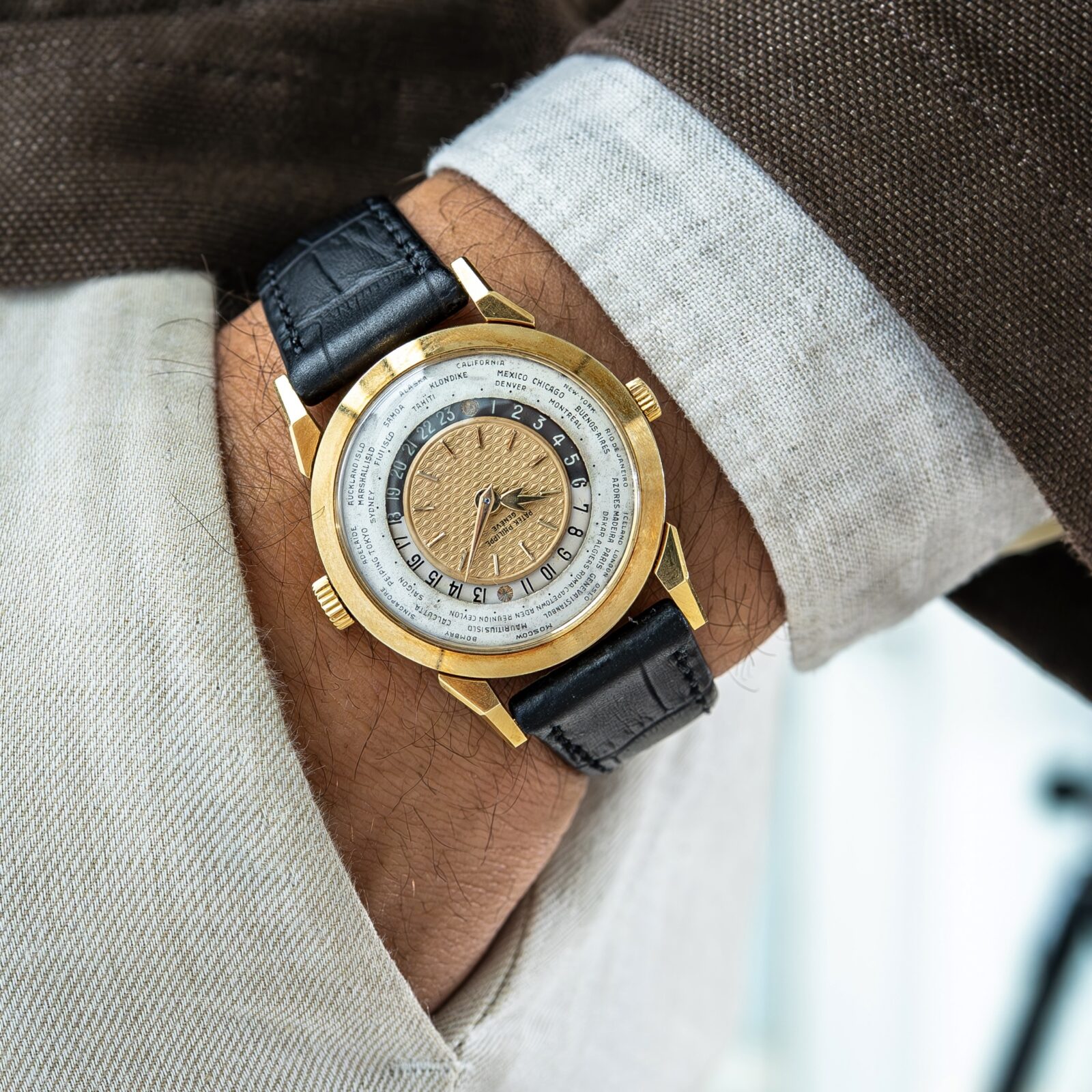
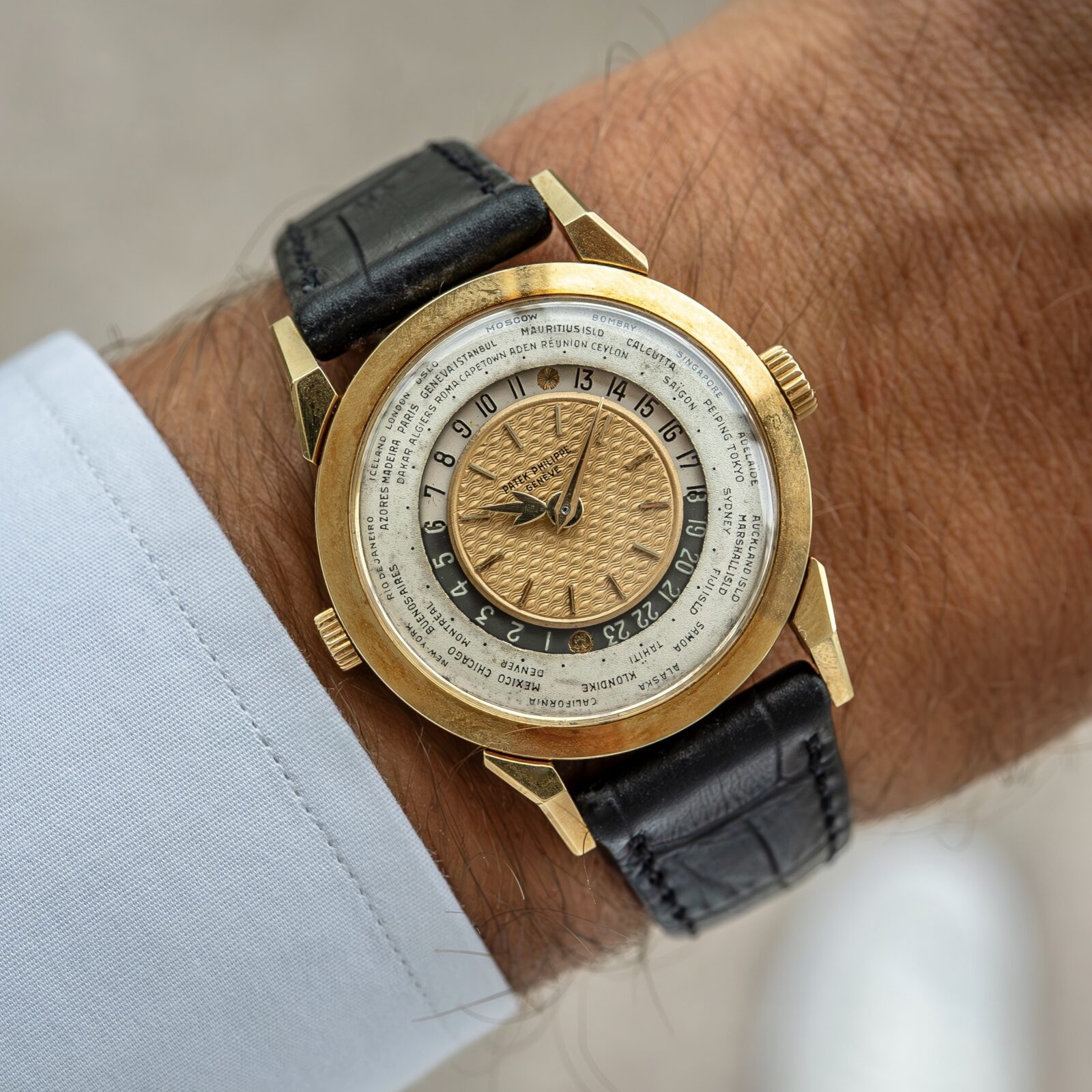
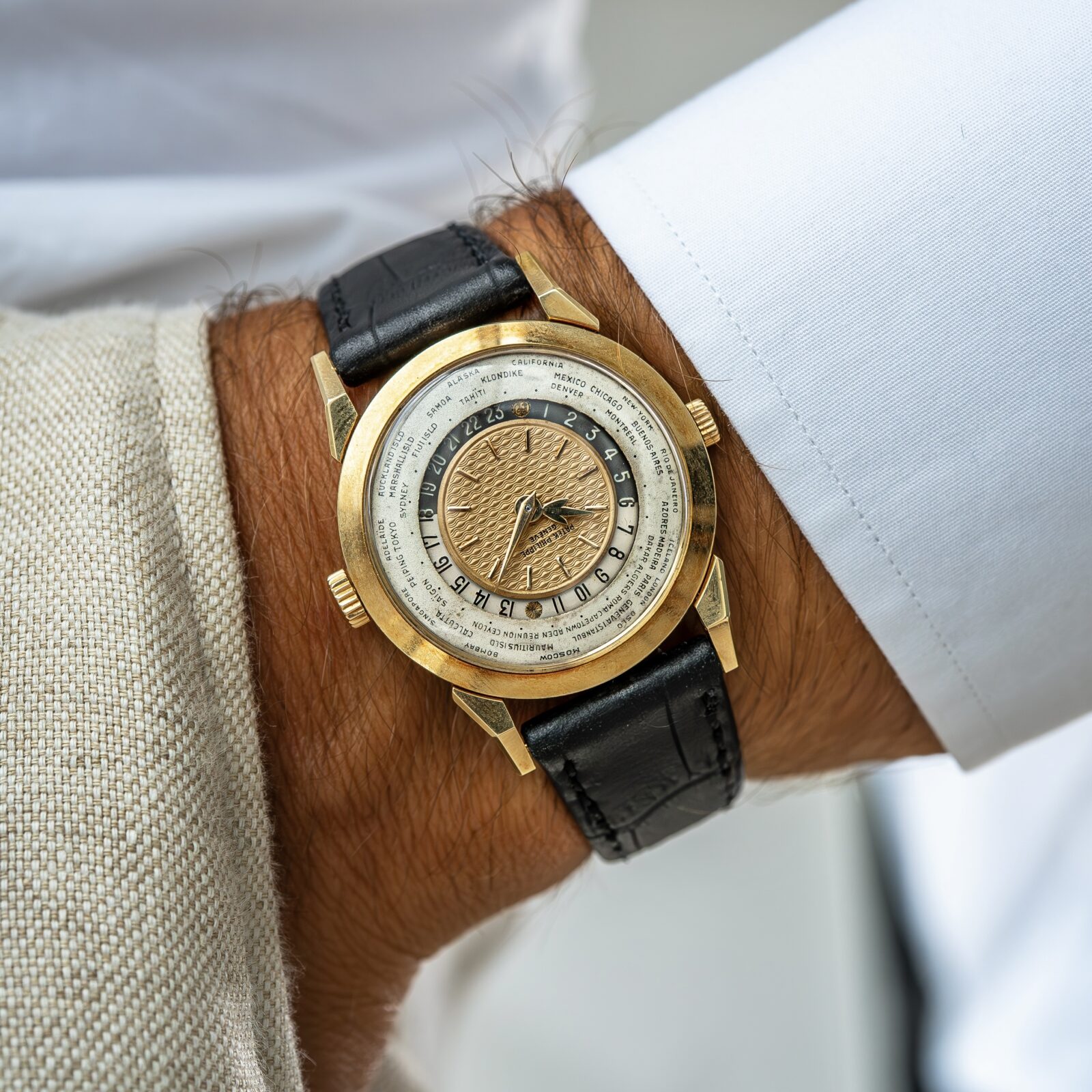
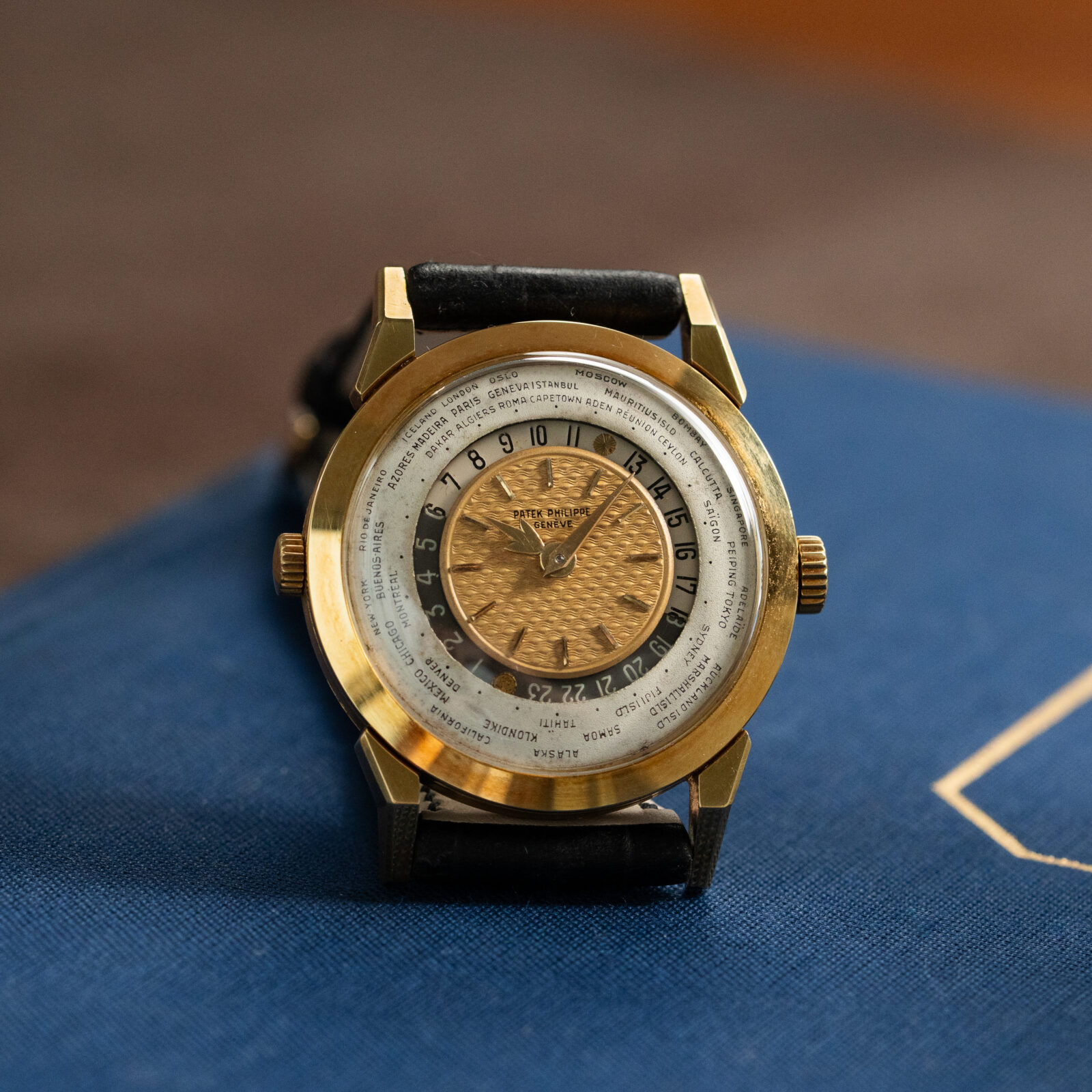
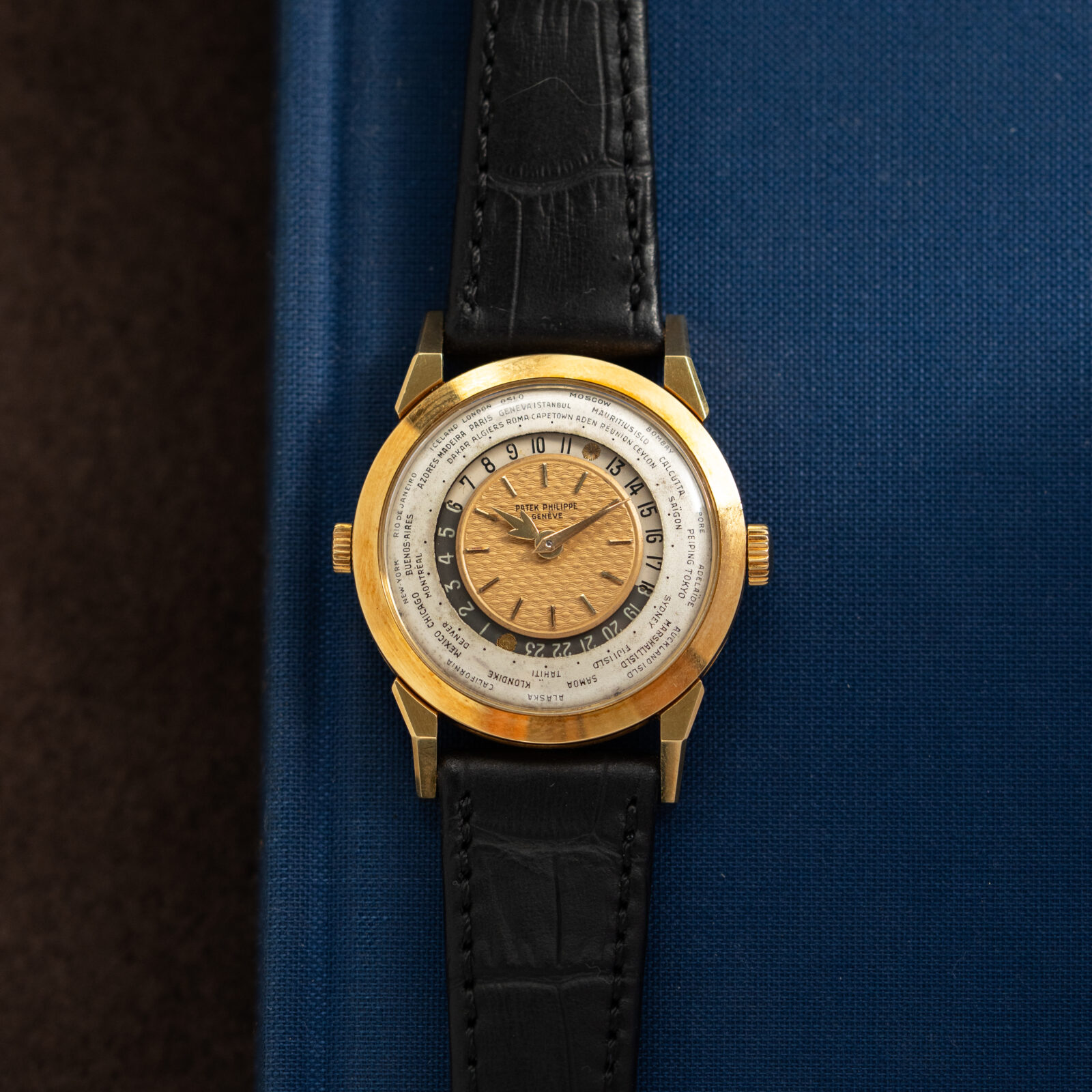
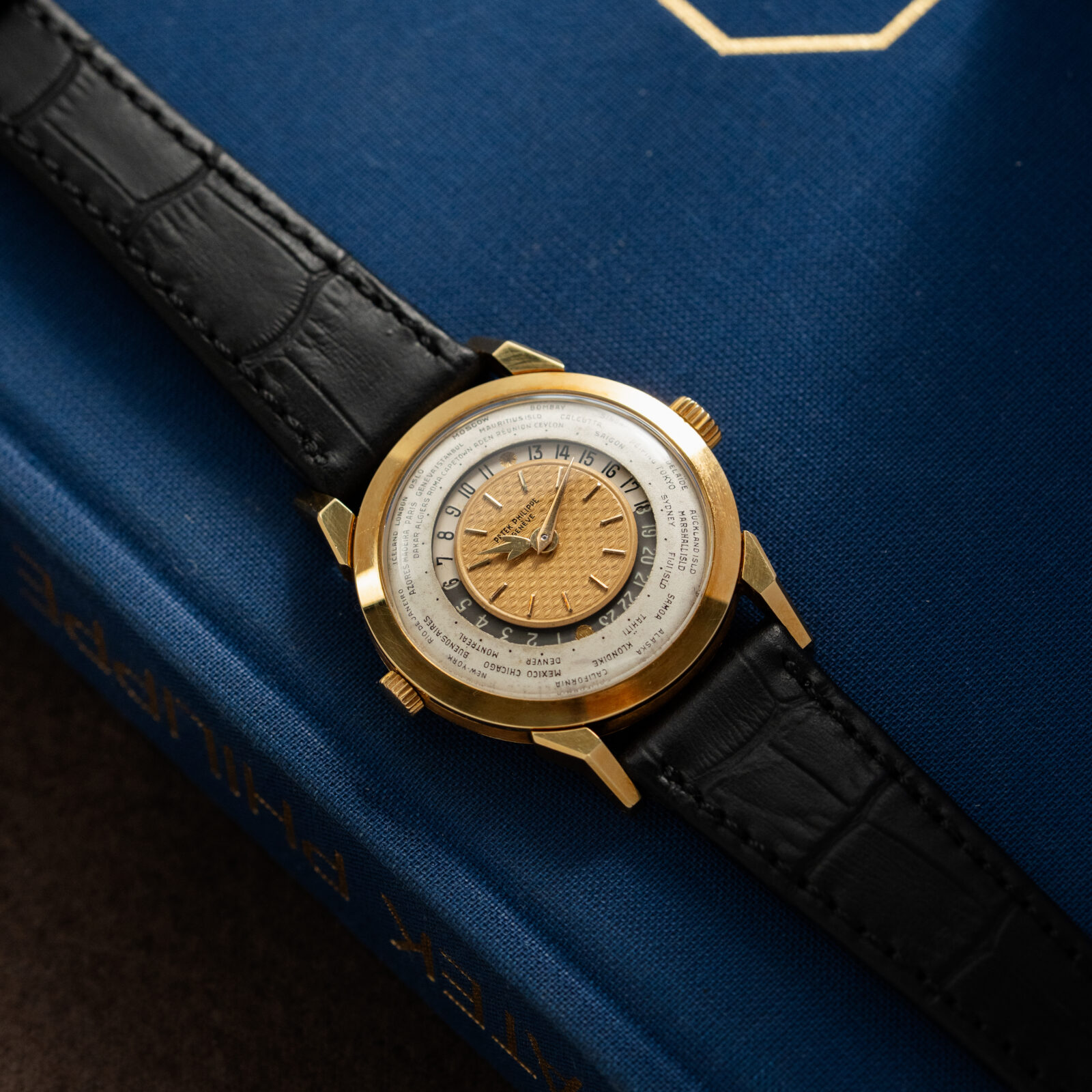
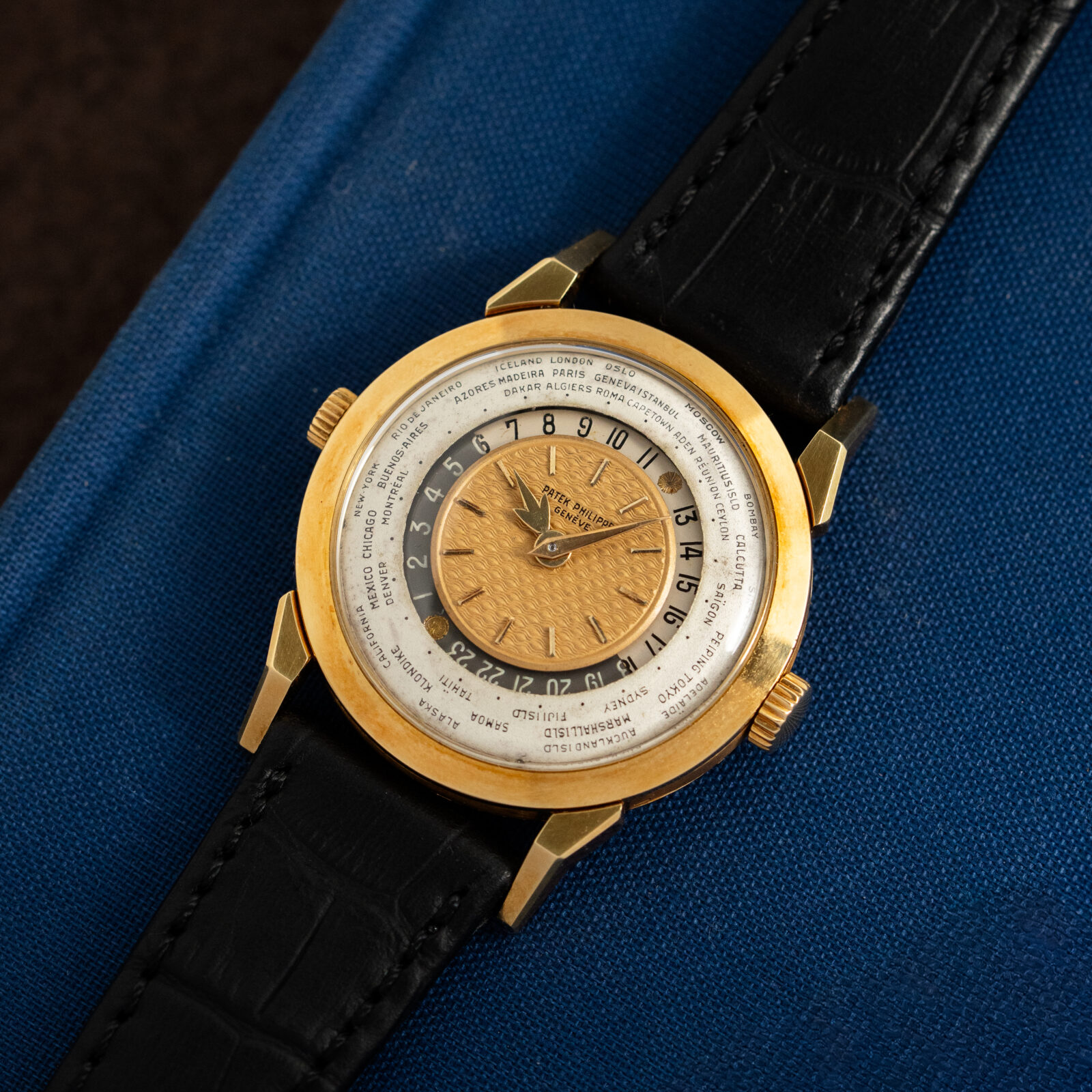







Patek Philippe World-Time 2523 'Prototype'
- Free worldwide delivery
Thrilled to introduce you to what may be one of the most important wristwatches ever created. Yes, that’s a bold claim, and one that’s often thrown around a little too casually, but I think you’ll agree that this time, it’s entirely justified.
To truly appreciate the significance and ambition behind this watch, we’ll take things step by step. But before we dive into the piece itself, we need to understand the world that shaped it; and, just as importantly, the brilliant mind behind its creation.
What exactly is a world-time watch? To answer that, we need to rewind to the 19th century, a period defined by rapid innovation and the shrinking of distances. Railways expanded, steamships connected continents, and suddenly, the world felt smaller than ever before.
There was just one problem: time itself refused to cooperate. Every region operated on its own local time, creating a logistical nightmare for travellers and railway systems alike. The solution came in 1876 with a revolutionary idea: divide the world into 24 standardized time zones. Less than a decade later, this system was formally adopted.
It was a turning point, one that made modern travel and global communication possible. But it also presented a fascinating challenge for watchmakers: how do you capture the time of the entire world on a single dial?
Enter Louis Cottier, a name that deserves far more recognition than it often receives. Born as the son of a watchmaker and inventor, Cottier was immersed in horology from the very beginning. After working with several respected firms, he struck out on his own during the economic turmoil of 1931. It was then that he unveiled his most enduring contribution: the “Heure Universelle”, French for world time. Initially conceived for pocket watches, but eight years later, in 1939, adapted for wristwatches.
His system was as elegant as it was ingenious. By combining a rotating 24-hour ring with a location disc, his watches could display the time across multiple time zones simultaneously, transforming complexity into clarity. Cottier’s work quickly attracted the attention of the industry’s elite. He collaborated with legendary houses such as Rolex, Agassiz and Vacheron Constantin, and of course: Patek Philippe. He produced a little shy of 400 movements for Patek Philippe between 1937 and 1965, many of which incorporated this world-time innovation.
He was crafting movements that would define an entire category of horology. Over the years, he secured multiple patents and expanded his repertoire to include jump hours and early interpretations of digital displays, always pushing the boundaries of what a watch could do. Even today, his influence is unmistakable. Modern world-time watches still rely on the principles he established nearly a century ago; a testament to the enduring brilliance of his design.
In short, before we even begin to examine the watch itself, it’s worth pausing to appreciate this: what you’re about to see isn’t just a timepiece. It’s the culmination of a global problem, a revolutionary idea, and the genius of a man who changed the way we measure the world.
The 2523 is not the first world-time reference by Patek Philippe, but it is widely considered the most accomplished. Its predecessor, ref. 1415, had already been in production since 1939. The 2523 first entered the market in 1953 at a price of 2,385 CHF and remained in production until 1966. In those 12 years, fewer than 50 examples were produced, divided between the 2523 and 2523-1.
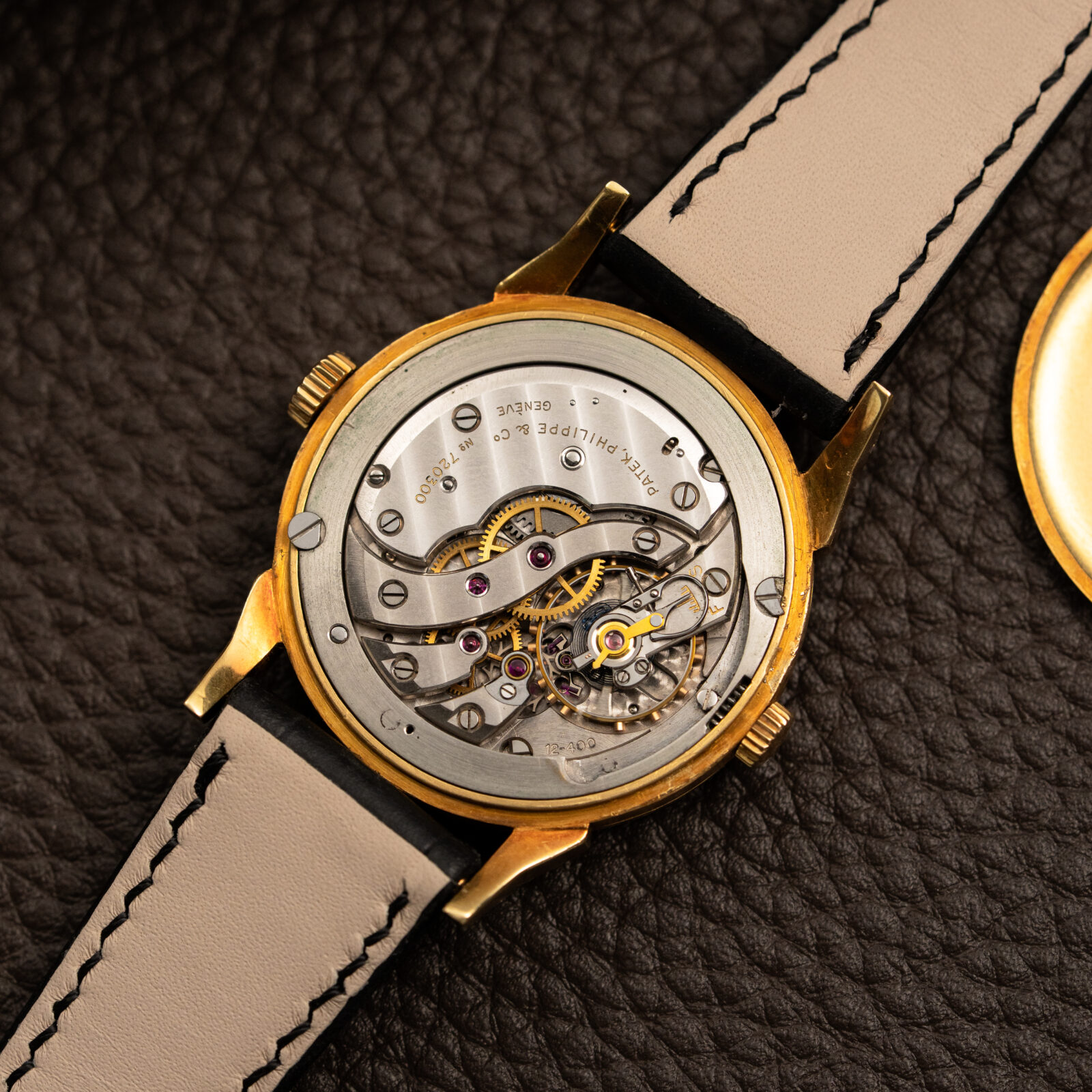
The cases were made by Genevan master Antoin Gerlach, as can be seen by the number 4 within the key inside the snap-on caseback. Above it, the case number can be found: 305699, being the lowest number of this reference and therefore the first produced case. Lastly, we find the alloy and hallmarks; in this instance, 18K. The majority were produced in yellow gold, a few in pink, and just one in white gold.
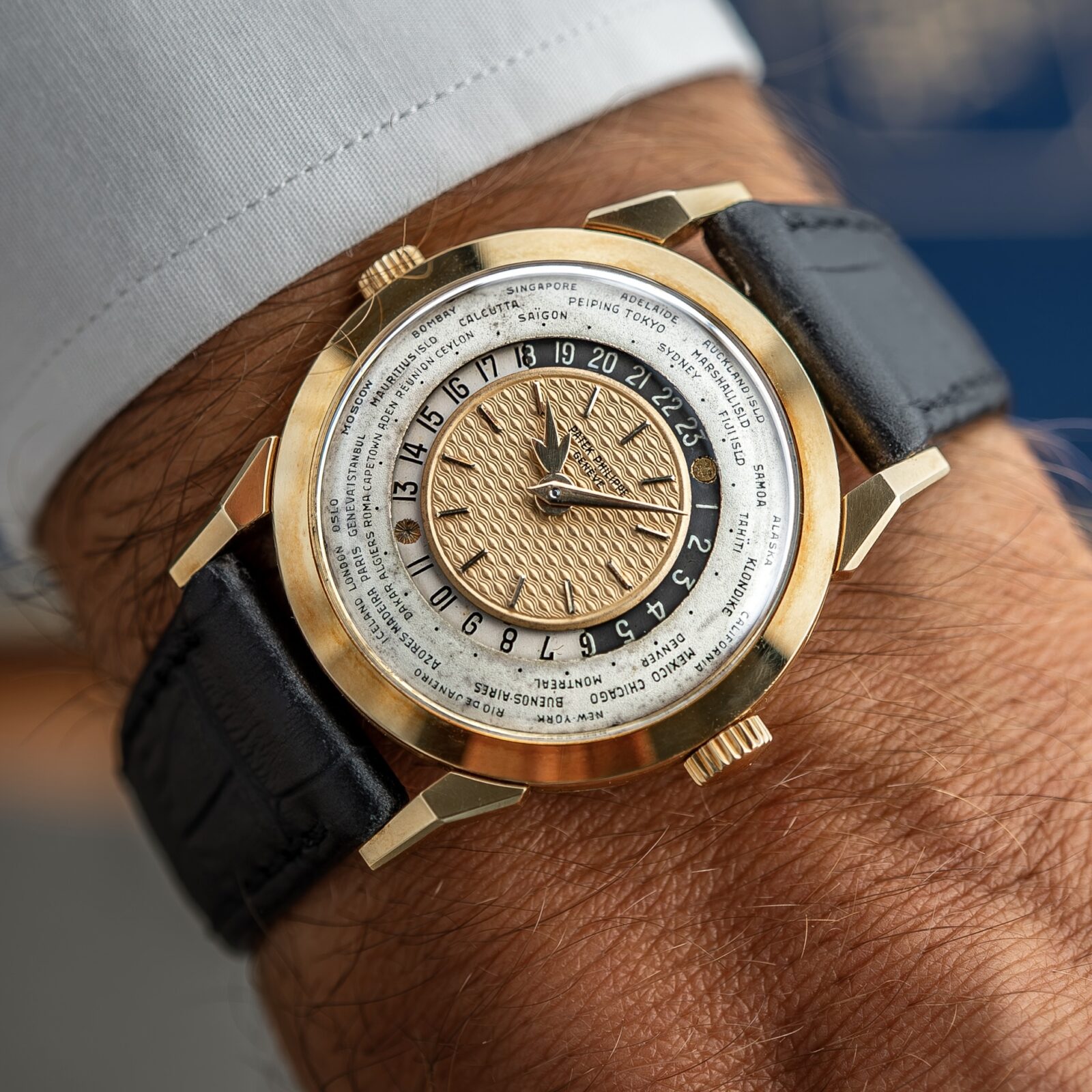
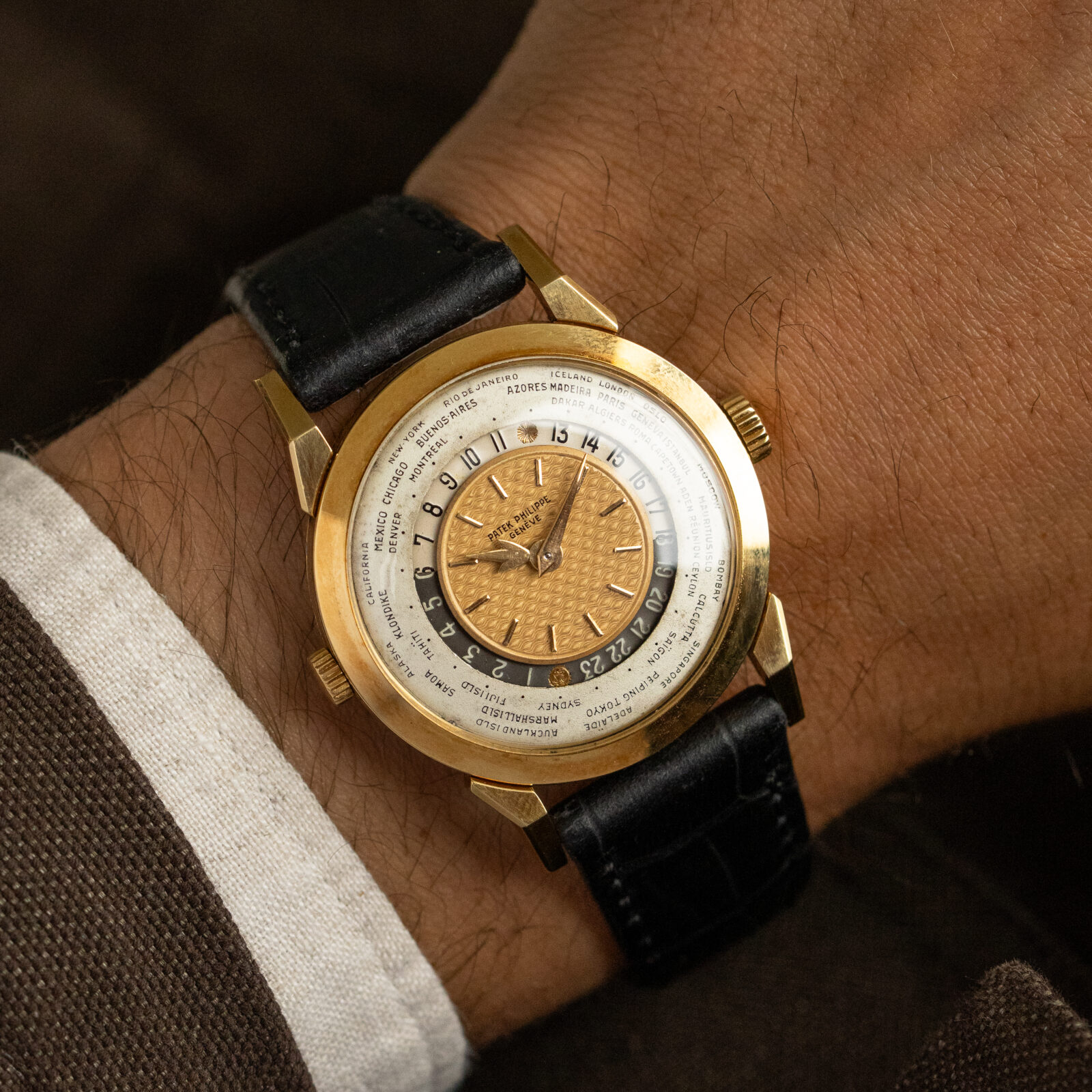
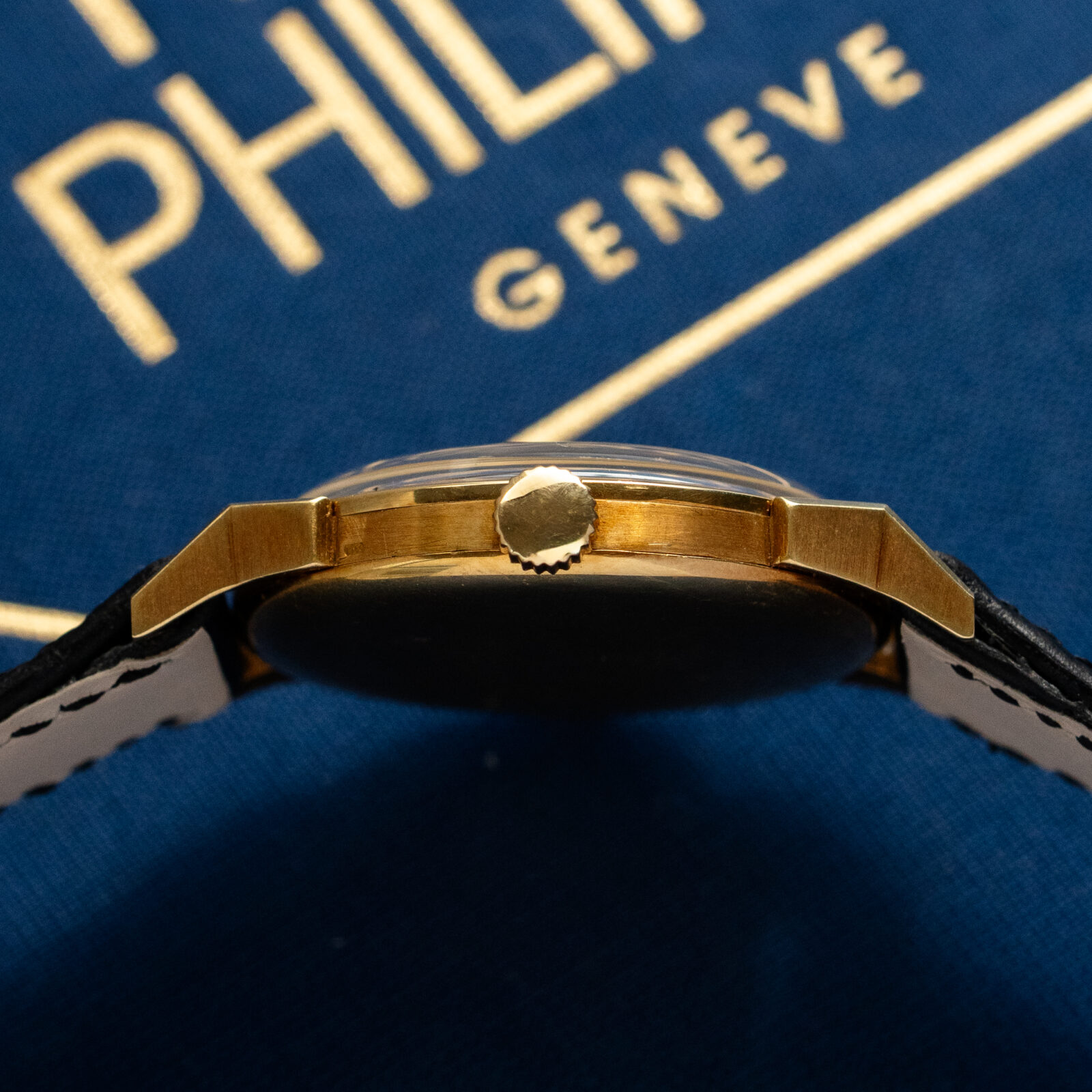
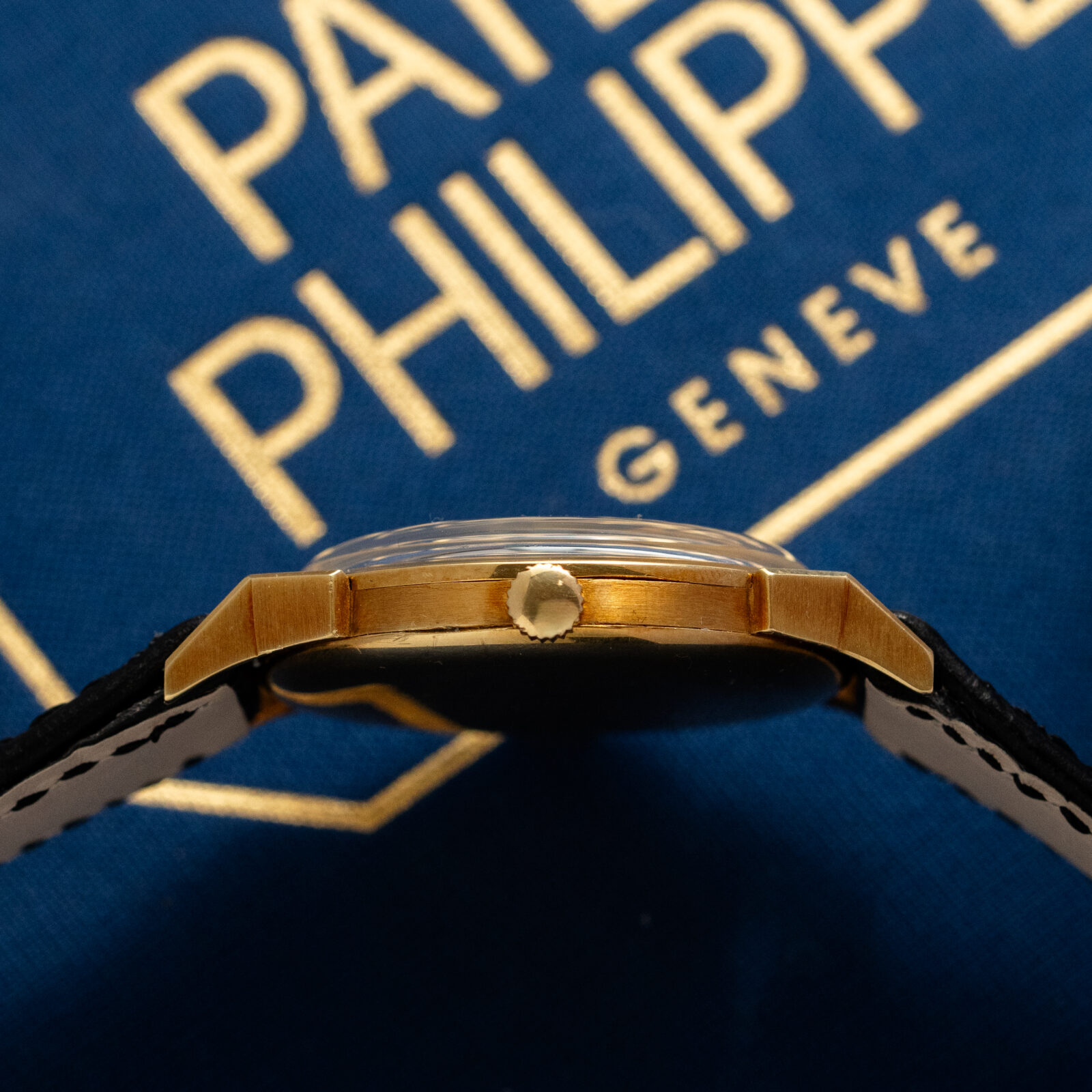
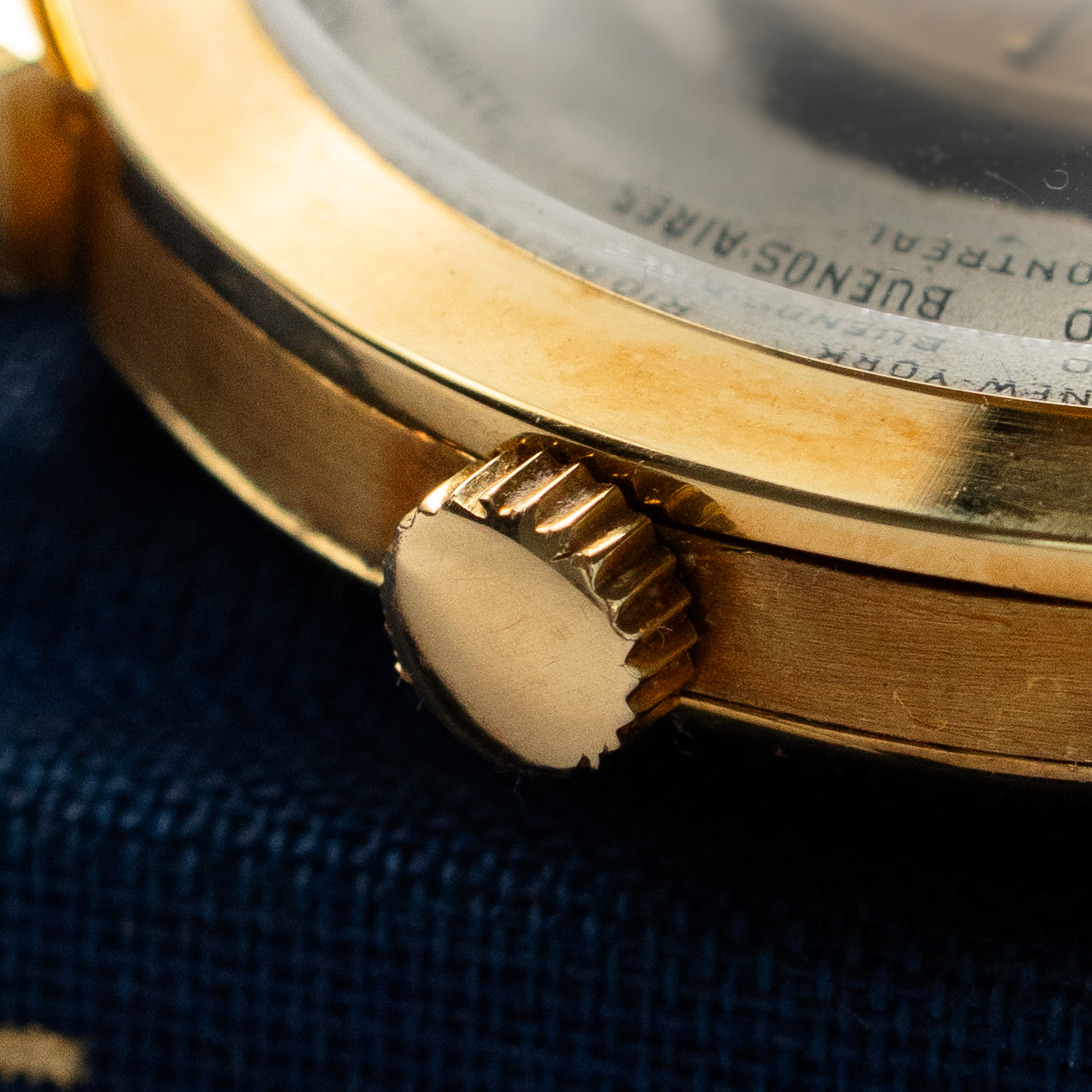
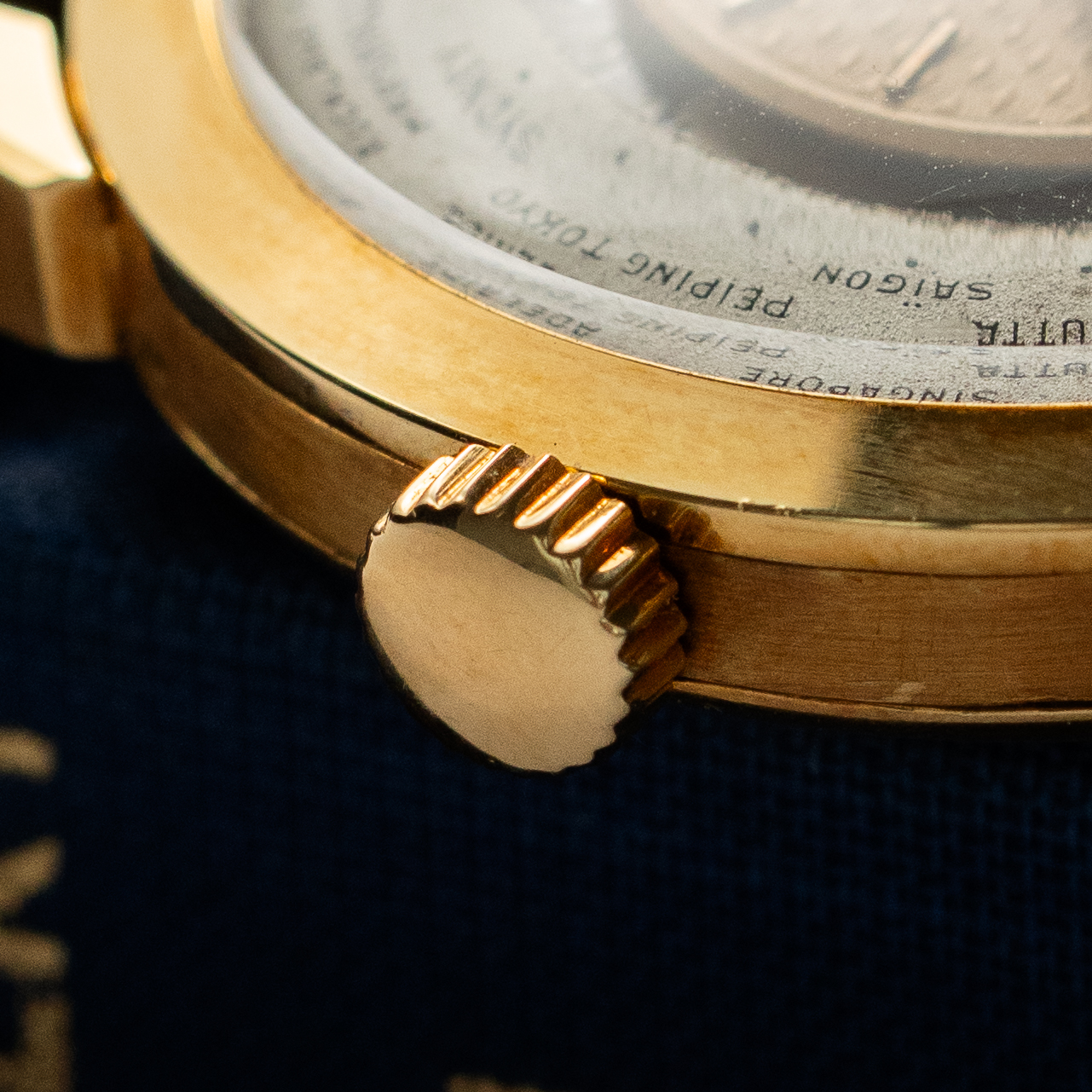
It is a three-piece case, featuring a smooth, sloped bezel and measuring 35.5mm excluding both crowns, which were produced by Boninchi Frères from Geneva. Since this is such an important feature, both functionally and aesthetically, it is reassuring to see the original crowns still in place. The time-setting crown was made slightly larger for ease of use.
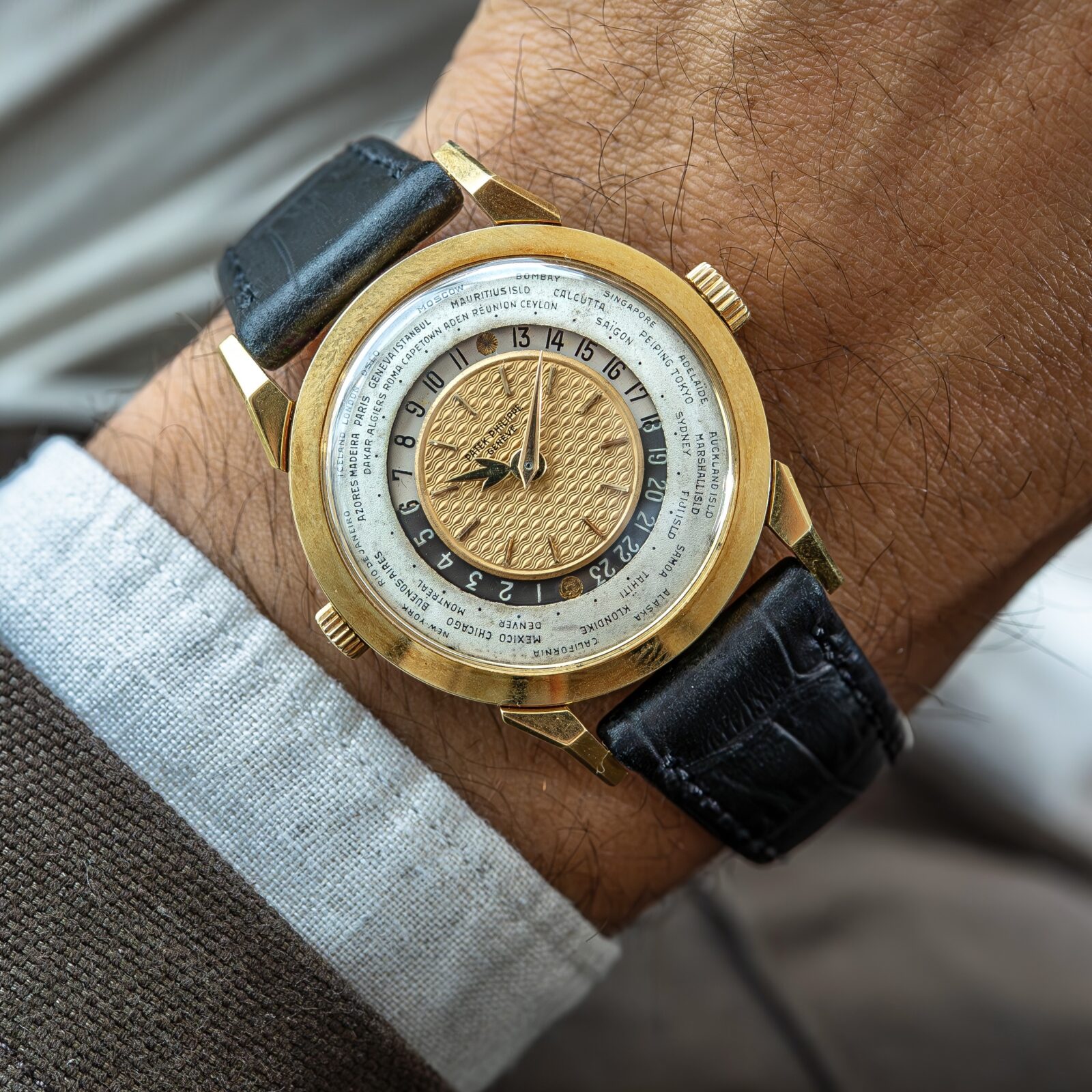
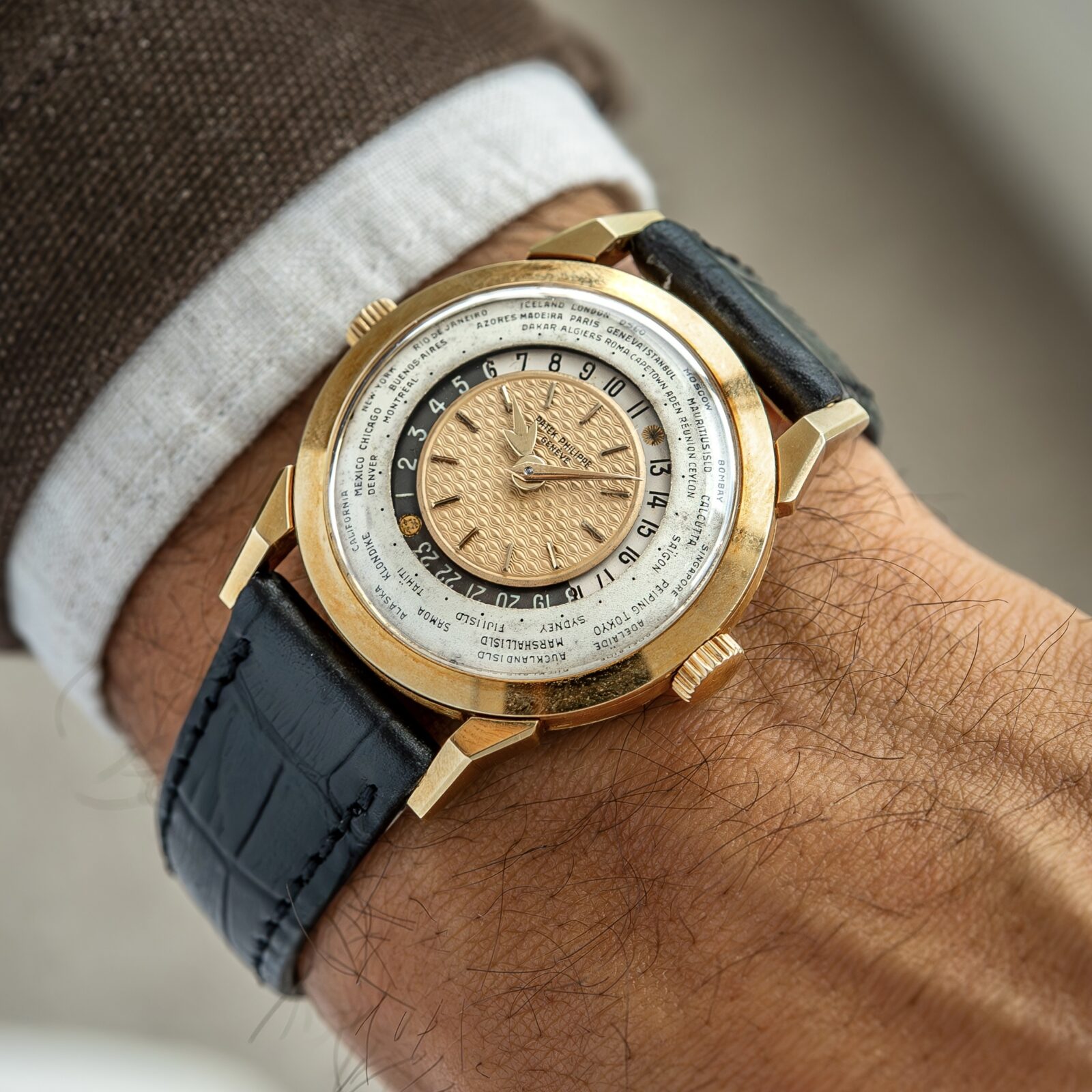
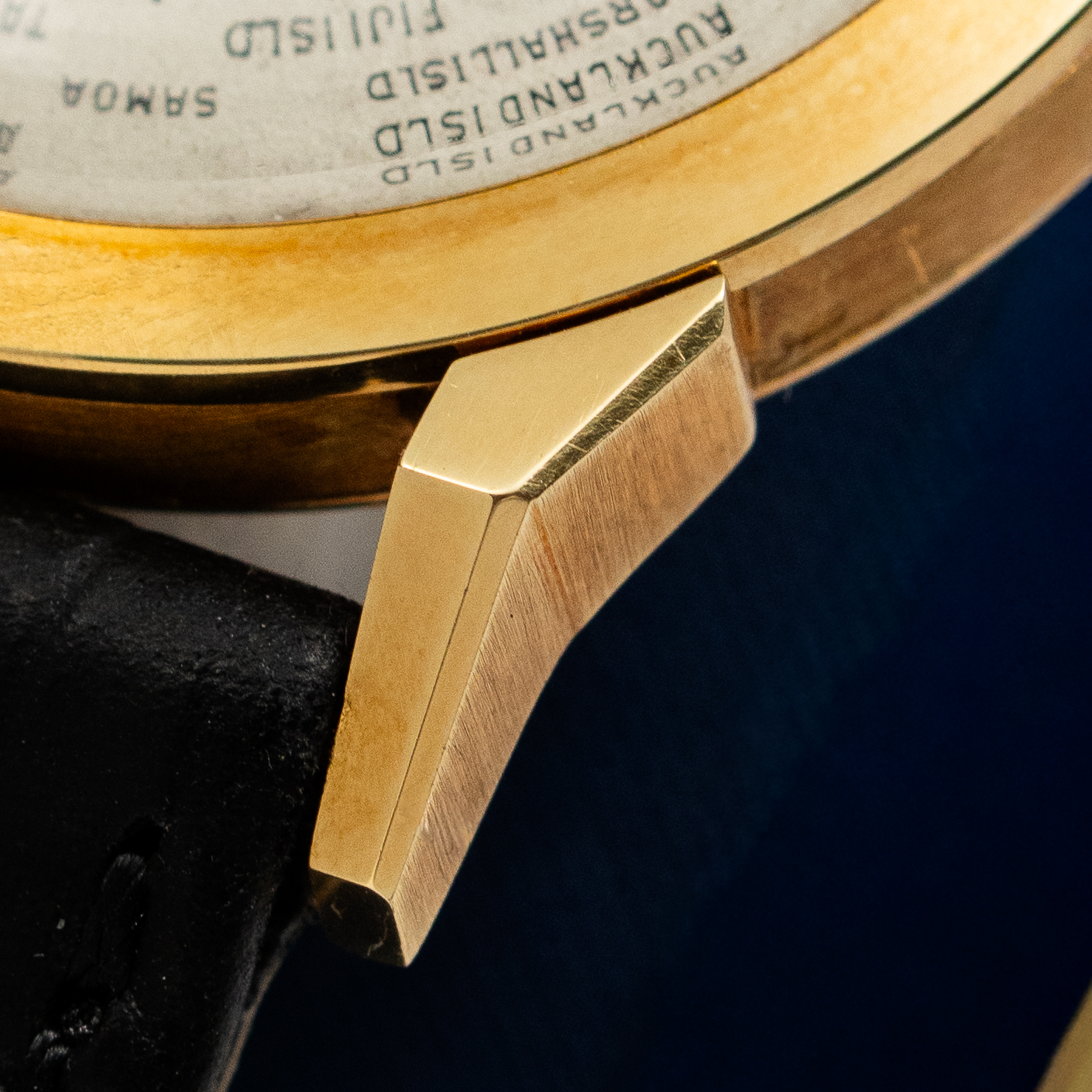
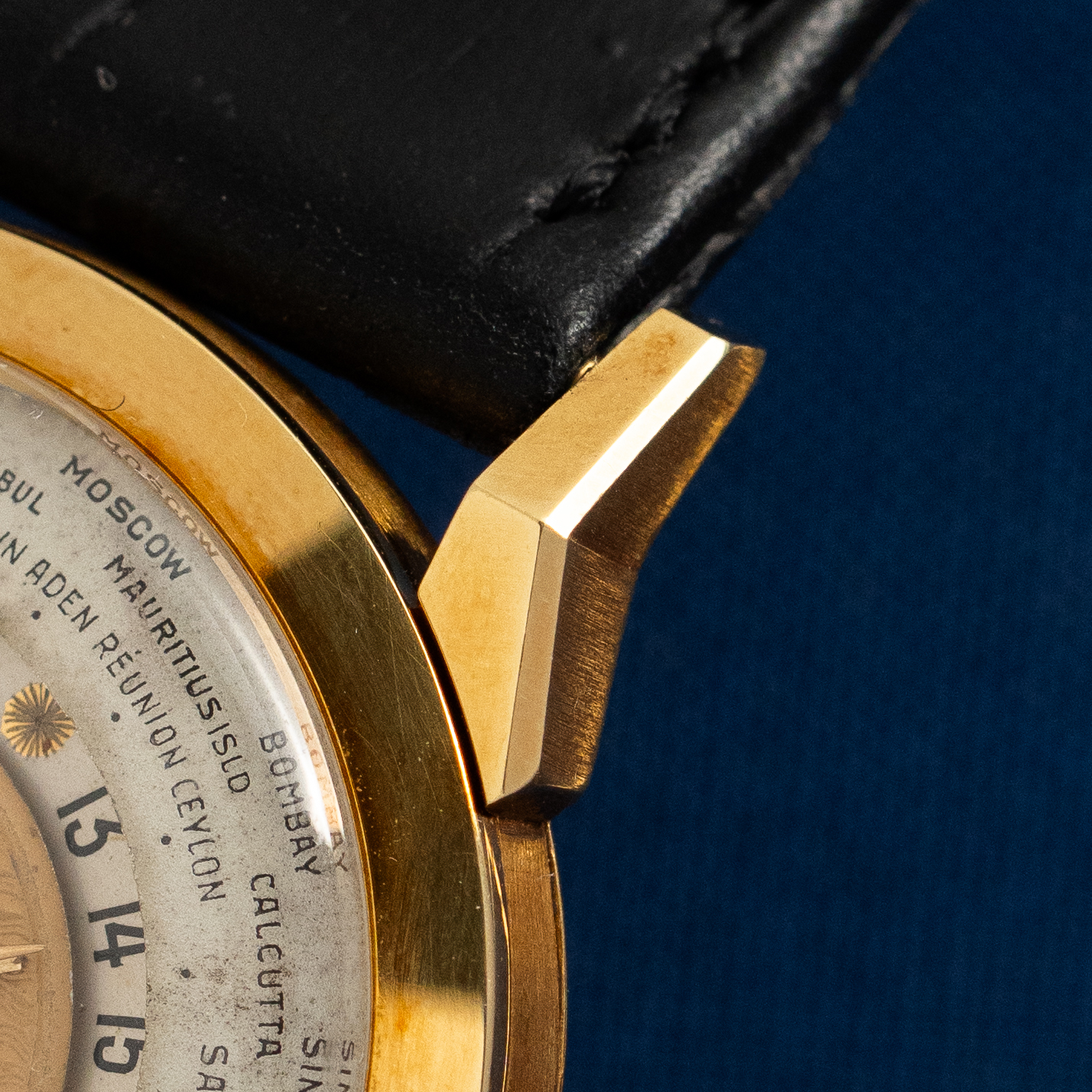
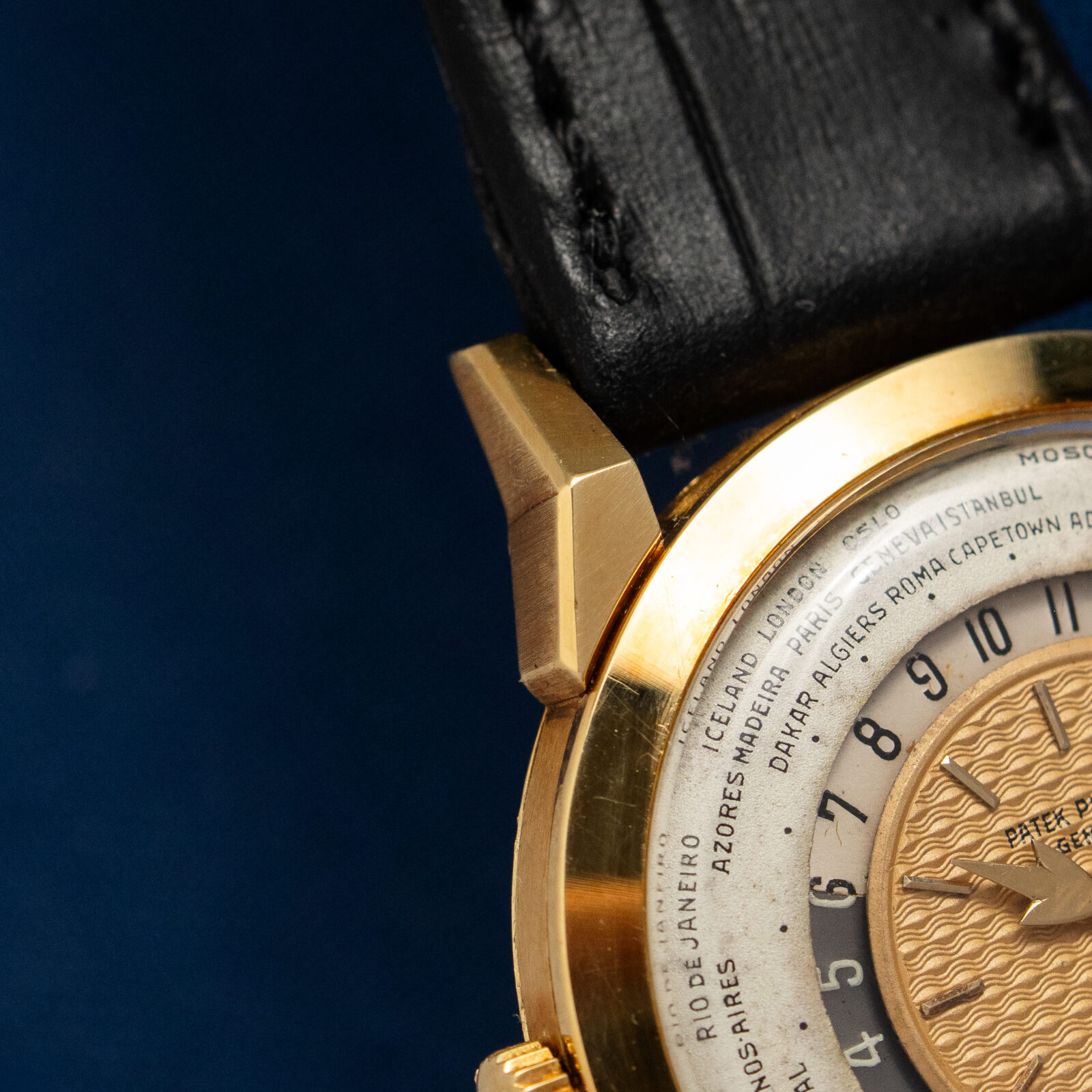
As mentioned, there is a distinction between the 2523 and the 2523-1. The latter, introduced some years later, features less prominent lugs. The knicked lugs of the earlier execution are among the most charming characteristics, and as such, collectors naturally favour examples like this one. The proportions remain strong, showing excellent volume and elegant bevelled edges, albeit with one lug showing a slight bend. The hallmarks are still clearly visible.
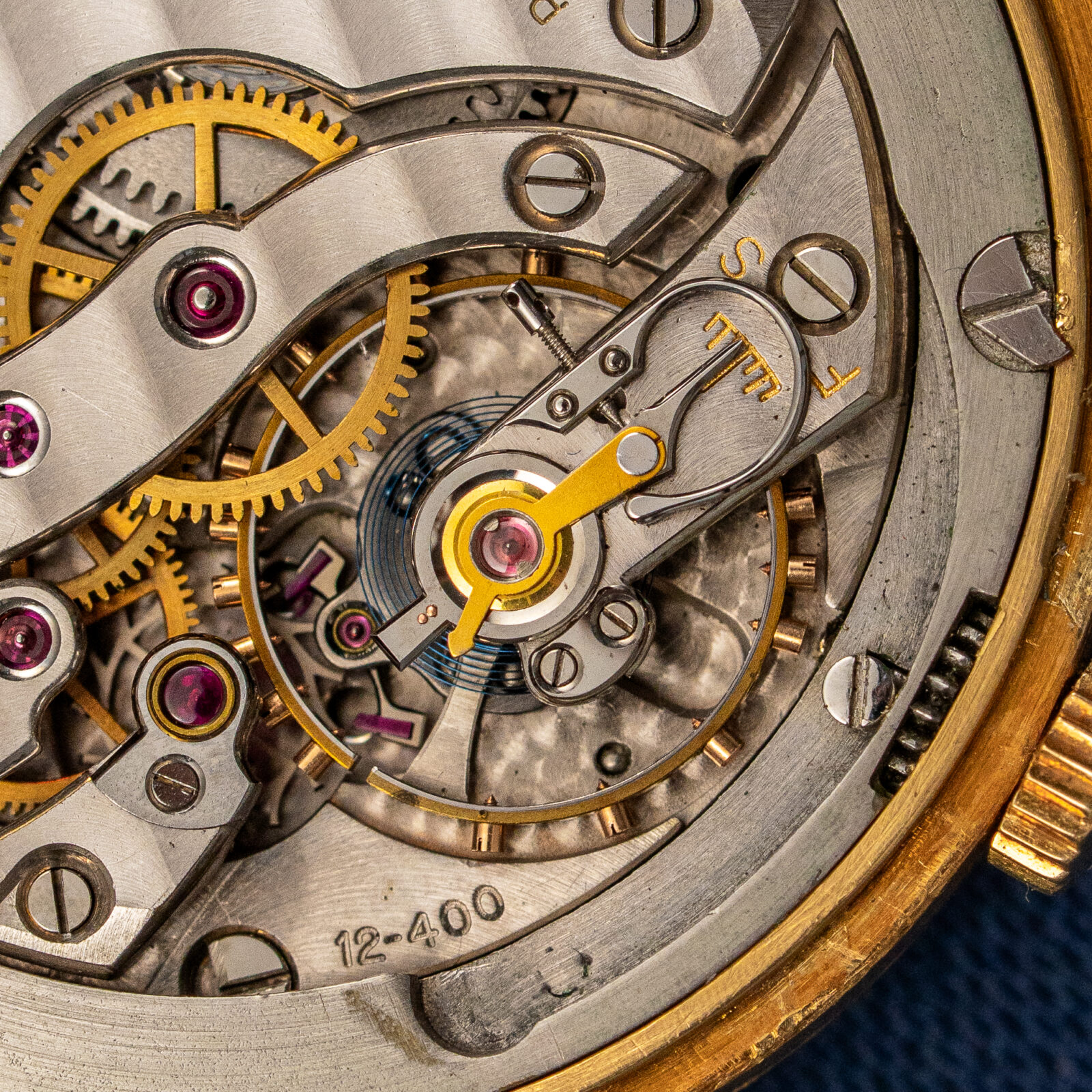
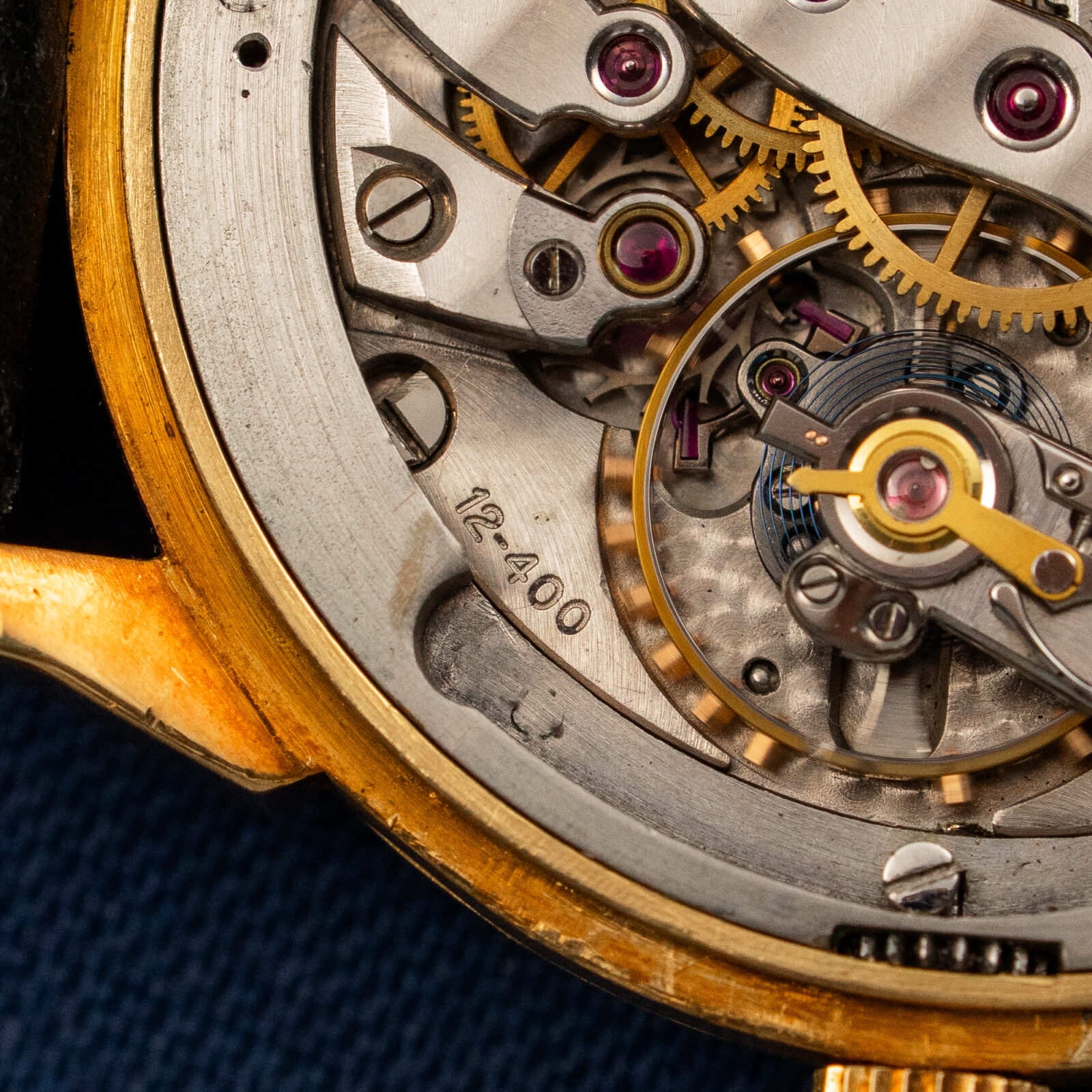
At its base, the movement began as the calibre 12-400, first introduced in 1950. Cottier then modified it by adding his world-time module. What makes it important is not that it was the first Cottier-based HU movement, but that it represents the decisive evolution. Earlier Patek world timers used the Cottier principle, but the city display was tied to an external bezel arrangement that proved less practical in daily use.
The real breakthrough came with the introduction of the second crown at 9 o’clock, which adjusted an inner rotating city ring, making the watch significantly easier for the wearer to reset when changing time zones. This change fundamentally improved usability and marks the defining moment in this calibre’s story.
Only around fifty 12-400 HU movements were produced. In other words, the calibre’s mystique stems not only from its ingenuity, but also from its extremely limited production and the continued involvement of Cottier’s workshop. It is closely associated with the ref. 2523, which ceased production in the mid-1960s following Cottier’s passing.
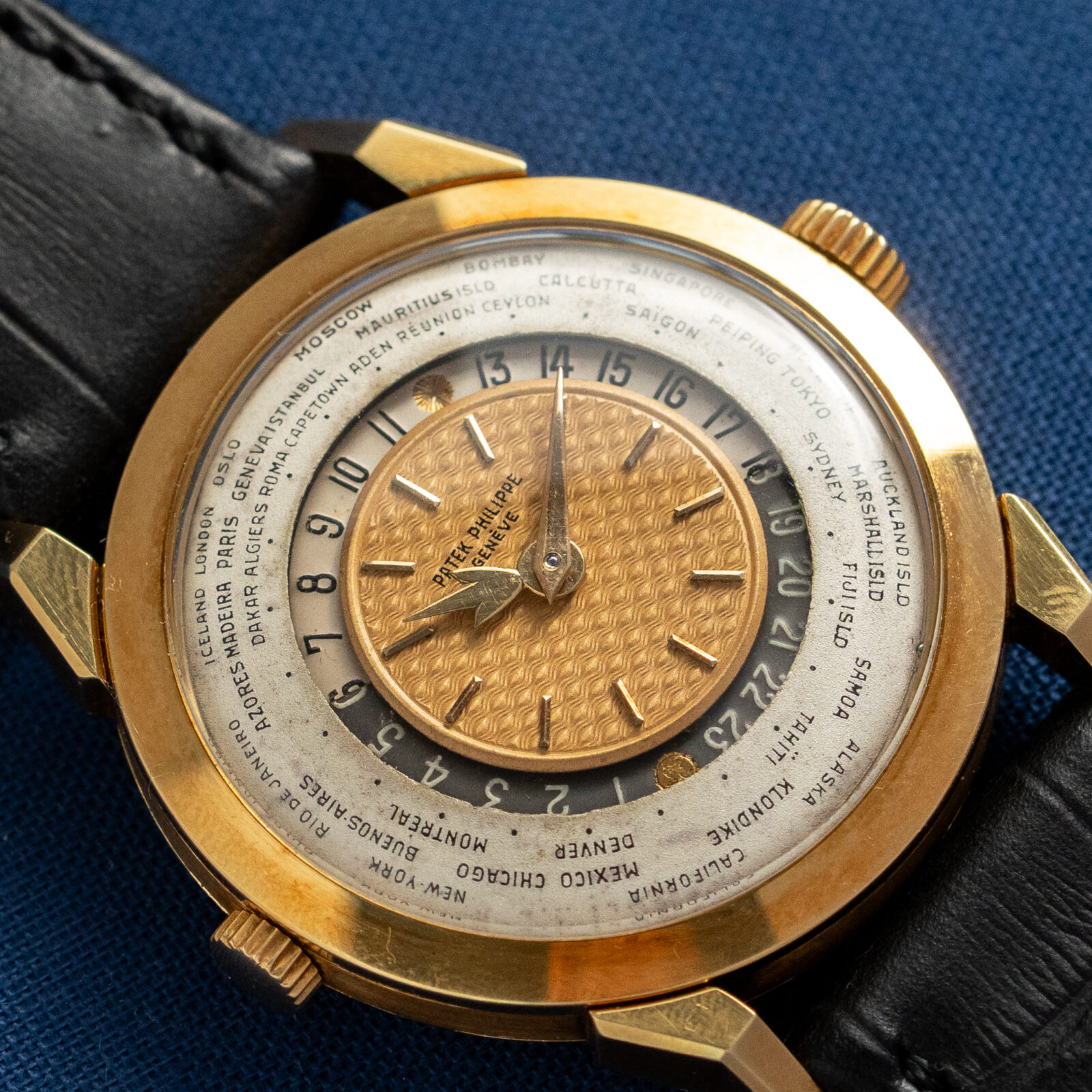
Technically, the genius of the 12-400 HU lies in its clarity. You set the local time with the main crown, while the 24-hour ring remains synchronized with the hands. Then, using the crown at 9 o’clock, you align your city at 12 o’clock on the city ring. Once set, the time in every listed city becomes immediately readable against the 24-hour scale. What feels intuitive today was, at the time, a significant ergonomic leap.
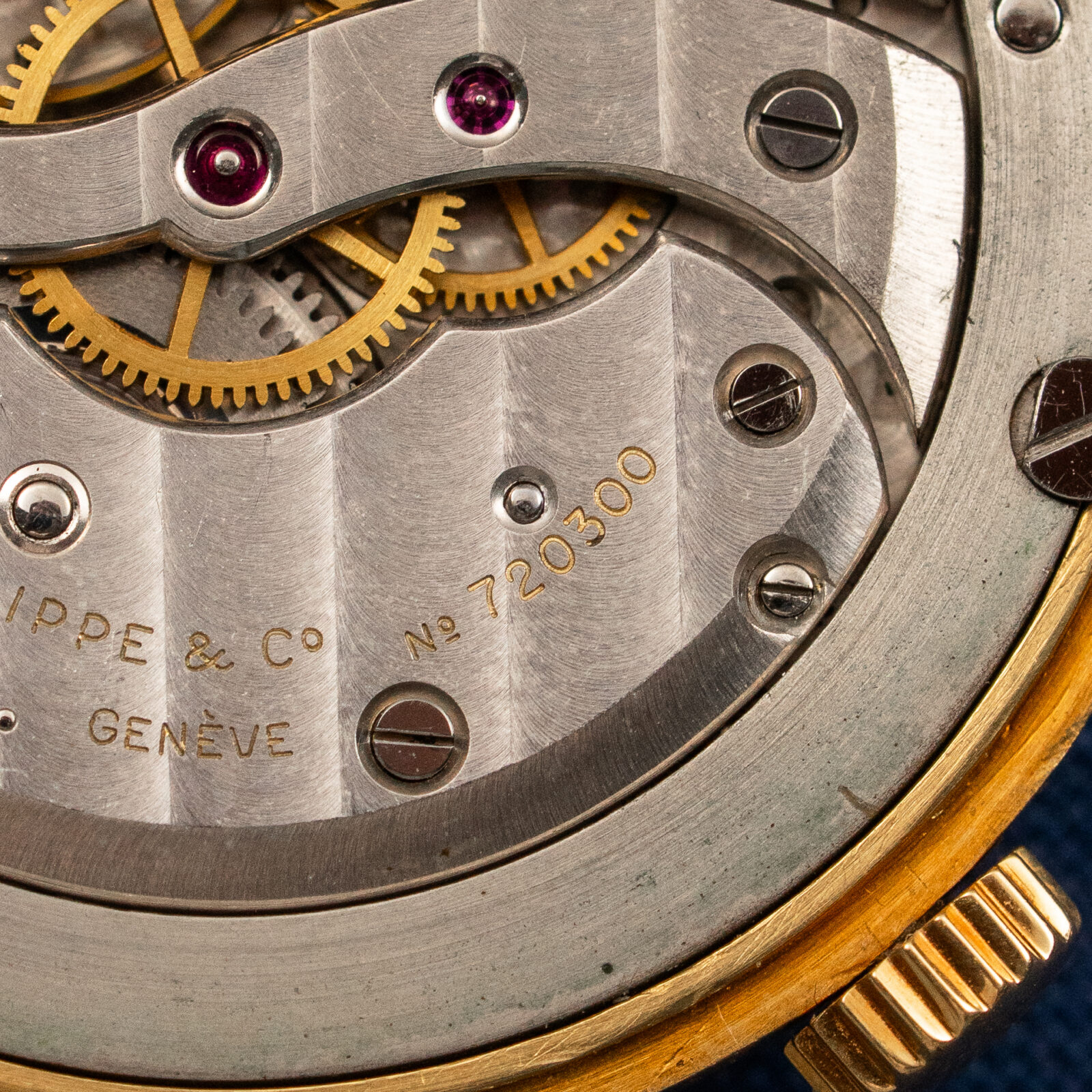
Naturally, the movement number 720’300 is the lowest recorded for a 12-400 HU, further emphasizing that this is the very first 2523 ever created.
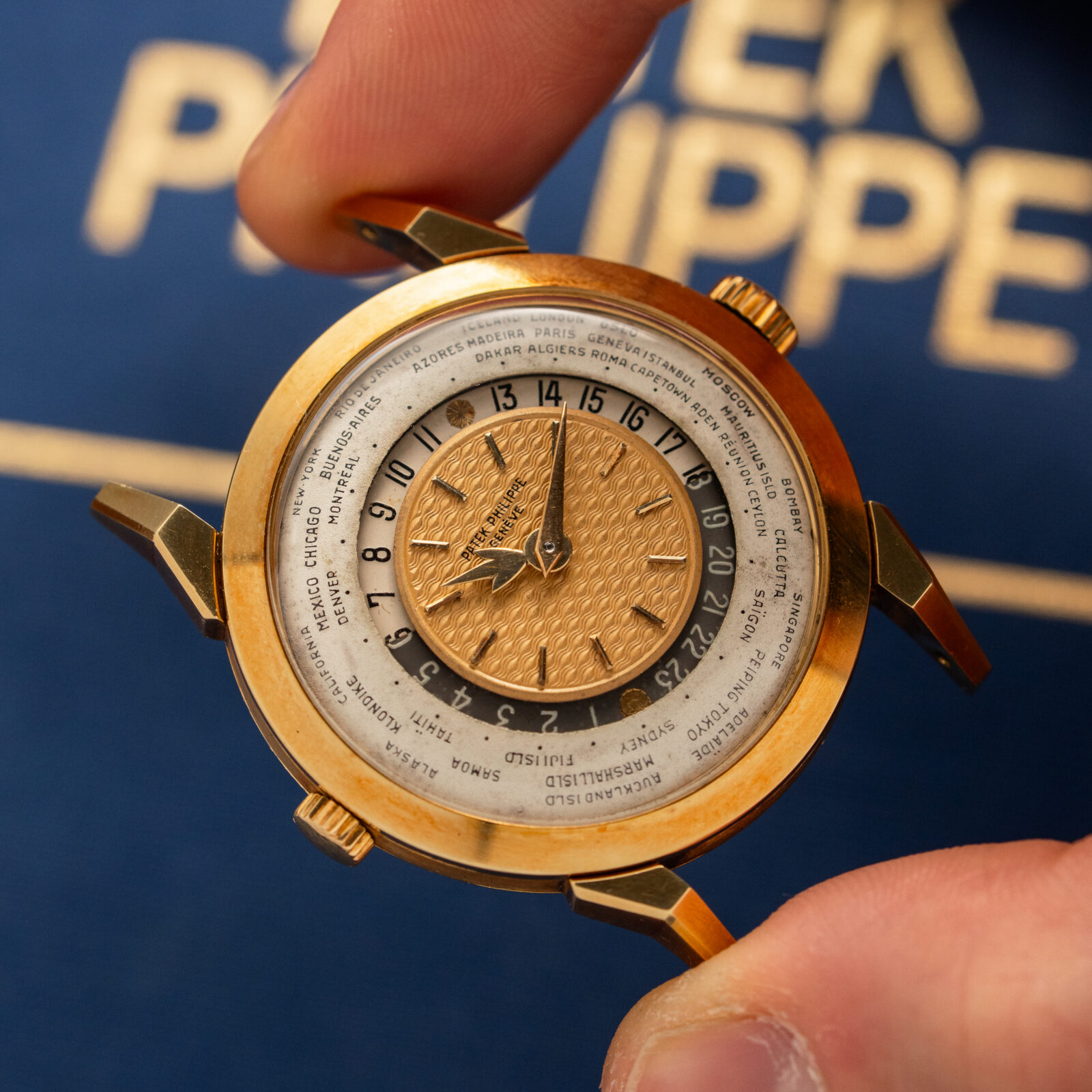
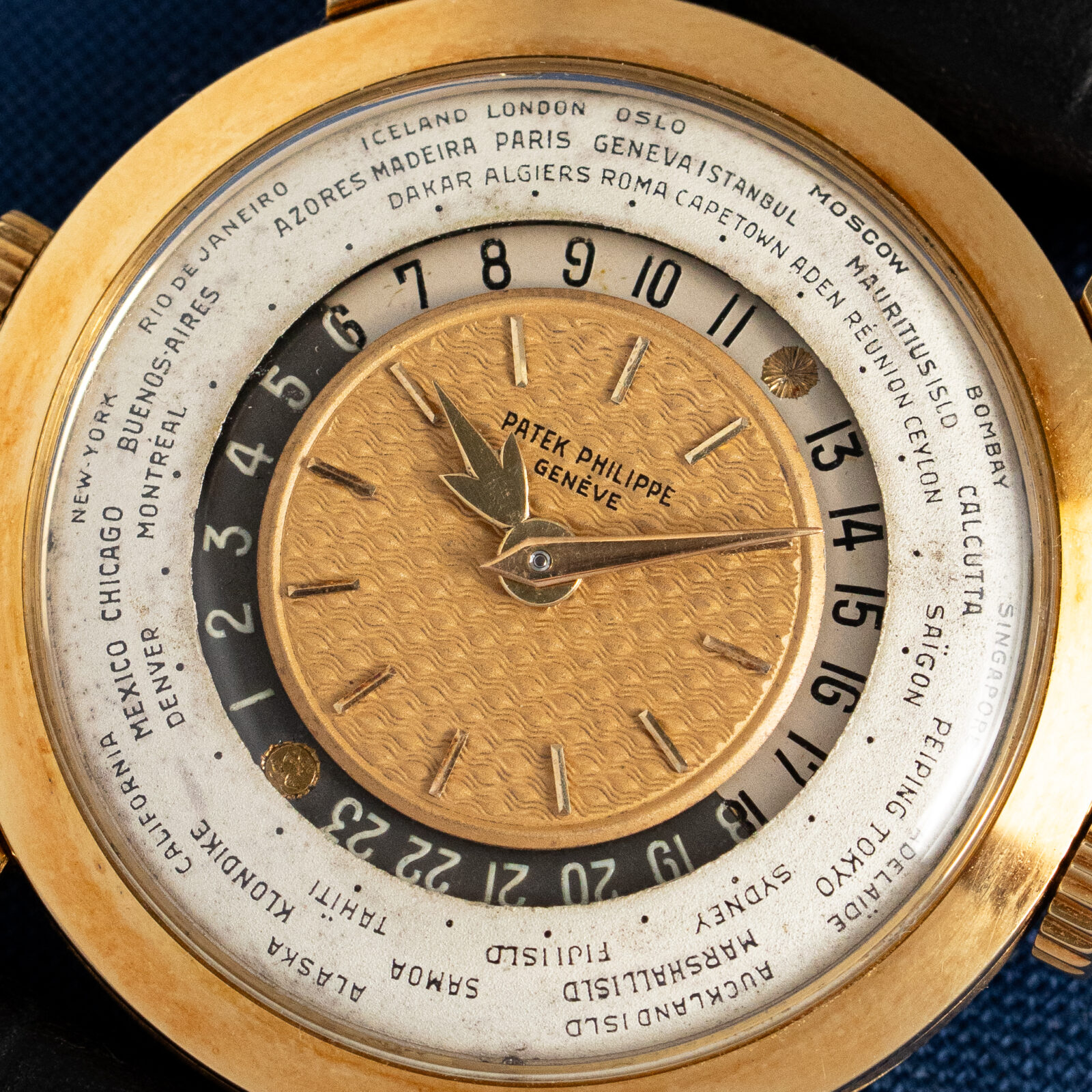
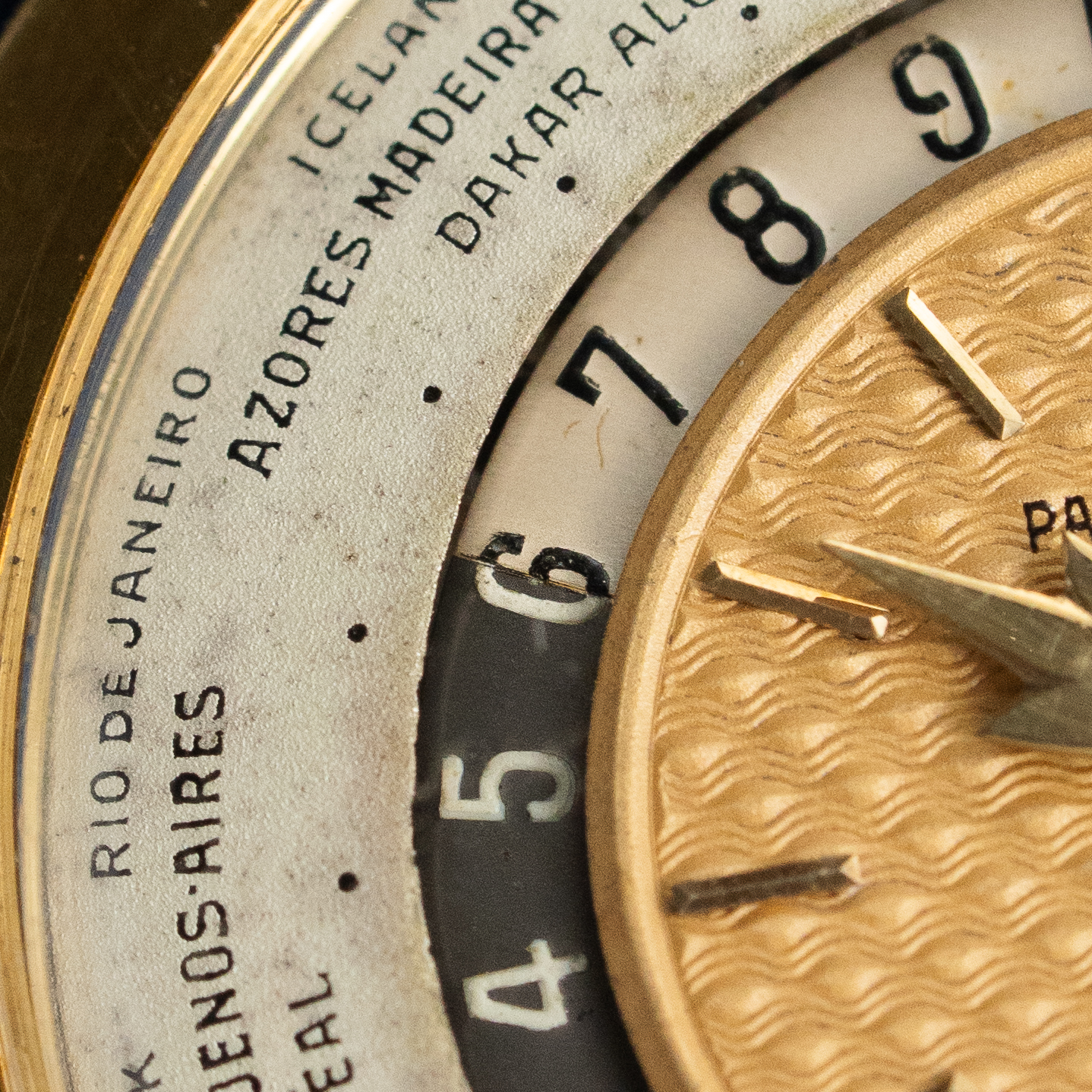
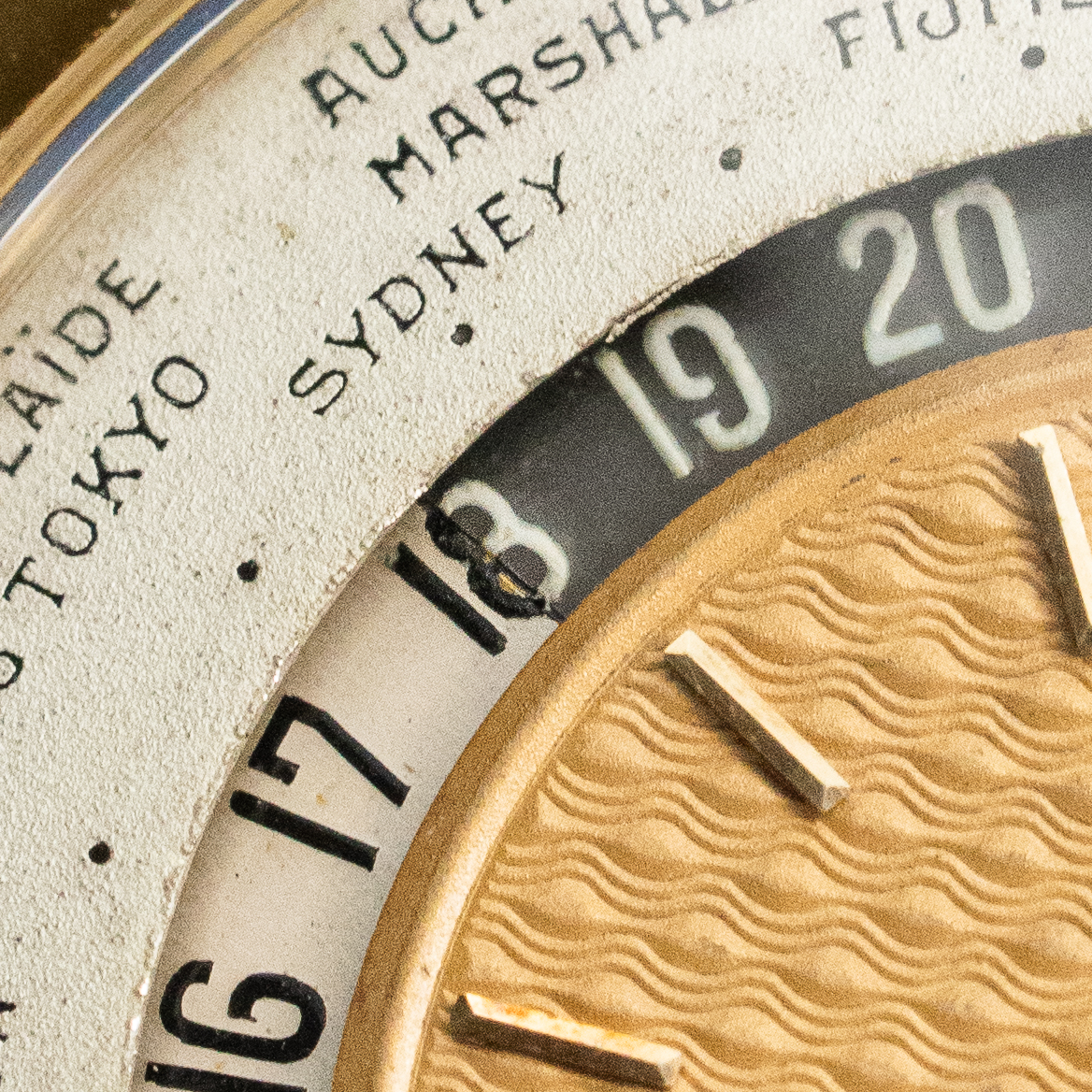
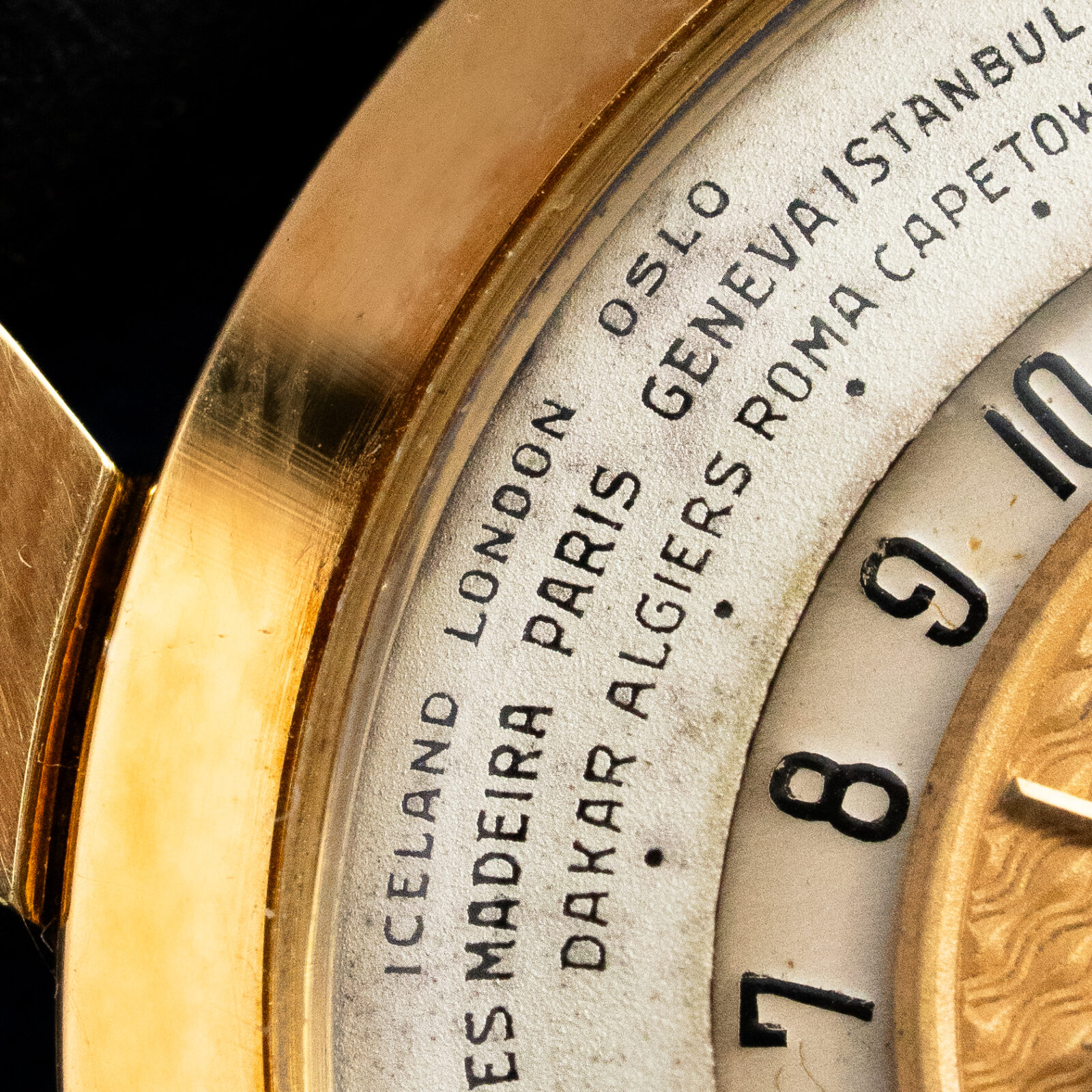
The dial of this 2523 is, in every sense, where the watch transcends from mechanical ingenuity into pure artistry; and that is not a statement made lightly. What you are looking at is not merely a display of information, but a carefully orchestrated composition of three distinct yet perfectly harmonised elements: the solid gold dial centre, the rotating 24-hour day-night disc, and the city ring that frames the world itself.
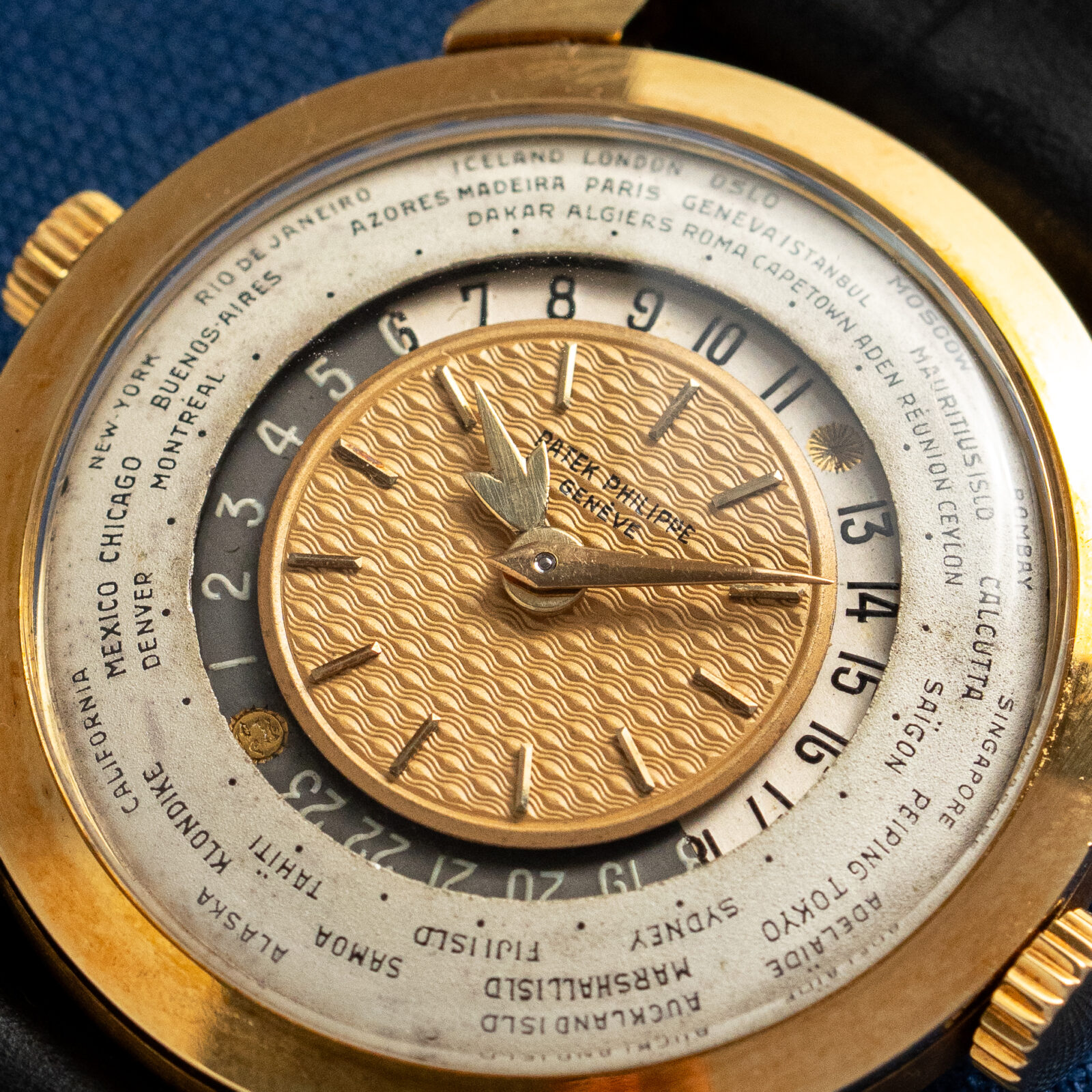
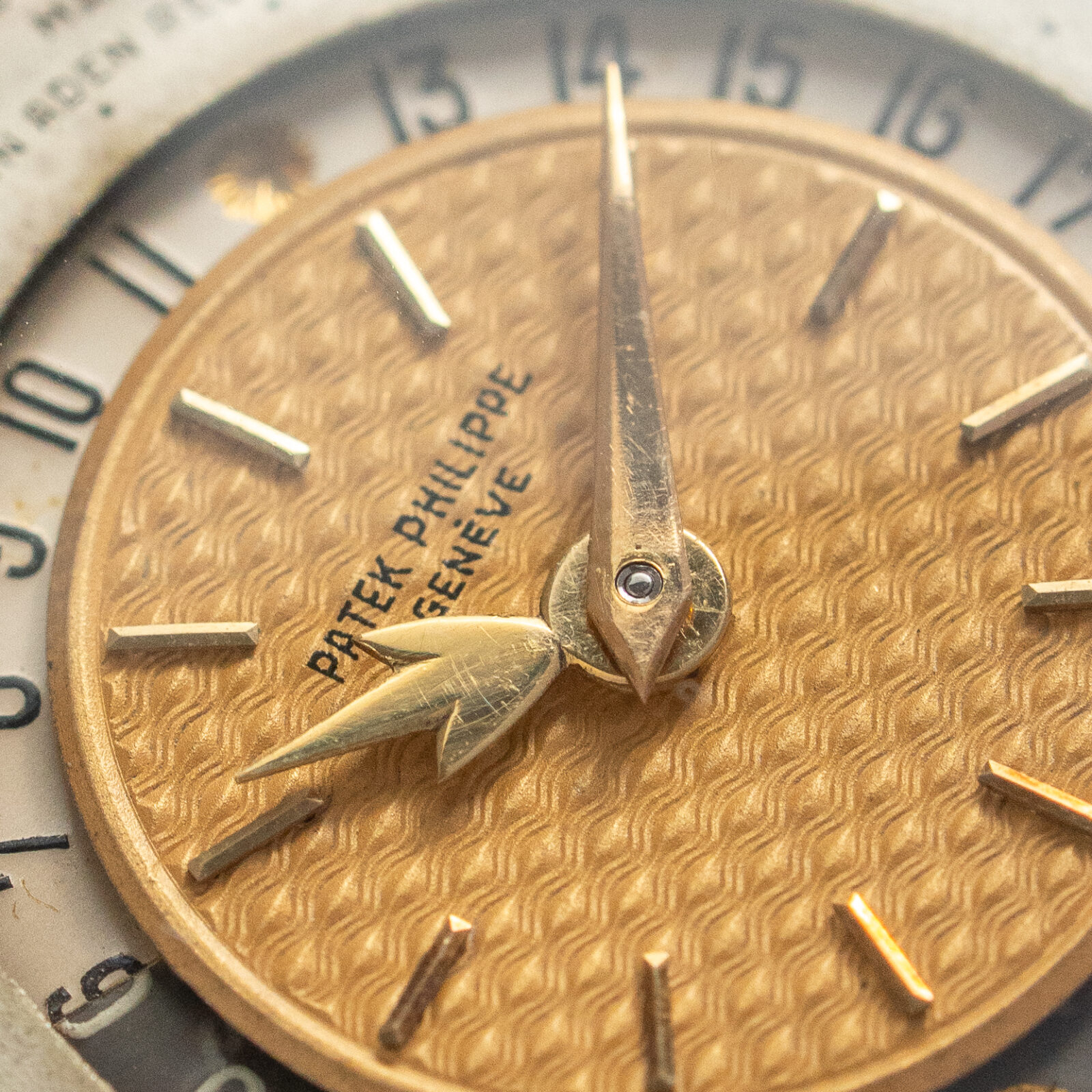
The central portion alone is worthy of prolonged admiration. Crafted from a solid gold plate and entirely executed by hand, it features an unusually expressive guilloché pattern; a flowing, almost organic wave motif that comes alive under changing light. It speaks to the confidence and virtuosity of the artisan behind it. That artisan, of course, being Stern Frères, the undisputed masters of dial making, whose close familial ties to Patek Philippe ensured that such technical and artistic excellence remained exclusive.
Then there is the remarkable integrity of the components themselves. Every visible element remains well-maintained: the enamel work, the applied hour markers, and the finely executed “lys”-shaped hands, all preserved with remarkable coherence. Possibly the brandname has been re-applied by transfer technique. The reverse side of the dial reveals its link to the movement by repeating the serial number, a detail mirrored on the 24-hour ring.
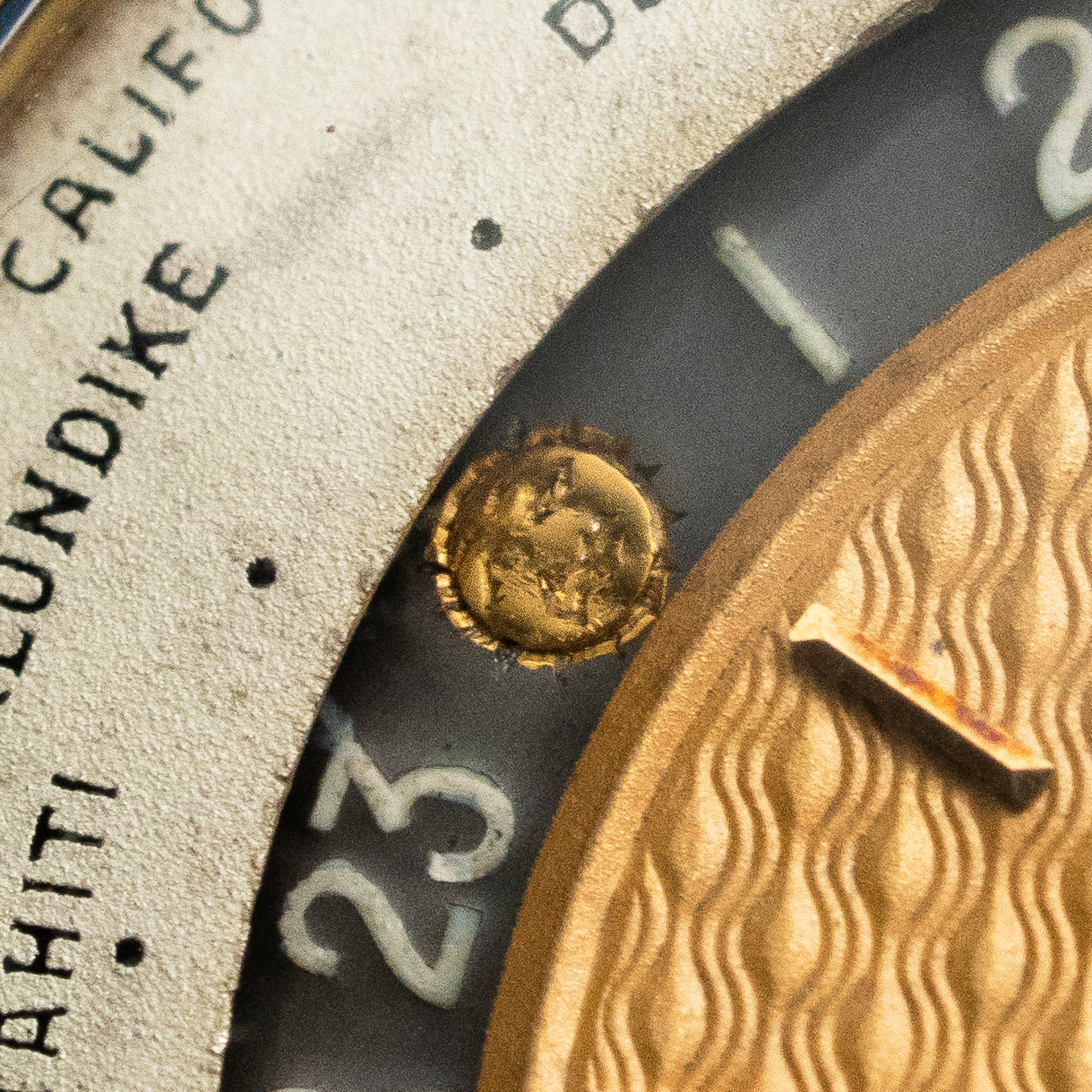
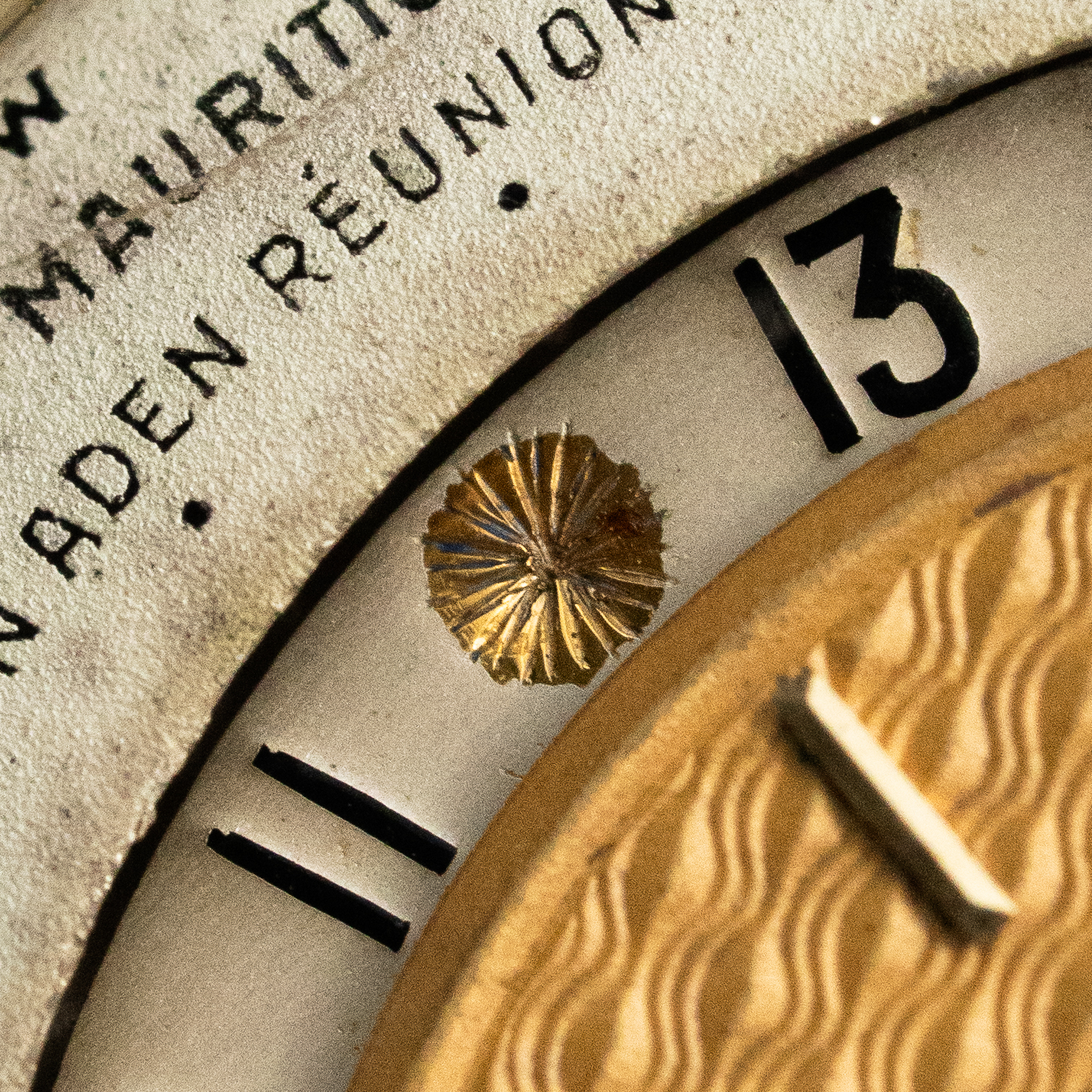
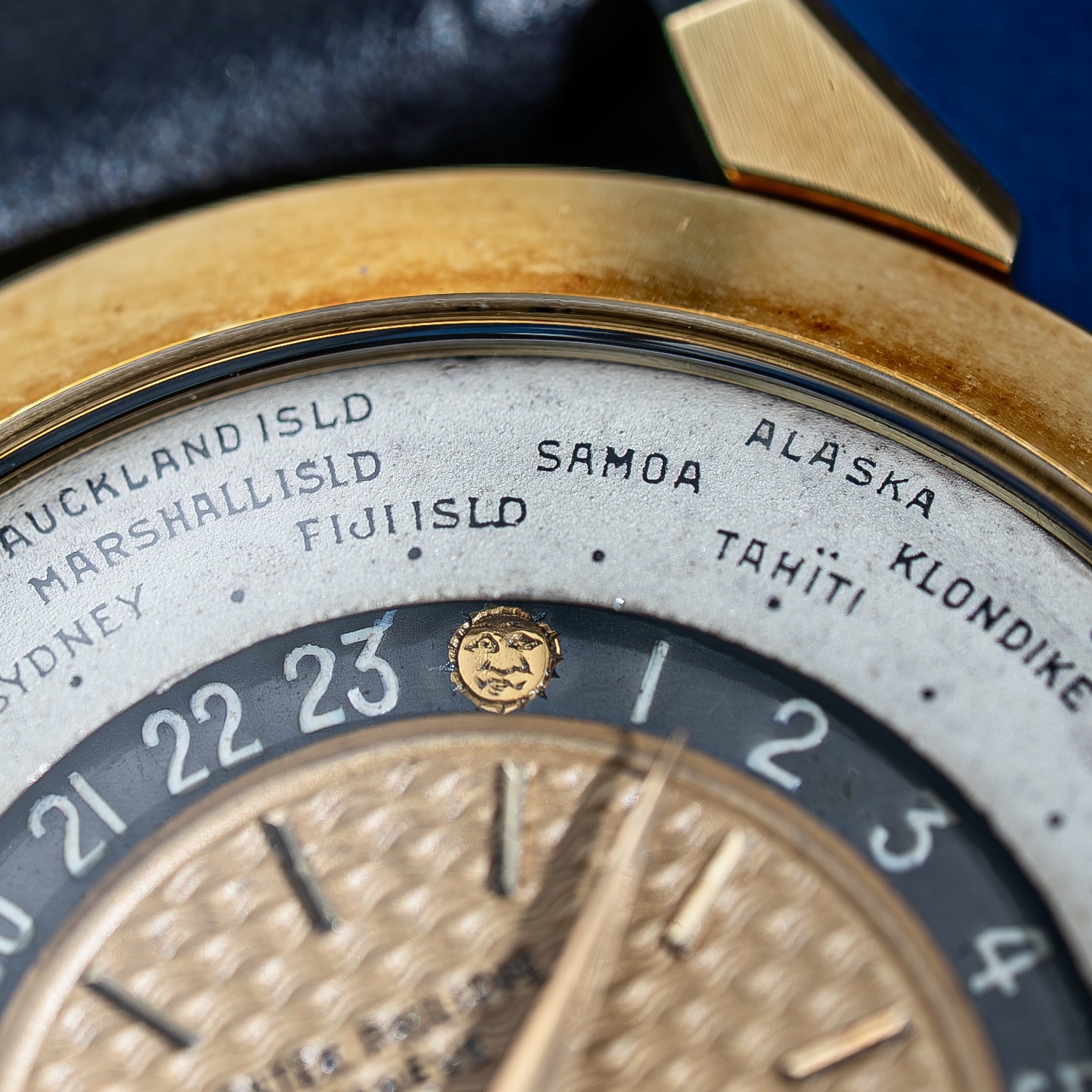
That particular element deserves special attention. Instead of the more familiar minimal dot indicators seen on later examples, this first execution features beautifully engraved gold sun and moon medallions; large, expressive, and unmistakably tied to Cottier’s earlier work. The fact that he had largely ceased this decorative approach by the late 1940s makes its presence here, in a watch from 1953, nothing short of extraordinary. There is a compelling reason for this. Through research provided by Brandon Thomas, who acquired original workshop notes from Cottier’s atelier over two decades ago, one word emerges that changes everything: “Prototype.”
The archival notes suggest that this piece was not only the first of its kind, but potentially a presentation example. It may have originally been delivered with two interchangeable centre dials: one unique guilloché, as seen here, and another likely enamel. An archival photograph showing the same distinctive sun and moon engraving strongly suggests we are looking at the very same watch, albeit with the alternate dial fitted.
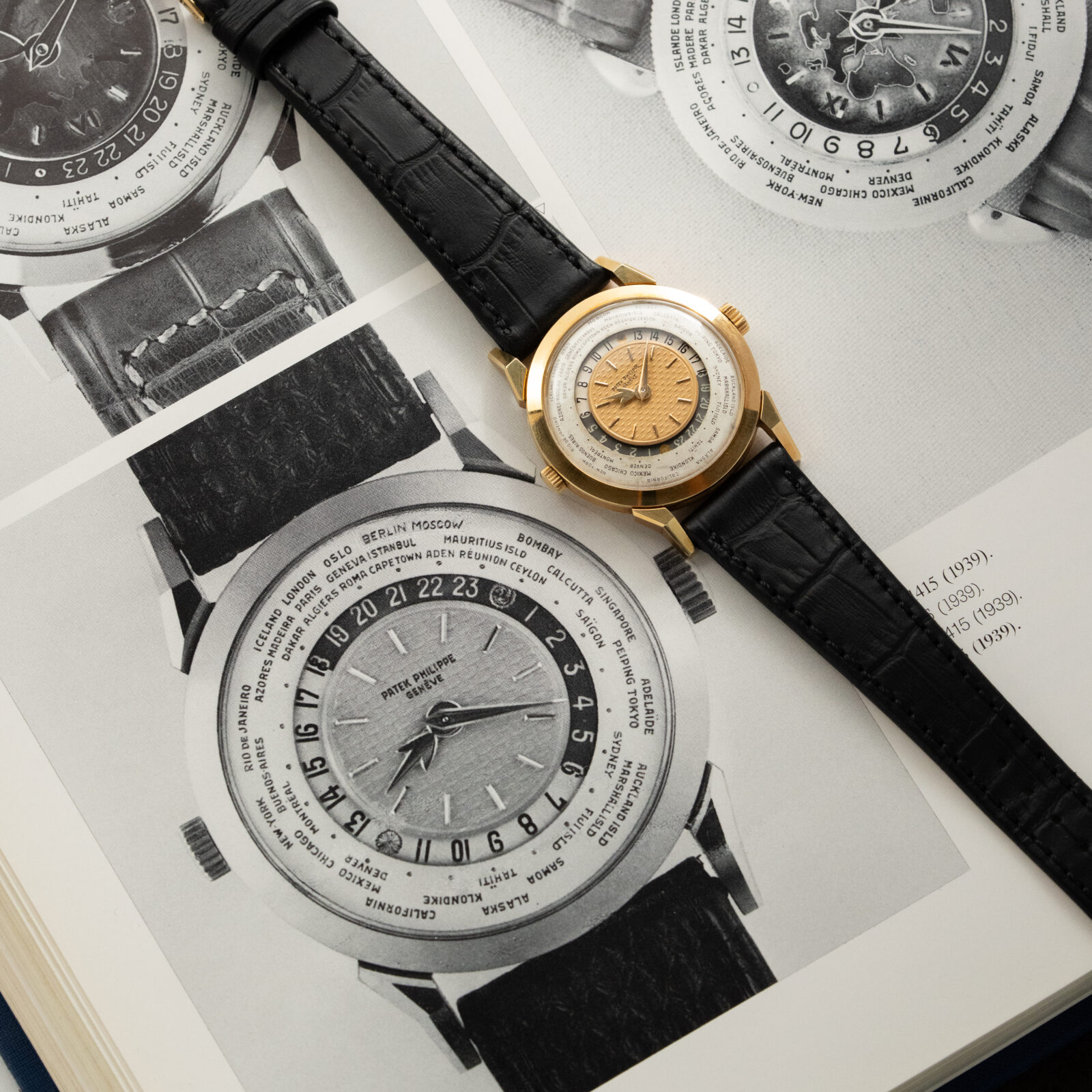
It reflects a moment in time when Patek Philippe and Cottier were not simply producing watches, but actively exploring the visual identity of the world-time complication. Even the city ring contributes to this narrative. Its silvered surface, engraved and enamelled with 40 locations, reveals another fascinating detail. Archival imagery from 1953, later published in the 1988 Banbery & Huber book, includes Berlin; a city now absent from the present configuration.
This suggests a period where such elements were adapted for different markets, much like language variations on the disc itself. Upon closer inspection, it becomes clear that the ring was not physically altered, but rather adjusted photographically in the darkroom; an early form of visual tailoring to suit different audiences. Another archival image, showing the enamel dial version instead features Moscow and Baghdad.
It underscores the fluidity of design at this early stage; where nothing was entirely fixed, yet everything was executed to the highest standard imaginable. In short, the dial is not just beautiful; it is deeply narrative. It captures experimentation, mastery, exclusivity, and history within a space no larger than a few centimetres.
We feel genuinely privileged to have been entrusted with the search for this watch’s next custodian; a role that carries far more weight than a simple transaction ever could. Spending time with this piece, uncovering its nuances, its intricacies, and its extraordinary place within the history of horology, has been nothing short of captivating. It is one thing to admire a watch for its beauty, but quite another to understand the story it tells; and rarer still to realise you are holding a chapter that may never be written again.
This is a watch that rewards curiosity. The deeper one looks, the more it reveals; not only about the ingenuity of its makers, but about a moment in time when boundaries were still being explored, when even the most refined houses were willing to experiment, to push, and to perfect. It has been a true pleasure to bring that story forward and to share it in a way that does justice to its significance.
We would also like to extend our sincere thanks to Brandon Thomas for his invaluable contribution, which has added an important layer of depth and context to what is already an exceptional piece. To end with his words: “It should be the most valuable of the yellow gold watches, if not all 2523, as it is the most important and unique.” If that sentiment resonates with you, we would be delighted to continue the conversation.
Specifications
- SKU 8320
- Bezel material
- Caliber
- Case Dimensions
- Case Material
- Clasp
- Dial
- Documents
- Extracts from the Archive
- Glass
- Index
- Model
- Movement
-
Reference
2523
- Year